Budget
How Much Does It Cost to Make a Fursuit? DIY Budget Breakdown
A partial fursuit (head, paws, tail) costs $200-500 in materials. A full digitigrade suit runs $600-1,200+. Here's the real material breakdown from a builder who's made 23 suits.
Making a fursuit costs $200-1,200+ in materials depending on coverage
That range covers everything from a partial set (head, paws, and tail) to a full digitigrade bodysuit with padding, cooling, and indoor-outdoor soles. I've built 23 fursuits over the past nine years, both for myself and on commission, and I've tracked every dollar.
Commissioning a fursuit from a known maker runs $1,500-5,000+ for a partial and $3,000-10,000+ for a full suit. The DIY route cuts costs by 60-80%, but it demands time, patience, and a willingness to learn sewing, foam carving, and pattern drafting from scratch.
I'm breaking down every material cost by suit type so you can plan a realistic budget before you buy your first yard of fur. If you want a quick total before diving into the details, plug your build specs into the Craft Build Cost Estimator for an itemized estimate.
What goes into a fursuit
Before the cost tables, you need to understand the components. A fursuit isn't one project. It's five or six sub-projects stitched together.
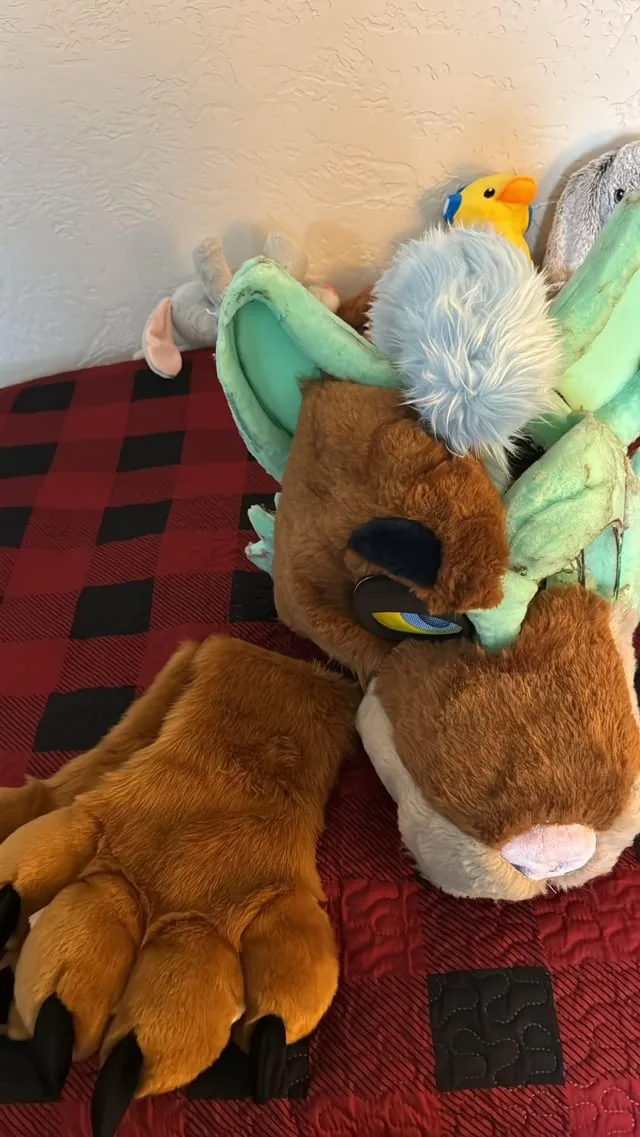
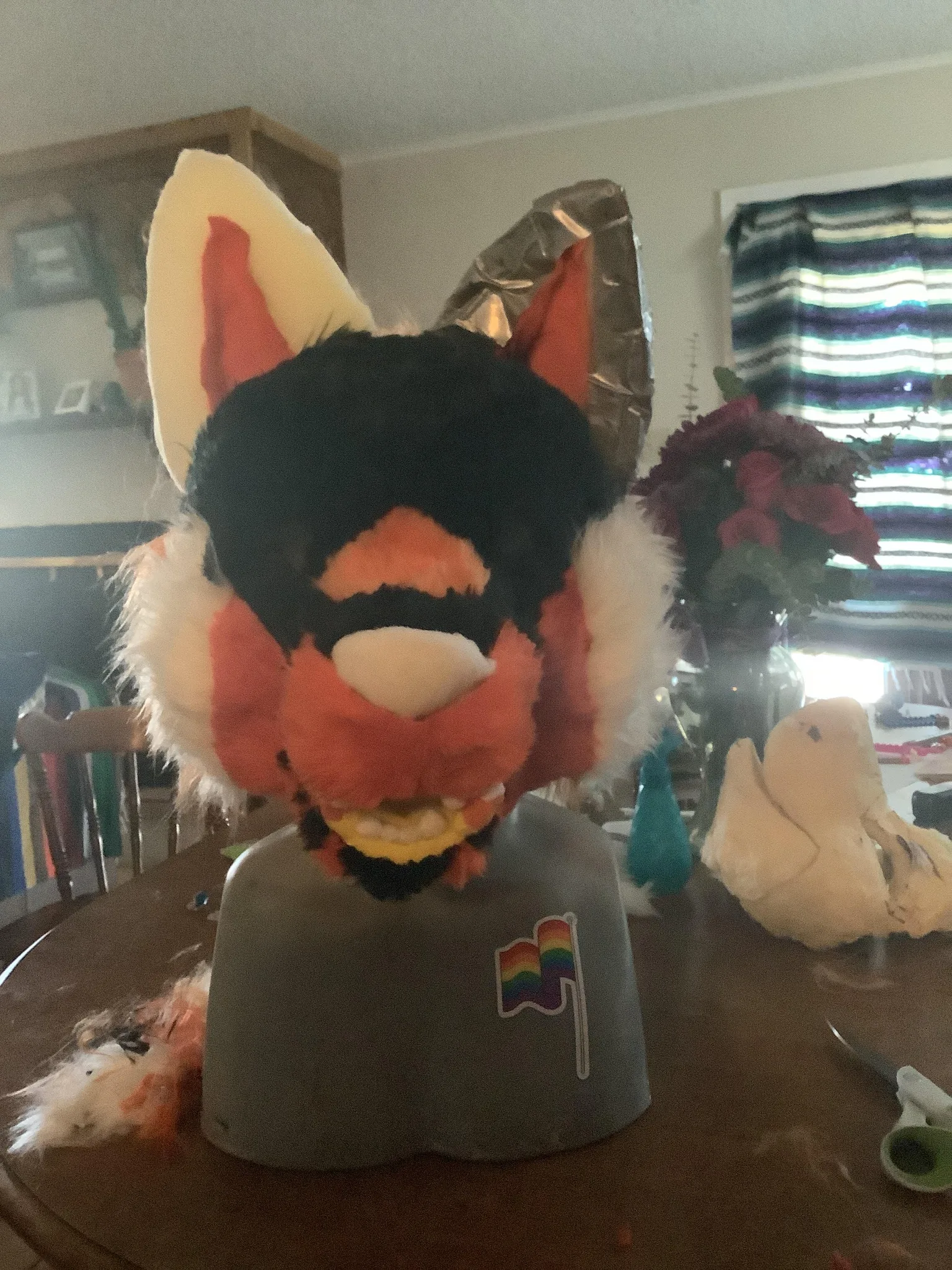
Head: The most complex piece. A carved foam base (or 3D-printed base) covered in fur fabric, with resin or 3D-printed eyes, a jaw hinge for a moving mouth, and often a nose and teeth sculpted from polymer clay or resin.
Body: A lycra or fleece bodysuit used as the base layer, covered in fur panels sewn to match the character's markings. Full suits include arm and leg coverage.
Paws (hands): Foam-padded gloves with claws, covered in fur with fleece or silicone paw pads.
Feet/paws: Indoor versions use anti-slip soles. Outdoor versions need sandals or sneakers built into the base. Digitigrade feet add foam leg extensions to create the animal-like leg shape.
Tail: Wire armature or stuffed, attached via belt loop or harness. Ranges from simple stuffed tubes to articulated tails with servos.
Extras: Cooling vests, follow-me eyes, EL wire accents, magnetic eyelids, wing harnesses.
Material costs: the full breakdown
Here's every material category with real prices from Distinctive Fabric, Mendel's, Amazon, and Joann as of 2026.
Fur fabric
This is your single biggest expense. Quality matters enormously. Cheap craft fur from a big-box store pills, mats, and looks terrible after one convention. You want long-pile luxury shag or short-pile minky from a specialty supplier.
| Fur type | Price per yard | Yards for full suit | Subtotal |
|---|---|---|---|
| Long-pile shag (NFT, Distinctive Fabric) | $18-30/yard | 4-7 yards | $72-210 |
| Short-pile minky | $10-16/yard | 3-5 yards | $30-80 |
| Specialty (sparkle, long flow) | $25-40/yard | 4-7 yards | $100-280 |
| Accent colors (small cuts) | $10-25 total | 0.5-1 yard | $10-25 |
A partial suit (head, paws, tail) needs 1.5-3 yards. A full suit needs 4-7 yards depending on your body size and the character's color pattern. Multi-colored characters eat more fabric because you can't efficiently cut from a single piece.
I budget $15-25/yard as my baseline for quality fur. The difference between $10 craft fur and $22 Distinctive Fabric fur is visible from across a convention hall.
Head materials
| Material | Cost | Notes |
|---|---|---|
| Upholstery foam (1" and 2" sheets) | $15-30 | Base for carving |
| Balaclava or hard hat liner | $5-10 | Internal structure |
| Resin or 3D-printed eye blanks | $10-25 | Toony or realistic style |
| Buckram (follow-me eye mesh) | $3-5 | Seeing-out fabric |
| Plastic mesh (for jaw) | $3-5 | Jaw hinge structure |
| Polymer clay or resin (nose, teeth) | $8-15 | Sculpted features |
| Hot glue sticks (many) | $5-8 | Head construction adhesive |
| Fur fabric (head portion) | $15-30 | 0.5-1 yard |
| Head subtotal | $64-128 |
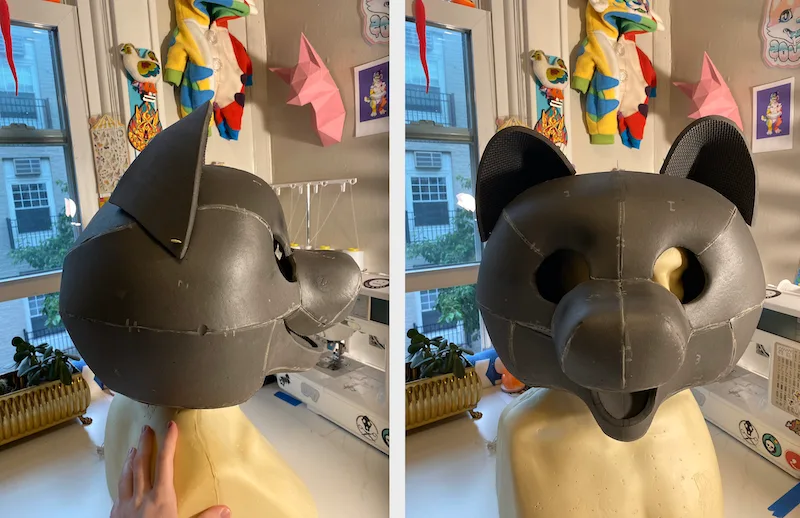
The head is where most of your time goes. My first head took 60 hours. Now I can do one in 20-25 hours, but it's still the most labor-intensive component. Foam carving is the core skill. You're sculpting a 3D form with scissors, a razor blade, and a heat gun, then draping fur over it and hand-sewing every seam.
3D-printed head bases are increasingly popular and cost $30-80 from services like Kaiborg or DreamVision Creations. They save 10-15 hours of foam carving but limit your ability to customize proportions.
Body and padding
| Material | Cost | Notes |
|---|---|---|
| Lycra/spandex bodysuit base | $15-25 | Base layer to sew fur onto |
| Fur fabric (body) | $60-180 | 3-5 yards for torso, arms, legs |
| Padding foam (body shaping) | $10-25 | For chest, hips, or muscle definition |
| Digitigrade leg padding foam | $15-30 | Only for digi builds |
| Elastic and webbing (internal straps) | $8-12 | Holds padding in place |
| Zipper (heavy-duty, separating) | $8-12 | Back or front entry |
| Thread (heavy-duty polyester) | $5-8 | Multiple spools |
| Body subtotal | $121-292 |
Digitigrade legs are the biggest cost and complexity jump in fursuit building. You're adding shaped foam extensions to the lower legs that simulate an animal's reversed knee joint. The foam costs $15-30 extra, and the fur pattern for digi legs requires more fabric and careful shaping.
Plantigrade suits (normal human leg shape) skip the leg padding entirely. If you're building your first suit, start plantigrade. The legs are simpler to pattern, easier to walk in, and cost less. I made my first three suits plantigrade before attempting digi, and I'm glad I did.
Paws and feet
| Material | Cost | Notes |
|---|---|---|
| Glove liners (stretch fabric) | $3-5 | Base for hand paws |
| Foam (hand paw padding) | $5-8 | Claw and palm shaping |
| Fleece or silicone (paw pads) | $4-8 | Tactile detail |
| Claw blanks (resin or sculpted) | $5-10 | 10 claws per set |
| Fur fabric (paws) | $10-15 | Small cuts |
| Indoor sandals or sneakers (foot paw base) | $10-20 | Structural sole |
| Anti-slip sole material | $5-10 | Critical for convention floors |
| Paws subtotal | $42-76 | Hands and feet combined |
Foot paws built onto cheap sandals work fine for indoor events. Outdoor suiting needs sturdier soles. I glue EVA foam midsoles to flip-flops, then build the paw structure on top. The sandal gives you a real sole that survives pavement.
Tail
| Material | Cost | Notes |
|---|---|---|
| Armature wire or PVC | $3-5 | Internal structure |
| Stuffing (polyester fiberfill) | $5-8 | Volume and shape |
| Fur fabric | $8-15 | 0.5-1 yard |
| Belt loop or harness attachment | $3-5 | Secure mounting |
| Tail subtotal | $19-33 |
Tails are the simplest component and a great first project if you want to test your sewing skills before committing to a full build.
Cost by suit type
Here's how the component costs stack up across the three main build tiers.
| Suit type | Components | Material cost | Build time |
|---|---|---|---|
| Partial (head + paws + tail) | Head, hand paws, tail | $200-500 | 60-120 hours |
| Full plantigrade | Head, body, hand paws, foot paws, tail | $400-900 | 120-250 hours |
| Full digitigrade | Head, body with digi legs, hand paws, foot paws, tail | $600-1,200+ | 180-350 hours |
The jump from partial to full plantigrade roughly doubles your cost because the bodysuit consumes 3-5 yards of fur at $18-30/yard. The jump from plantigrade to digitigrade adds another $100-300 in padding materials and extra fur for the leg extensions.
Most first-time builders start with a partial. It teaches you every core skill (foam carving, fur sewing, eye making) without the overwhelming scope of a full bodysuit. My first build was a head and tail. My second was a partial with hand paws. I didn't attempt a full suit until build number four.
The hidden costs that wreck budgets
I've mentored a dozen first-time builders, and every single one has underestimated these categories.
Adhesive: $20-40. You will go through hot glue sticks at a pace that seems impossible. A head alone can eat 20-30 sticks. Add fabric glue for hem work, E6000 for eye installation, and spray adhesive for foam-to-foam bonding. Budget for at least two bags of hot glue sticks and a bottle each of fabric glue and E6000.
Hand-sewing supplies: $15-25. Fursuit construction involves extensive hand-sewing, especially on the head where a machine can't reach. Heavy-duty needles, curved upholstery needles, thimbles, and quality polyester thread are ongoing costs. Needles break in foam. Budget for replacements.
Cooling solutions: $30-80. This is the cost nobody warns you about until your first convention. Fursuits are hot. Dangerously hot. Core body temperature inside a full suit at a summer convention can spike fast.
| Cooling item | Cost | Effectiveness |
|---|---|---|
| Personal fan (neck-worn) | $15-25 | Moderate |
| Head-mounted fan (PC fan + battery) | $10-20 DIY | Good for head cooling |
| Cooling vest (ice pack type) | $25-50 | Excellent for body |
| Spray bottle (misting) | $3-5 | Quick cool-down between sets |
| Extra balaclava (sweat management) | $5-10 | Swap between wear sessions |
I install a 12V PC fan in every head I build now. A 80mm Noctua fan, a battery holder, a switch, and some wire runs $10-20 in parts and makes the difference between 45 minutes of comfortable wear and 20 minutes of suffocating misery. This is a non-negotiable line item.
Maintenance and cleaning: $15-30/year. Fursuits need cleaning after every event. You can't throw them in a washing machine. The standard method is a bathtub soak with gentle detergent, followed by extensive air drying. Budget for detergent, fabric freshener spray, a fur brush (slicker brush from a pet store, $5-8), and lint rollers.
Fur matting is inevitable with wear. A wire slicker brush restores pile direction, but heavily matted areas sometimes need spot replacement. Keep spare fur from your original fabric order for patches.
Replacement parts: $10-25/year. Eyes get scratched. Paw pads wear through. Claws chip. Seams pop under stress. I keep a repair kit with spare eyes, matching thread, hand-sewing needles, hot glue, and fur scraps. Convention repair emergencies are stressful enough without hunting for supplies.
Where to save money without sacrificing quality
Buy fur during sales. Distinctive Fabric and Howl Fabric run sales around holidays and at the start of convention season. A 20-30% discount on 5 yards of fur saves $20-45. I time my bulk purchases to these sales and store extra yardage.
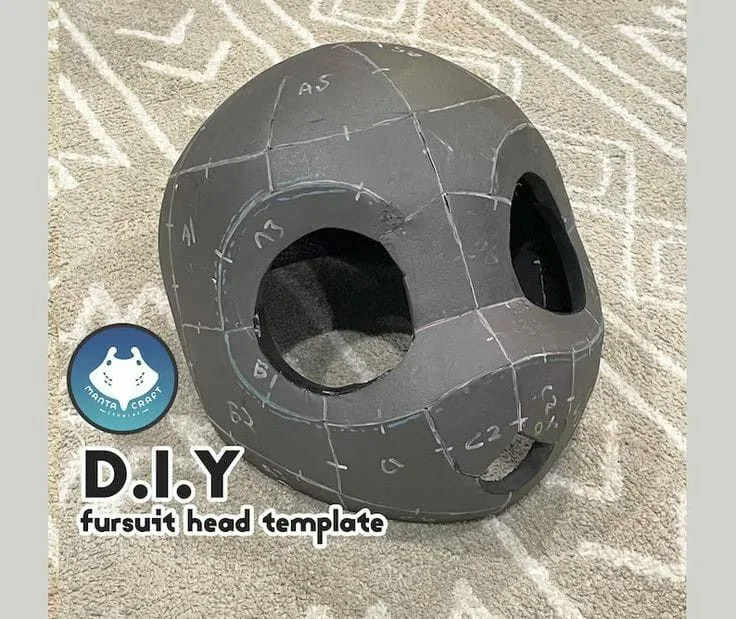
Use a foam head base from a community template. Free foam head base patterns exist from builders like Skyehigh Studios and Matrices. A proven base pattern saves you from wasting $15-30 in foam on a head shape that doesn't work. My first head used a free template and turned out better than my second head where I tried to freestyle the shape.
Thrift store bodysuit bases. A plain black lycra bodysuit from a thrift store costs $3-5 versus $15-25 new. You're sewing fur over it anyway, so brand and color don't matter.
Make your own eyes. Resin-cast or buckram eyes cost $3-10 in materials versus $20-40 for pre-made eyes from an Etsy maker. Buckram follow-me eyes are especially cheap: mesh fabric, acrylic paint, and clear sealant. Total cost under $5 for a pair that looks professional.
Start with a partial and upgrade later. A $200-500 partial teaches you every skill. If you decide to go full suit, you've already completed the hardest component (the head) and can add the body later. I've seen too many first-timers buy $400 worth of fur for a full suit, struggle with the head for three months, and burn out before touching the body.
DIY vs. commission cost comparison
| Suit type | DIY cost | Commission cost | Savings |
|---|---|---|---|
| Partial (head + paws + tail) | $200-500 | $1,500-5,000 | 70-90% |
| Full plantigrade | $400-900 | $3,000-7,000 | 75-87% |
| Full digitigrade | $600-1,200 | $4,000-10,000+ | 80-88% |
The savings are dramatic, but the tradeoff is time. A full DIY digitigrade suit takes 180-350 hours of labor. At even a modest $15/hour value for your time, that's $2,700-5,250 in labor on top of materials. Commissioning makes sense if you value your time more than the savings.
For most people, the real value of DIY isn't the cost savings. It's the satisfaction of wearing something you built entirely with your own hands. Every compliment at a convention hits different when you can say "I made this."
Budget planning by timeline
Spreading purchases over time makes the cost manageable.
| Month | Purchase | Cost |
|---|---|---|
| Month 1 | Fur fabric (buy all at once for dye lot consistency) | $80-210 |
| Month 2 | Head materials (foam, eyes, clay) | $50-100 |
| Month 3 | Body base, padding, notions | $40-70 |
| Month 4 | Paw and tail materials | $30-60 |
| Month 5 | Cooling, cleaning, repair supplies | $40-80 |
| Total | $240-520 |
Buy all your fur at once from the same seller, even if you're not using it for months. Fur is dyed in batches. The "white" you order in January may not match the "white" available in April. I learned this on suit number seven when the belly panel was noticeably yellower than the chest because I ordered from different dye lots. Never again.
Use the Craft Build Cost Estimator to build your shopping list with realistic quantities and current prices. It tracks which materials you've purchased and what's remaining, so you can spread the cost across paychecks.
Frequently
asked questions.
Sources & references
We link to the brands, retailers, and research we reference so you can verify and explore.