Budget
How Much Does LARP Armor Cost to Make?
Real DIY costs for LARP armor by material type: EVA foam, leather, thermoplastic, and metal. Includes forgotten costs, durability tips, and a budget breakdown.
The price tag nobody warns you about
I've been making LARP armor for a decade. In that time I've built foam kits, leather breastplates, hybrid rigs, and one ill-advised aluminum cuirass that I wore exactly twice before my shoulders filed a formal complaint.
Here's what I wish someone had told me at my first Alliance event: the retail price of LARP armor is a horror story, and the DIY price is reasonable, but only if you know which material path you're actually signing up for.
Pre-made LARP armor from retailers like Artisans d'Azure starts at $500 for a basic set. Premium pieces run $1,000-1,500. Hand-forged steel reproductions go for $1,200-4,000. There's a reason "I spent more on my kit than my first car" is a running joke in the community.
Building it yourself cuts costs dramatically. But "DIY LARP armor" isn't one category. It's five different projects depending on your material choice, each with a different price floor, skill requirement, and failure mode. Run your specific build through the Craft Build Cost Estimator to get a realistic total before shopping.
EVA foam armor: $80-200
Foam is the entry point for good reason. It's light, cheap, forgiving, and you can build a full set in a weekend with basic tools.
Materials for a full set (chest, shoulders, bracers, belt):
| Item | Cost |
|---|---|
| EVA foam sheets (6-10mm, 4-6 sheets) | $25-50 |
| Contact cement | $14-18 |
| Plasti Dip (sealant) | $12-14 |
| Acrylic paint + clear coat | $20-35 |
| Strapping (heavy-duty elastic, buckles) | $20-35 |
| Heat gun (if you don't own one) | $25-35 |
| Total | $80-200 |
If you've done cosplay foam work before, the process is identical with one critical difference: LARP armor gets hit. Repeatedly. By people swinging boffer weapons as hard as the rules allow.
That means your sealing game needs to be better than display cosplay. Where you'd use two coats of Plasti Dip for a convention piece, LARP foam needs three to four coats minimum. Edges need extra reinforcement. Seams need contact cement, not hot glue, because hot glue pops under impact.
Foam armor won't last forever on the field. Plan for repairs between events. A tube of contact cement and some spare foam scraps in your kit bag saves a lot of mid-battle embarrassment.
For the full breakdown on EVA foam costs and techniques, the cosplay budget guide covers the material in detail. The difference for LARP is durability investment, not base cost.
Leather armor: $150-400
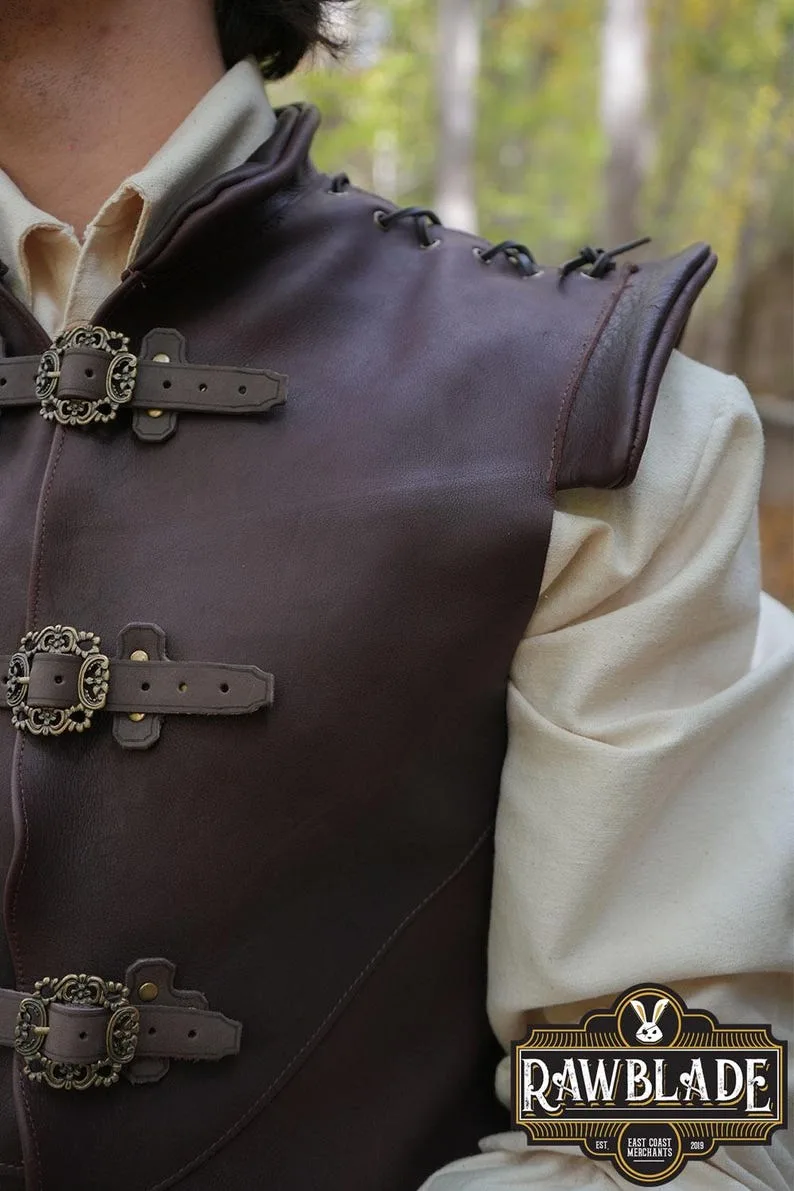
Leather is the classic LARP material, and it's where I spend most of my build time now. Nothing beats the look and feel of a well-dyed veg-tan breastplate. Nothing beats the cost of learning that lesson, either.
Materials for a basic set (breastplate + bracers):
| Item | Cost |
|---|---|
| Veg-tan leather, 7-9oz (12-20 sq ft) | $100-300 |
| Leather dye (2-3 colors) | $16-36 |
| Leather finish/sealant | $10-15 |
| Rivets + setter kit | $15-25 |
| Leather lace/cord | $5-8 |
| Edge beveler, swivel knife, cutting mat | $30-50 |
| Total | $150-400 |
Leather hides run $8-15 per square foot for the weight you need for armor. A basic breastplate and bracer set eats 12-20 square feet depending on your pattern and how efficiently you cut. The leather alone is $100-300 before you touch dye or hardware.
The tooling investment is real but one-time. A swivel knife, edge beveler, rivet setter, and cutting mat run $30-50 and you'll use them for years.
Here's the cost nobody budgets for: waterproofing. I learned this at a Dagorhir event in 2019 when a three-hour rain turned my un-sealed leather cuirass into a warped, cracked mess. Two events' worth of work, ruined because I skipped a $12 bottle of leather sealant.
Non-waterproofed leather cracks after one or two rainy events. Budget $10-20 for weather protection and apply it before your first field battle, not after.
Thermoplastic armor: $200-500
Worbla and Wonderflex give you the precision of foam with the rigidity of hard armor. They're heat-formable, paintable, and durable. They're also expensive.
Materials for a full set:
| Item | Cost |
|---|---|
| Worbla/Wonderflex sheets (4-8 sheets) | $120-240 |
| Primer (wood glue or gesso, multiple coats) | $12-18 |
| Acrylic paint + clear coat | $20-40 |
| Strapping and hardware | $20-35 |
| Heat gun | $25-35 |
| Total | $200-500 |
At roughly $30 per sheet, Worbla is the single most expensive crafting material per square foot in the LARP armor world. You'll need four to eight sheets for a full set, and mistakes are costly because you can't just cut another piece from a $5 foam sheet.
The upside: thermoplastic armor passes weapon-safety checks at stricter systems and holds fine detail better than foam. If you're building plate-style armor for the SCA where hits have real force, thermoplastic handles impact better than foam.
The downside beyond cost: weight. A full Worbla set lands in an awkward middle ground, heavier than foam without the authenticity points of real plate.
Metal armor: $300-800+
Steel or aluminum plate is the top of the DIY food chain. It's the most expensive, heaviest, and most tool-intensive option. It also looks incredible and lasts essentially forever.
Materials for a basic set:
| Item | Cost |
|---|---|
| Aluminum or mild steel sheet stock | $80-200 |
| Rivets, straps, buckles, padding | $40-60 |
| Metalworking tools (snips, anvil, hammer, drill) | $100-300 |
| Finishing (paint, powder coat, or patina) | $30-60 |
| Total | $300-800+ |
The material itself isn't as expensive as people expect. The tools are what kill the budget. If you don't already own metalworking equipment, the startup cost pushes a first build well past what leather or thermoplastic would cost.
Metal is also the heaviest option by a wide margin. Wearing it for an eight-hour Amtgard field battle is a fundamentally different physical experience than wearing foam. You need serious padding underneath and strapping that distributes weight across your frame.
I built my aluminum cuirass because I wanted the look. I stopped wearing it because I wanted functional knees at 40.
Composite builds: $150-350
This is where experienced LARPers usually land. A foam base with leather accents, or a leather core with metal hardware. You get the look of mixed materials without the weight or cost of going all-in on the expensive stuff.
Typical composite build:
| Item | Cost |
|---|---|
| EVA foam base (chest + shoulders) | $40-70 |
| Leather accent pieces (belt, trim, bracers) | $50-120 |
| Metal hardware (buckles, studs, rings) | $20-40 |
| Paint, sealant, dye across materials | $30-50 |
| Strapping | $20-35 |
| Total | $150-350 |
Composite is also the most forgiving approach for immersion. A foam breastplate painted to look like steel, combined with real leather belts and metal buckles, reads as convincing in-character garb without the weight penalty. At 20 feet across a battlefield, nobody can tell the difference.
The costs everyone forgets
Every material path above has the same set of hidden costs that blow budgets:
Padding and comfort layers: $15-30. Armor against bare skin is miserable. Foam padding, a quilted gambeson layer, or even just a moisture-wicking shirt underneath is a real cost that belongs in your budget.
Combat-grade strapping: $20-35. LARP strapping needs to be heavier duty than cosplay strapping. You're running, fighting, diving behind cover. Cosplay-weight elastic and Velcro won't survive a full battle game. Budget for wide elastic, real buckles, and reinforced attachment points.
Waterproofing and weather protection: $10-20. Applies to every material. LARP happens outdoors. Your armor lives in car trunks, gets rained on, and bakes in summer sun.
Repair supplies: $15-30/year. LARP armor takes damage. Contact cement, spare leather lace, touch-up paint, replacement straps. Budget for maintenance, not just construction.
Storage and transport: $15-30. Armor thrown loose in a car trunk gets scratched, dented, and bent. A $20 storage solution protects a $300 investment.
Add these to any material total above. That's $75-145 in costs that don't show up in the build plan but show up at the event.
Quick comparison
| Material | Cost range | Weight | Durability | Beginner friendly? |
|---|---|---|---|---|
| EVA foam | $80-200 | Lightest | Low-medium | ✓ Yes |
| Leather (veg-tan) | $150-400 | Medium | High | Moderate |
| Thermoplastic | $200-500 | Medium-heavy | High | Moderate |
| Metal (aluminum/steel) | $300-800+ | Heaviest | Highest | — |
| Composite | $150-350 | Varies | Medium-high | ✓ Yes |
Where to start
If you're building your first LARP armor set, start with EVA foam or a composite build. Get on the field, take some hits, figure out what breaks and what holds up. Your second set will be better because you'll know what your system demands and what your body can carry for a full event day.
Use the Craft Build Cost Estimator to price out your specific build before you start buying materials. Pick your material type, add your components, and it'll flag the hidden costs before they surprise you at checkout.
The best LARP armor isn't the most expensive. It's the set you actually wear to every event because it fits, it's comfortable, it survives the day, and it didn't bankrupt you to make.
Frequently
asked questions.
Sources & references
We link to the brands, retailers, and research we reference so you can verify and explore.
- 1Artisans d'Azure — pre-made LARP armor pricing
- 2Plasti Dip — rubber coating sealant for foam armor
- 3Worbla Thermoplastics — thermoplastic sheet pricing and specs
- 4Wonderflex World — Wonderflex thermoplastic product info
- 5Alliance LARP — national live-action roleplaying organization
- 6Dagorhir Battle Games — full-contact medieval combat sport
- 7SCA (Society for Creative Anachronism) — medieval combat and reenactment organization
- 8Amtgard — combat-focused LARP organization