Budget
How Much Does Miniature Painting Cost to Start?
Getting into miniature painting costs $50-600+ depending on your goals. Here's the real cost breakdown for paints, brushes, minis, and the hidden expenses no one mentions upfront.
Starting miniature painting costs $50-600+ depending on how deep you go
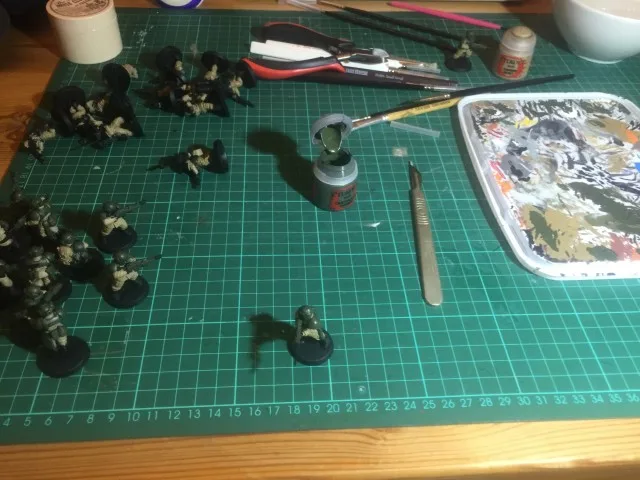
I've been painting miniatures for eleven years. I started with a starter set of Reaper Bones and a $12 brush pack from a craft store. Today I own more paint pots than I'd like to admit and a dedicated painting desk with a daylight lamp and a magnifier on a swing arm.
The most common question I get from people eyeing the hobby is some version of: "How much do I actually need to spend to start painting minis?" The answer depends entirely on whether you want to get paint on plastic, build a solid working setup, or chase competition-level display painting.
All three are valid paths, and I've priced each one out from real purchase totals, not manufacturer wish lists. If you want a quick number for your specific situation, run it through the Craft Build Cost Estimator and come back here for the breakdown.
The full starter breakdown
Here's every category of expense for someone entering the hobby from zero. These prices reflect current retail from hobby shops and online retailers as of 2026.
| Category | Price range | Notes |
|---|---|---|
| Paint set (starter, 8-12 pots) | $25-40 | Citadel, Vallejo, Army Painter, or Reaper |
| Individual paint pots (supplemental) | $3-5 each | You'll need 3-6 beyond any starter set |
| Brush set (synthetic, 3-5 brushes) | $8-15 | Round sizes 0, 1, 2 plus a drybrush |
| Primer (spray can or brush-on) | $8-18 | Spray is cheaper, brush-on offers more control |
| Miniatures (starter box or individual) | $15-60 | Ranges from Reaper Bones singles to GW kits |
| Hobby knife/clippers | $8-15 | For cleaning mold lines and removing from sprues |
| Palette (wet palette or disposable) | $5-20 | Wet palette keeps paint workable for hours |
| Painting handle/holder | $5-12 | Saves your hands and improves control |
| Total starter investment | $77-195 |
That range covers everything you need to sit down and paint your first miniature to a respectable tabletop standard. The low end assumes budget brands, a basic brush set, and a few Reaper Bones minis at $3-4 each. The high end assumes Citadel or Vallejo paints, a proper wet palette, and a Games Workshop starter box.
Cost by commitment level
Not everyone entering the hobby has the same goals. Here's how costs scale across three tiers I've seen play out repeatedly in my local painting group.
| Tier | What you get | Cost range |
|---|---|---|
| Starter kit | 8-12 paints, basic brushes, primer, a few minis, simple tools | $50-100 |
| Serious hobby | 30-50 paints, quality brushes, wet palette, lamp, variety of minis, basing supplies | $150-300 |
| Display-level | 60+ paints, sable brushes, airbrush setup, magnifier lamp, premium minis, varnish system | $300-600+ |
The jump from starter to serious isn't one purchase. It's six months of gradually adding paints you need for specific projects, replacing your first brushes when they splay, buying a proper lamp after squinting at details in bad light, and discovering that basing materials exist and suddenly caring deeply about what your miniature stands on.
The jump from serious to display-level is almost entirely about precision tools. An airbrush setup ($80-150 for a compressor and brush) for smooth basecoats and zenithal priming. Kolinsky sable brushes ($12-20 each) for fine detail work. A magnifier lamp ($30-60) so you can see what you're actually doing at 28mm scale. These are tools that make techniques possible, not just easier.
Paint: the core expense
Paint is the most confusing category for newcomers because the options are overwhelming and the pricing model is counterintuitive.
| Paint brand | Starter set price | Individual pot price | Dropper bottle? |
|---|---|---|---|
| Citadel (Games Workshop) | $30-40 (6-12 pots) | $5-8 | No (flip-top pots) |
| Vallejo Model Color | $35-50 (16 bottles) | $3-4 | ✓ Yes |
| Army Painter | $25-35 (10-12 pots) | $3-4 | Yes (Warpaints Fanatic) |
| Reaper MSP | $30-40 (9 triads) | $3-4 | ✓ Yes |
| ProAcryl | $35-45 (12 bottles) | $4-5 | ✓ Yes |
| Scale 75 | $35-50 (8 bottles) | $4-5 | ✓ Yes |
I started with Citadel because I was painting Warhammer and the paint-by-name system ("thin your Leadbelcher, wash with Nuln Oil, drybrush Necron Compound") made tutorials easy to follow. The downside: Citadel pots dry out faster than dropper bottles, and at $5-8 per pot, replacing dried-out paints stings.
I switched to Vallejo for most colors after year two. The dropper bottles last longer, the price per ml is lower, and the color range is enormous. I still use Citadel washes (Agrax Earthshade and Nuln Oil are genuinely best-in-class) and their technical paints for special effects.
My recommendation for beginners: buy one starter set in whatever brand matches the tutorials you plan to follow. Then fill gaps with individual pots as projects demand. Do not buy a mega set of 100+ paints on day one. You'll use 20 of them regularly and the rest will dry out before you touch them. I watched a friend buy a $180 Vallejo mega set, use nine colors in the first year, and throw away thirty dried-out bottles.
Brushes: where cheap costs more
Brushes are the tool you'll replace most often, and the biggest source of frustration for new painters.
| Brush type | Price | Lifespan | Best for |
|---|---|---|---|
| Craft store synthetic (set of 5-10) | $5-10 | 2-4 weeks of regular use | Drybrushing, base coating, learning |
| Mid-range synthetic (Artis Opus S, Army Painter) | $5-8 each | 2-4 months | General painting, daily use |
| Kolinsky sable (Winsor & Newton Series 7, Raphael 8404) | $12-20 each | 6-12 months with care | Fine detail, eyes, freehand, display work |
The first brushes you buy will die fast. New painters press too hard, leave paint in the ferrule, and forget to reshape the tip after rinsing. That's normal. It's why I tell people to start with a $10 craft store set and learn brush discipline before investing in sable.
Once your technique is decent, a single good Kolinsky sable brush in size 1 transforms your painting. The point holds, the belly carries paint, and you can go from broad strokes to fine lines without switching brushes. My Raphael 8404 size 1 is the single best painting purchase I've ever made.
Brush soap ($5-8 for a pot that lasts a year) extends brush life dramatically. I didn't use brush soap for my first two years and I killed brushes monthly. Now I clean and reshape after every session and my sables last six months to a year.
Miniatures: the thing you're actually painting
The models themselves range from nearly free to eye-wateringly expensive.
| Source | Cost per mini | Material | Detail level |
|---|---|---|---|
| Reaper Bones (individual) | $3-5 | PVC plastic | Good |
| Reaper Bones starter box (30+ minis) | $1-2/mini | PVC plastic | Good |
| Games Workshop (single character) | $30-40 | Polystyrene | Excellent |
| Games Workshop (squad box, 5-10 minis) | $5-8/mini | Polystyrene | Excellent |
| 3D printed (if you own a printer) | $0.25-1/mini | Resin | Excellent |
| 3D printed (purchased from seller) | $5-15 | Resin | Excellent |
| Premium display minis (Scale 75, Massive Voodoo) | $20-60 | Resin | Museum-grade |
For learning, Reaper Bones are unbeatable. They're cheap, they come in every fantasy archetype, and the detail is good enough to practice every fundamental technique. I still use Reaper Bones for testing color schemes before committing to expensive kits.
Games Workshop plastic kits have the best detail at scale but the price adds up fast. A single Space Marine character model costs $35-40. An army of 50+ models can run $400-800 in plastic alone before paint touches it. This is the hidden cost of Warhammer: the painting hobby is cheap, the collecting hobby is not.
3D printing has dramatically changed the economics. A resin printer ($150-250) and a bottle of resin ($25-35) produce dozens of miniatures at $0.25-1 each. The upfront cost is real, but the per-mini cost drops to almost nothing after the initial investment. I bought an Elegoo Mars three years ago and it's paid for itself many times over.
Primer: the step beginners skip and regret
Primer is the foundation coat that makes paint adhere to the miniature surface. Without it, paint beads up, chips off, and goes on unevenly.
| Primer type | Cost | Pros | Cons |
|---|---|---|---|
| Spray primer (Citadel, Army Painter, Rust-Oleum) | $8-15/can | Fast, smooth, even coat | Weather-dependent, overspray, ventilation needed |
| Brush-on primer (Vallejo Surface Primer) | $8-12/bottle | Weather-independent, precise | Slower, can obscure detail if too thick |
| Airbrush primer (Badger Stynylrez, Vallejo) | $10-18/bottle | Best finish, most control | Requires airbrush ($80-150 setup) |
One can of spray primer covers 30-50 miniatures depending on size. At $10-15 per can, primer costs are negligible per model. But you need to own it before you start painting, and beginners often forget to buy it.
I spray prime in black, grey, or white depending on the color scheme. Dark schemes get black primer. Bright or pastel schemes get white. Grey is the safe default for everything else. Zenithal priming (black base coat, white sprayed from above) creates natural shadows and highlights that guide your painting. It's a free technique that makes average paint jobs look significantly better.
The hidden costs nobody mentions
Every miniature painter discovers these expenses the hard way. Here they are upfront so you can budget for them.
Brush replacement: $20-40/year. Even with good brush care, you'll replace brushes regularly. Synthetic brushes for drybrushing and basecoating die every few months. Detail brushes lose their point. Budget for replacing 4-6 brushes per year once you're painting regularly.
Wet palette refills: $5-10 every 3-4 months. A wet palette uses a sponge and special parchment paper to keep paint workable for days instead of minutes. The paper needs replacing every few weeks of active use. Refill packs run $5-10 and last 3-4 months. You can use parchment baking paper as a cheaper substitute, but it doesn't work quite as well.
Hobby knife blades: $5-8/pack, 1-2 packs per year. Mold lines need cleaning, sprue gates need trimming, and conversions need cutting. Blades dull. A pack of replacement X-Acto blades is cheap and essential.
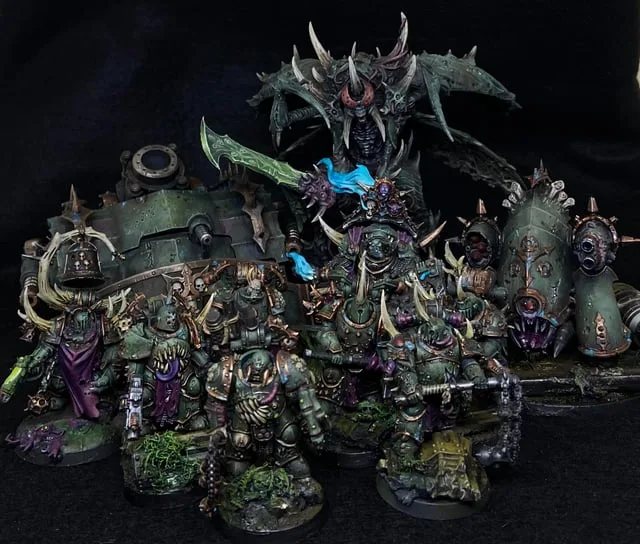
Varnish: $8-15 per can or bottle. Painted miniatures that get handled (game pieces, not display pieces) need a protective varnish coat. Matte varnish for a natural look, gloss for gems and metals, satin for a middle ground. You'll need at least one type, and most painters end up owning all three. I once lost an entire weekend's paint job on a squad of Plague Marines because I handled them during a game without varnishing first. The acrylic rubbed right off the high points.
Basing materials: $15-30. Once you start basing (adding texture and scenery to the miniature's base), you'll want texture paste, static grass, tufts, small rocks, and PVA glue. None of these are expensive individually but the collection grows fast. Basing transforms a painted mini from "finished" to "wow," and once you start, you can't stop.
A good light source: $25-60. Painting under a desk lamp with a warm bulb is fighting yourself. A daylight LED lamp ($25-40) or a magnifier lamp combo ($40-60) makes detail visible and colors accurate. I painted for eight months under warm kitchen lighting before buying a daylight lamp, and the difference in my work was immediate. Colors I thought I'd blended smoothly looked patchy and uneven under proper light because I'd been painting effectively blind.
These hidden costs add $80-170 over your first year. They don't hit all at once, which is why they sneak past budgets.
Where to save money without hurting your results
Start with a learn-to-paint kit. Reaper's Learn to Paint kits ($30-35) include minis, paints, and brushes with a step-by-step guide. It's the most efficient dollar-per-lesson entry point in the hobby. I've given them as gifts to six people and five of them are still painting.
Use a wet palette from day one. A $15-20 wet palette (Redgrass or Army Painter) saves paint by keeping it workable for days instead of drying out in minutes on a dry palette. Over a year, you'll waste 30-40% less paint. You can make a DIY wet palette with a plastic container, a sponge, and parchment paper for $3, but the commercial ones are better and worth the upgrade.
Don't buy washes, make them. Citadel Shade paints are $8 per pot. You can make serviceable washes by thinning any acrylic paint with water and a drop of dish soap or flow improver. I still buy Nuln Oil and Agrax because they're genuinely excellent, but for other wash colors, DIY works fine.
Buy minis you'll actually paint. A $60 box of unpainted plastic sitting on your shelf for six months is more expensive than a $4 Reaper Bones you paint this weekend. Pile of shame management is a real budget issue in this hobby. I have approximately $300 in unpainted minis in a box under my desk and I tell every beginner not to repeat my mistake.
Share specialty paints with a painting group. Metallics, fluorescents, and technical paints see occasional use. If you paint with friends, share a communal set of specialty paints and split the cost. My local painting group has a shared pot of Citadel Tesseract Glow that's lasted two years across eight painters.
The ongoing cost of the hobby
Once you're past the initial investment, miniature painting has a surprisingly low ongoing cost compared to many hobbies.
| Ongoing expense | Annual cost | Frequency |
|---|---|---|
| Paint restocking | $30-60 | Replacing empties, adding new colors |
| Brush replacement | $20-40 | 4-6 brushes per year |
| Miniatures | $50-300+ | Entirely discretionary |
| Primer (spray cans) | $15-30 | 2-3 cans per year |
| Wet palette supplies | $10-15 | Parchment refills |
| Basing materials | $10-25 | Tufts, texture paste, static grass |
| Varnish | $10-20 | 1-2 cans/bottles per year |
| Total annual | $145-490+ |
Miniatures themselves are the wildcard. You can paint $30 worth of Reaper Bones per year and spend under $200 total. Or you can feed a Warhammer army habit and spend $500+ on plastic alone. The painting side of the hobby is cheap. The collecting side is where budgets go to die.
Run your planned purchases through the Craft Build Cost Estimator before checkout. Seeing the running total before you click "buy" is the best budget discipline I've found.
Frequently
asked questions.
Sources & references
We link to the brands, retailers, and research we reference so you can verify and explore.