Planning
How to Plan a Cosplay Build Backwards from Your Convention Date
A practical scheduling method for turning one convention deadline into weekly milestones, material orders, and buffer days that actually prevent con crunch.
Why backwards planning works
Most cosplayers plan forward: pick a character, start building, and hope it comes together before the convention. This almost always leads to con crunch — that frantic final week where you're gluing pauldrons at 2 AM, skipping sleep, and making decisions you'll regret at the con.
Backwards planning flips this. You start from the date you need the costume packed, then work backwards through every phase. The result is a timeline where each milestone has a real deadline, not a vague "I should probably start painting soon."
I started doing this after my third convention build ran long and I wore an unfinished cuirass to Anime Expo. The chest plate had no weathering, the strapping was safety-pinned, and the paint was still tacky in the hotel room. Never again.
Set the real finish date
Your finish date is not the first day of the convention. It's the day you need the costume packed and ready to travel.
Count backwards from the event:
- Convention day 1: you're wearing it
- Day before: hotel check-in, badge pickup, wig touch-ups, last-minute repairs
- Two days before: travel day (if driving or flying)
- Three days before: this is your real finish date
If your convention is June 15, your real deadline is June 12. Everything needs to be done, tested, and packed by then.
Map the work backwards
From your finish date, assign each major phase a completion date. Here's a realistic breakdown for an 8-week armor build:
- Week 8: packing, repair kit, travel prep
- Week 7: full wear test, fix fit issues, comfort adjustments
- Week 6: weathering, battle damage, final paint touch-ups
- Week 5: prime, base coat, detail paint
- Week 4: seal all foam (Plasti Dip or Flexbond, 2-3 coats with dry time)
- Week 3: detail work: raised trim, rivets, panel lines, foam clay accents
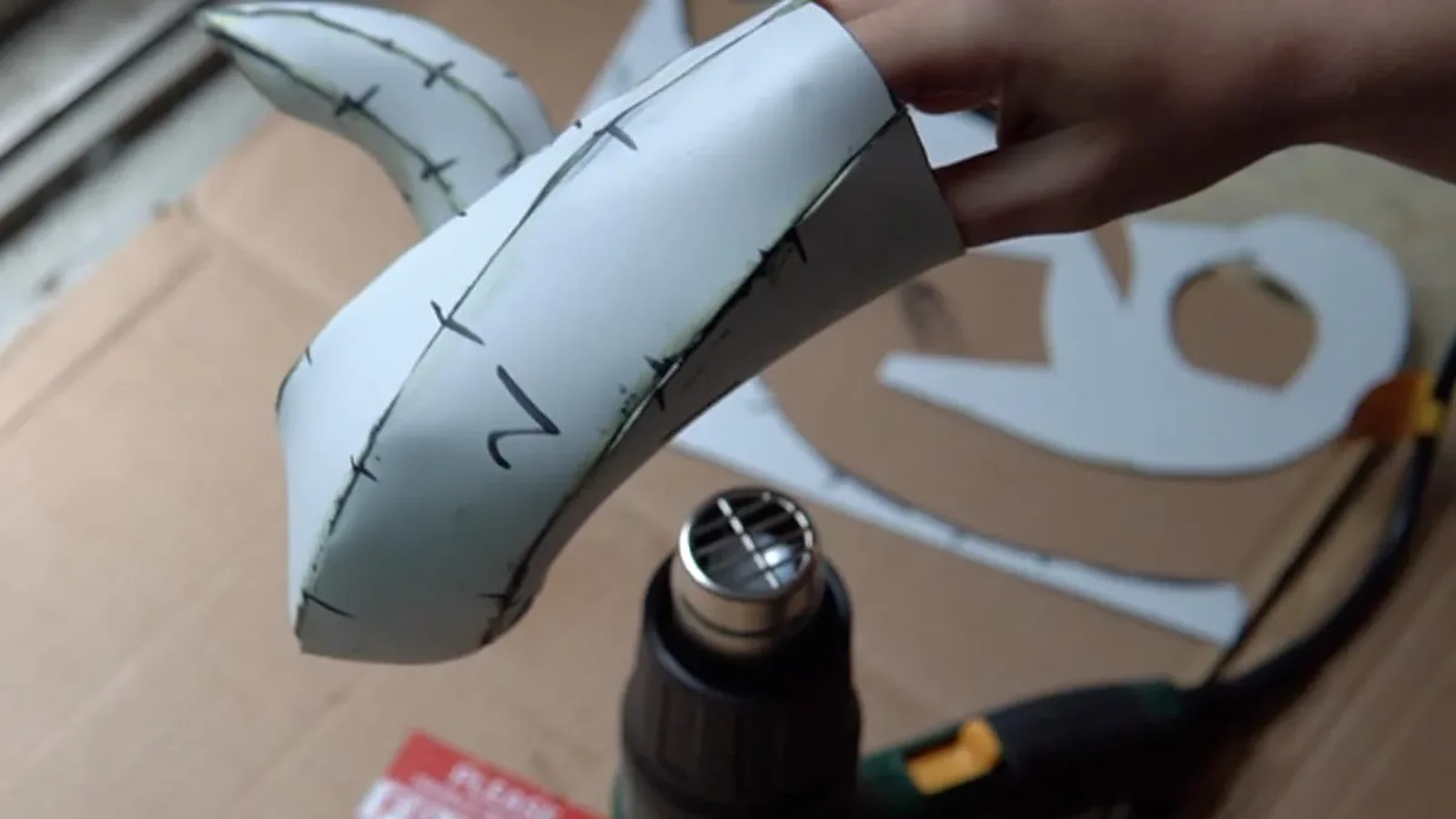
- Week 2: heat-form, glue, and assemble all pieces
- Week 1: cut foam, test patterns on cardboard, order missing materials
The key insight: each phase has dependencies. You can't paint before sealing, can't seal before assembling, can't assemble before cutting. Working backwards forces you to respect these dependencies instead of hoping the timeline "works out."
Protect the final week
Keep the final week boring on purpose. No new construction. No major decisions. Just:
- Snaps and closures that need reinforcement
- Hems that are loose
- Paint touch-ups from handling
- A full wear test (2+ hours in the costume with shoes, wig, and props)
- Packing with proper padding for transport
- Building a repair kit: extra contact cement, matching paint, spare elastic, needle and thread, safety pins
I carry a small toiletry bag as my repair kit to every convention. It's saved me at least four times — a shoulder strap that snapped at Katsucon, a paint chip at Dragon Con, a belt buckle that broke during photos.
Build in material lead time
This is where most backwards plans fail. You map out construction milestones but forget that materials have shipping times.
Order materials at least 2 weeks before you need them. EVA foam from TNT Cosplay Supply or SKS Props ships in 3-5 business days. Worbla can take longer. Contact cement (Barge is the standard) is available at most hardware stores, but specialty primers like Flexbond may need to ship.
Pro tip: order 15-20% more foam than you think you need. Test cuts, mistakes, and "I should redo this shoulder" moments eat material fast. A $12 extra sheet of 6mm EVA is cheaper than a panic Amazon order with overnight shipping.
Not sure what materials you'll need or what they'll cost? The Craft Build Cost Estimator gives you a category-by-category breakdown for armor builds, sewn costumes, and mixed builds.
Cut scope before it hurts
If the plan already feels tight on paper, it will be worse in practice. Everything takes longer than you estimate — especially painting, which needs dry time between coats that you can't rush.
When scope needs to shrink, cut from the bottom up:
- First cut: electronics. LEDs look amazing but add 4-8 hours of wiring, drilling, and troubleshooting. Save them for the next build.
- Second cut: weathering complexity. Basic dry-brushing takes 30 minutes. Full battle damage with chipping, rust, and dirt layers takes a full day per piece.
- Third cut: accessories. The sword can be a simpler shape. The belt pouch can wait. Focus on the pieces people see in photos.
A calmer partial build usually photographs better than a rushed complete costume. A clean bracer with smooth paint beats a full armor set with visible glue seams and fingerprints in the primer.
Use milestones, not a single deadline
Don't track "costume done by June 12." Track individual milestones:
- All foam pieces cut by April 20
- Assembled and glued by May 1
- Sealed and primed by May 10
- Painted by May 20
- Strapping and wear test by June 1
- Packed by June 10
When a milestone slips, you see it immediately and can adjust — cut scope, add weekend build sessions, or ask a friend for help with painting. When you only track the final deadline, you don't notice you're behind until it's too late.
Frequently
asked questions.
Sources & references
We link to the brands, retailers, and research we reference so you can verify and explore.