Budget
How Much Does Scale Modeling Cost? A Real Build Budget
Scale modeling costs $30-60 to start with hand brushes, $150-350 with an airbrush, and $400-800+ for competition-level work. Full cost breakdown by scale, tools, and skill tier.
Scale modeling costs $30-60 to start, but the rabbit hole goes deep
I've been building scale models for fourteen years. Started with a 1/72 Spitfire at my kitchen table with three bottles of Testors enamel and a brush that shed bristles into the cockpit. Last month I finished a 1/350 IJN Yamato with full photo-etch railings, turned brass barrels, and a custom wood deck. The Spitfire cost me $22 total. The Yamato ran past $600.
Both were worth every cent. But if someone had told me at the start what this hobby actually costs at each level, I would have planned my purchases very differently and wasted a lot less money on tools I didn't need yet.
Here's the honest breakdown across every cost category, from your first kit to competition-level builds. If you want a quick number before reading the details, run your build through the Craft Build Cost Estimator and come back for the context.
Kit prices by scale
The kit itself is just the starting point, but it's where most people form their expectations. Kit prices vary wildly by scale, subject, and manufacturer. Here's what you'll actually pay at retail in 2026.
| Scale | Subject | Price range | Notes |
|---|---|---|---|
| 1/72 | Aircraft | $10-30 | Best entry point. Airfix, Tamiya, Eduard all compete here |
| 1/48 | Aircraft | $25-60 | The sweet spot for detail vs. size. Tamiya kits at the top end |
| 1/35 | Armor/vehicles | $30-80 | Tamiya and Meng dominate. Complex kits with 300+ parts |
| 1/32 | Aircraft | $60-150 | Large, detailed. Revell and Tamiya. Shelf space becomes real |
| 1/350 | Ships | $50-150+ | Larger warships push past $200. Pontos detail sets add $80-120 |
| 1/700 | Ships (waterline) | $15-45 | Smaller but still complex. Good for fleets and dioramas |
| 1/24 | Cars | $25-60 | Chrome-plated parts. Tamiya and Aoshima lead |
Tamiya consistently costs 20-40% more than competitors at the same scale, and it's usually worth it. The fit is better, the instructions are clearer, and the plastic quality means less cleanup. I've built cheap kits where I spent more time fixing mold lines than actually building, and the frustration cost is real even if it doesn't show up on a receipt.
Bandai Gundam kits occupy their own universe: $15-40 for High Grade, $40-80 for Master Grade, $80-200+ for Perfect Grade. The snap-fit engineering is spectacular, but the painting and finishing costs below still apply if you want them to look like anything beyond toy-shelf plastic.
Cost tiers: from kitchen table to competition
I'm going to break this into three tiers because the jump between them is significant and knowing where you are saves money.
Tier 1: Hand-brush starter ($30-60)
This is one kit, a few paints, and a brush. It's enough to build something you're proud of.
| Item | Cost |
|---|---|
| Kit (1/72 aircraft or 1/35 armor) | $10-30 |
| Acrylic paint set (6-8 colors) | $8-15 |
| Brush set (3 sizes) | $5-8 |
| Plastic cement (Tamiya Extra Thin) | $4-6 |
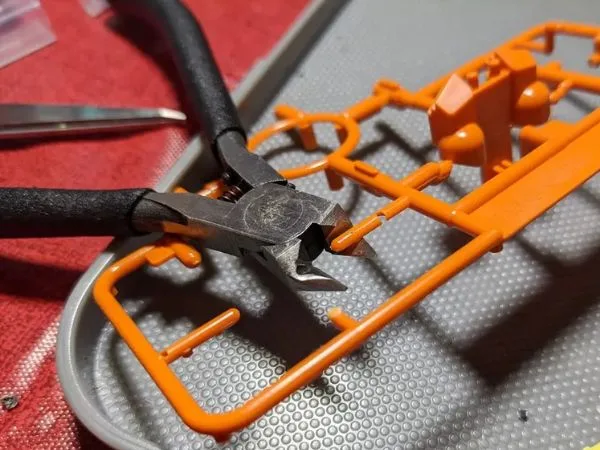
| Side cutters (sprue nippers) | $5-10 |
| Hobby knife | $3-5 |
| Total | $35-74 |
Most people land in the $30-60 range because they pick up a mid-priced kit and a small paint set. This is genuinely enough to produce a good-looking model. Hand-brushing gets a bad reputation from people who haven't learned to thin their paints properly. Two thin coats of properly thinned Vallejo beat one thick coat of anything.
I built my first dozen models this way and some of them still hold up on my shelf. The limitation isn't quality, it's time. Hand-brushing a 1/35 tank takes three to four times longer than airbrushing, and large flat surfaces show brush strokes no matter how careful you are.
Tier 2: Intermediate with airbrush ($150-350)
This is where the hobby clicks. An airbrush transforms what's possible with paint, and the supporting tools start to add up.
| Item | Cost |
|---|---|
| Kit (1/48 aircraft or 1/35 armor) | $25-60 |
| Airbrush (Iwata Neo or Badger Patriot 105) | $50-80 |
| Compressor (with tank and regulator) | $80-120 |
| Airbrush cleaner | $6-10 |
| Acrylic paints (12-15 bottles) | $30-50 |
| Primer (spray can or airbrush-ready) | $8-12 |
| Panel line wash (Tamiya or AK) | $6-10 |
| Weathering pigments (basic set) | $10-18 |
| Decal setting solutions (Micro Set + Sol) | $8-12 |
| Masking tape (various widths) | $8-14 |
| Sanding sticks/files | $5-10 |
| Cutting mat | $8-12 |
| Total | $244-408 |
The realistic range is $150-350 because most builders already own some basics from Tier 1 and buy the airbrush setup as an upgrade rather than all at once. The compressor is the single biggest purchase and it's the one you should not cheap out on. A $40 compressor without a moisture trap and tank will spit water into your paint at the worst possible moment. I ruined a completed canopy on a P-51 that way and the memory still stings.
At this tier you're producing models that look genuinely impressive. Smooth base coats, subtle color modulation, clean panel lines, proper decal application. This is the level where people start asking "how did you do that?"
Tier 3: Competition-level ($400-800+)
This is the deep end. Photo-etch details, aftermarket parts, resin upgrades, specialized weathering products, and the time investment to use them all properly.
| Item | Cost |
|---|---|
| Kit (premium brand, larger scale) | $50-150 |
| Photo-etch detail set | $15-40 |
| Resin aftermarket parts (cockpit, engine, wheels) | $20-60 |
| Turned metal barrels/antennas | $8-20 |
| Rigging material (EZ Line, stretched sprue) | $5-10 |
| Premium airbrush (Harder & Steenbeck, Iwata HP-CS) | $120-250 |
| Full paint range (30-40 bottles, multiple brands) | $80-140 |
| Weathering products (oils, enamels, pigments, streaking) | $30-60 |
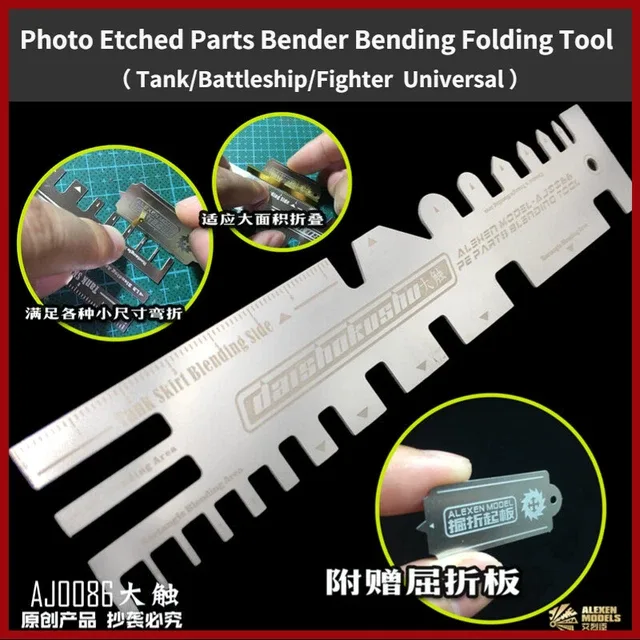
| PE bending tool and dedicated scissors | $20-35 |
| Magnifier/optivisor | $20-40 |
| Display case | $15-40 |
| Reference books/plans | $15-40 |
| Total | $398-885 |
A single competition build can run $150-300 in kit plus aftermarket before you touch paint. I spent $210 on the Yamato kit, PE set, and wood deck alone. The paint, weathering supplies, and rigging added another $80. Display case was $35.
At this tier you're not just building a model. You're building a representation of a specific vehicle at a specific time, and accuracy expectations (your own, mostly) drive costs upward. That $25 photo-etch cockpit detail set exists because the kit cockpit has raised panel lines where the real aircraft had recessed ones, and at competition, someone will notice.
The hidden costs that blow budgets
Every modeler I know has been surprised by the same set of expenses. They're small individually but they compound.
Putty and filler: $5-15. No kit fits perfectly. Tamiya comes close, but you'll still need putty for wing root seams, hull joins, and anywhere two large surfaces meet. Tamiya Basic Putty, Mr. Surfacer 500, and various gap-filling super glues are all consumables you'll replace regularly.
Sandpaper and sanding supplies: $10-20. You need multiple grits (400, 600, 800, 1000, 1500, 2000) for different stages. Sanding sticks, sponges, and flexible files for curved surfaces. These wear out and need replacing every few builds.
Masking materials: $10-20. Beyond basic tape, you'll want Tamiya curve tape for canopy frames, liquid mask for organic camouflage edges, and pre-cut canopy masks (sold per kit, $5-8 each). Pre-cut masks save hours but add up fast if you build a lot of aircraft.
Replacement airbrush needles and nozzles: $10-25. Needles bend. Nozzles clog and crack during cleaning. A spare needle/nozzle set for your airbrush is insurance you'll eventually need. I keep two spare needles for my Iwata at all times because bending one during a session with no backup means the session is over.
Reference material: $15-50. Squadron/Signal publications, Osprey books, walk-around photo sets. You can find a lot of reference online, but for competition work or historically accurate builds, a good reference book for your specific subject makes a real difference. I've got a shelf of these that probably totals $400 at this point.
Decal solutions and spare decals: $15-30. Micro Set and Micro Sol are essentials ($4-5 each), but old kit decals yellow and crack. Aftermarket decal sheets from Cartograf or Techmod run $8-15 each and are often necessary for older kits or alternate markings.
Ventilation: $30-100. If you're airbrushing indoors, you need a spray booth or at minimum a good exhaust fan. Portable spray booths run $60-100. Even a box fan with a furnace filter ($30) is better than nothing. Lacquer thinners and solvent-based paints are no joke in a closed room. I started airbrushing near an open window and upgraded to a proper booth after one headache too many.
These hidden costs total $95-260 over your first year. On a $200 airbrush setup, that's a 50-130% overshoot from what you initially budgeted.
Where to save money without hurting quality
Not everything needs to be top-shelf. Here's where experienced modelers cut costs.
Buy Vallejo or AK paints instead of Tamiya acrylics for hand-brushing. Tamiya acrylics are formulated for airbrush use. They work hand-brushed but they're not optimized for it. Vallejo Model Color is specifically designed for brush application, covers better in fewer coats, and costs about the same per bottle. Save the Tamiya for the airbrush.
Start with a dual-action gravity-feed airbrush in the $50-80 range. The Iwata Neo CN and Badger Patriot 105 both produce excellent results. A $200+ Harder & Steenbeck is a beautiful tool but the improvement over a good $70 airbrush is marginal until your technique outgrows it. I used a Patriot 105 for six years before upgrading.
Skip aftermarket for your first builds. Photo-etch and resin upgrades make sense when your base skills are solid enough to do them justice. On your first three to five models, the out-of-box kit is plenty. Adding a $40 PE set to a build where you're still learning to handle seam lines is throwing money at the wrong problem.
Buy paint in sets, not individual bottles. Most paint brands sell themed sets (WWII German, US Navy, RAF) at 15-25% less than buying the same bottles individually. Plan your builds around available sets when possible.
Use cheap kits for practice. Airfix 1/72 kits at $10-15 are perfect for trying new techniques. Practice your pre-shading, oil dot filtering, or chipping on a $12 kit instead of risking a $60 one. I still grab an Airfix starter kit whenever I want to experiment with a technique I haven't tried before.
Cost comparison across modeling types
| Type | Entry cost | Mid-level cost | Competition cost |
|---|---|---|---|
| Aircraft (1/72-1/48) | $30-50 | $150-250 | $300-500 |
| Armor (1/35) | $40-60 | $180-300 | $400-700 |
| Ships (1/350-1/700) | $40-70 | $200-350 | $500-800+ |
| Cars (1/24) | $35-55 | $150-250 | $300-500 |
| Gundam (HG-MG) | $20-50 | $100-200 | $250-500 |
| Figures (1/35) | $15-25 | $80-150 | $200-400 |
Ships and large-scale armor are the most expensive verticals because the kits cost more, they consume more paint and weathering supplies, and aftermarket detail sets are pricier. Aircraft at 1/72 remains the most accessible entry point in the hobby.
Plan before you buy
The biggest money-waster in scale modeling isn't buying expensive things. It's buying the wrong things at the wrong time. A $250 airbrush setup before you've built three kits with a brush. A $40 photo-etch set before you own a PE bending tool. A shelf full of paints in colors you'll never use because they came in a set themed around a subject you don't build.
Plug your next build into the Craft Build Cost Estimator to see the full picture: kit, tools, paint, consumables, and the hidden costs listed above. It's better to know the real number before checkout than to discover it after three separate orders.
Then track what you spend. The modelers I know who stay in the hobby longest are the ones who budget deliberately, not the ones who spend the most. One well-built $40 kit beats three half-finished $80 kits every time.
Frequently
asked questions.
Sources & references
We link to the brands, retailers, and research we reference so you can verify and explore.