Sewing
Sewing Fitting Notes You Won't Lose
How to record fitting adjustments so you never repeat the same alteration twice. A system for measurements, muslin notes, and pattern modifications.
I've taken in the same waist seam on the same pattern three times. Each time I thought "I'll remember this." I did not remember this.
Three muslins. Three identical adjustments. Three sessions of standing in front of a mirror thinking "wait, this looks exactly like the last time." Because it was exactly like the last time. I just had no record of what I'd done.
Why Fitting Notes Matter More Than Any Other Sewing Skill
You can sew perfect French seams. You can do immaculate topstitching. You can match plaids and grade seam allowances. None of it matters if the fit is wrong. Fit is 80% of how a garment looks on a body.
Bad fit announces itself immediately. People notice that a jacket pulls across the back before they notice anything else. Fit is also the thing that separates handmade clothes that look handmade (in a bad way) from handmade clothes that look intentional.
Fitting notes are how you accumulate knowledge about your body instead of starting from zero every time you open a new pattern.
The Measurement Problem Nobody Talks About
Pattern sizing was designed around a theoretical average body. That body doesn't exist. A size 12 bust with a size 16 hip is completely normal. Needing to grade between two or three sizes on every single pattern isn't a problem with your body; it's a problem with how patterns are drafted.
Most sewists need 3-5 standard adjustments on nearly everything they sew. The small bust adjustment. Swayback correction. A forward shoulder adjustment. Broad back. These repeat across patterns and across years. If you don't write them down, you'll spend 20 minutes diagnosing the same fit problem on your fifth project that you already diagnosed on your second.
You can save hours by building a personal fitting profile that you bring to every new pattern. This is exactly what ready-to-wear brands do with their fit models. You're your own fit model. Act like it.
What to Record Per Project
Here's the specific list. Not everything, just this:
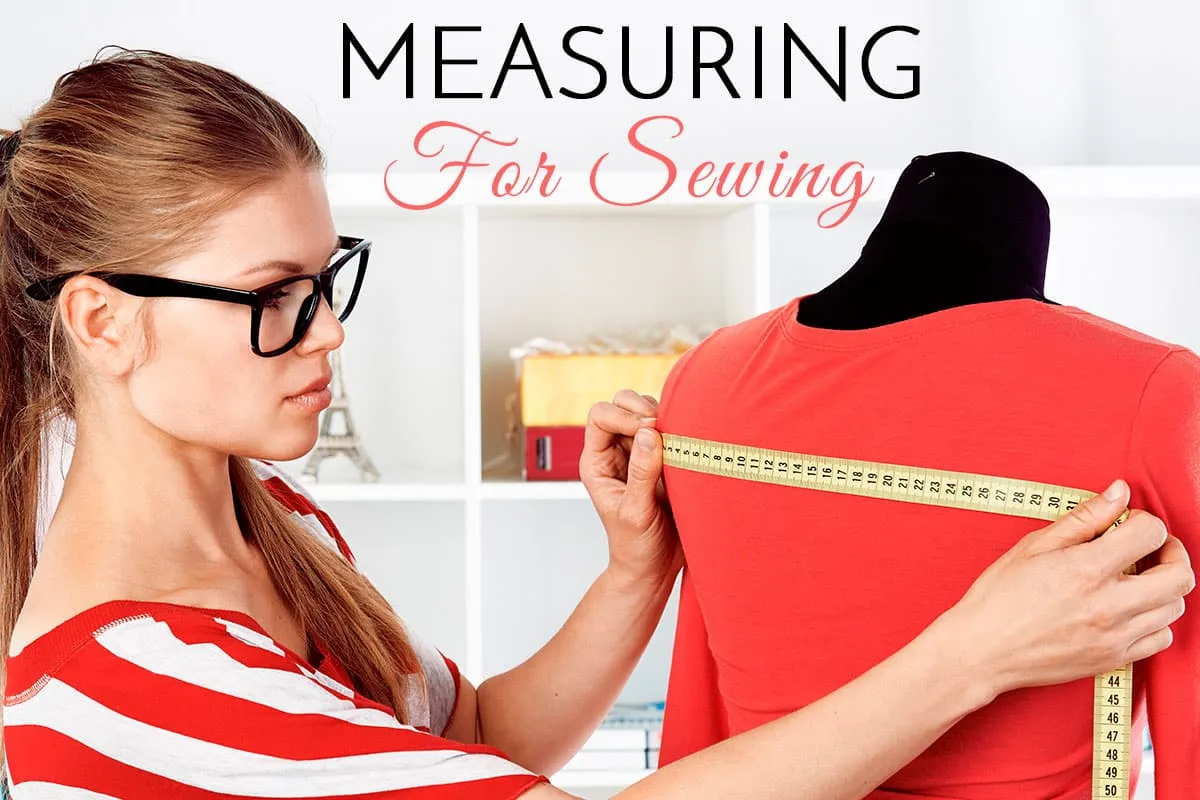
1. Your current measurements (with a date). Full bust, high bust, waist, hip, shoulder width, arm length, and back length. Date them because bodies change. Measurements from two years ago may not fit the body you have now.
2. Pattern information. Brand, pattern number, size you cut, and which size you cut if you graded ("cut 14 bust, graded to 16 at hip").
3. The adjustments you made before cutting. Every alteration to the pattern tissue. If you added a half-inch to the side seams, write it down. If you did a full bust adjustment, note the amount.
4. Muslin results. What fit, what didn't, what surprised you. Photos of the muslin on your actual body are worth 1000 words of notes.
5. What to do next time. This is the most important field and the most neglected one. End every project with a note that starts "Next time on this pattern..." Future you will be grateful.
Where to Keep Fitting Notes (Honestly Compared)
Inside the pattern envelope is where most people start. It works until you lose the envelope, switch to PDF patterns, or need to find notes for a pattern that's at the bottom of a stack. It also doesn't survive if you ever have a pattern envelope disintegrate from handling.
A dedicated notebook works reliably if you sew occasionally and have fewer than 20 active patterns. It breaks down when you're juggling multiple projects because you're constantly flipping back through pages looking for the right entry.
Photos on your phone are great for visual reference. You can pull up "what did the muslin look like" instantly. They're terrible for searching. "What did I adjust on that Vogue blazer pattern?" is not a question your camera roll can answer.
Costumary project notes keep fitting adjustments linked to the specific project, which is actually the right data model. When you're working on a blouse and you write a fitting note, it stays attached to that blouse project, with photos, with the materials list, with the cost breakdown. The downside: you need to create a project per garment, which adds setup time upfront. If you're already using it for project planning and budgeting, the notes field handles this well.
A pattern binder is the lowest-tech option with the highest reliability. One page per pattern, a consistent template you fill in every time, kept in a three-ring binder next to your sewing machine. Low-tech, no data loss risk, instantly browseable. Many experienced sewists with 200+ patterns still use this.
The Muslin Mockup System
I know you know you should muslin. I know you're still not always doing it. Here's the math that might change your mind.
A muslin for a bodice costs about $3-5 in cheap cotton and 2-3 hours of time. Cutting into $22/yard silk without a muslin is gambling $44-66 in fabric on a fit you haven't confirmed. That's not a risk calculation that makes sense.
The threshold I use: muslin anything where the fashion fabric costs more than $15/yard, anything with a complex fitting challenge (full bust adjustment, significant grading between sizes), and anything being made for a specific event with a hard deadline. Getting to the event with a garment that doesn't fit is worse than any fitting session.
Take photos of the muslin on your body. Front, back, side. Make notes directly on the muslin tissue with a marker. Then transfer those notes to your fitting record before you put the muslin away. This is the step people skip and then regret.
For cosplay and costume builds, this matters even more because you're often fitting armor, structured bodices, or garments with no commercial pattern. Read more about that in the cosplay sewing beginner guide.
Body Measurement Updates
Measure yourself every six months. Write the date next to every measurement. Bodies change in ways that are slow enough to miss in the mirror but significant enough to change a full pattern size over two years.
The measurements that matter most for pattern fitting: high bust (above the fullest point), full bust, waist at the narrowest point, hip at the fullest point, shoulder width (back of shoulder to back of shoulder), and back waist length (base of neck to waist).
If you're fitting pants, add: full hip, low hip, inseam, rise, and thigh circumference. Pants are their own challenge and deserve their own fitting record.
Pattern Modification Shorthand
Develop a notation system you use consistently. Mine looks like this:
"W-1" means take in one inch at waist. "H+0.5" means let out half an inch at hip. "FBA 1.5" means full bust adjustment, 1.5 inches. "SBA 1" means small bust adjustment, one inch. "FS" means forward shoulder adjustment was needed.
Write this shorthand on the pattern pieces in pencil. Not on a separate piece of paper that can get lost. On the tissue itself, or on a sticky note attached to the tissue. When you pull that pattern out of the envelope in two years, the notes travel with it.
You can also find good systems for tracking this in project planning tools. The sewing project planner tools round-up covers what's available for more structured note-keeping across multiple patterns.
Fitting Notes for Fabric-Specific Adjustments
Some adjustments are pattern-specific. Others are fabric-specific. Know the difference.
If you always need the same waist adjustment on every pattern you make, that's a body adjustment you should build into your process from the start. If you only needed it on one pattern, it might be a drafting quirk of that pattern, not a universal adjustment for you.
Fabric also changes fit. Ponte behaves differently than crepe. Stretch fabric lets you fit tighter without losing mobility. Keep notes on how each fabric performed. "Cut size 14 in this ponte, same pattern needs size 12 in woven" is useful information.
For understanding how fabric types affect fit and ease, the fabric types guide for cosplay and costume work goes deeper into the specific properties that matter for fitting.
The Payoff
After a year of consistent fitting notes, you start to see patterns (no pun intended). You're a consistent waist take-in. You're a consistent forward shoulder. You're a consistent broad-back adjustment across almost every jacket. These become automatic. You make them before you cut, before you even make a muslin, because you know your body.
That's when sewing gets faster instead of slower. Not because you skip the fitting, but because you've already done the fitting work on past projects. You're building a database of knowledge about your specific body that no pattern company or online tutorial can give you.
The fabric calculator can help you figure out yardage once you know your sizing. The budget calculator helps you plan costs before you buy. But neither of those tools helps if the garment doesn't fit. Fitting notes are the foundation.
Sources & references
We link to the brands, retailers, and research we reference so you can verify and explore.