
Simple Garb
Your first faire-ready outfit from scratch: a linen or cotton chemise (or tunic), a leather belt with pouch, and the finishing details that keep you from looking like you raided a Halloween clearance rack. Three weeks, basic sewing skills, under $120.
3 weeks
8
6
3
See the whole look before you start.
References, materials, budget, and build order for Simple Garb.
Timeline
3 weeks
Color refs
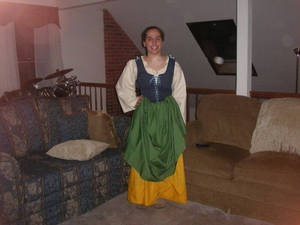
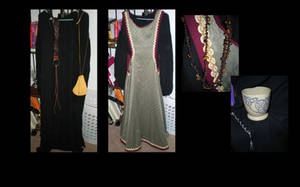
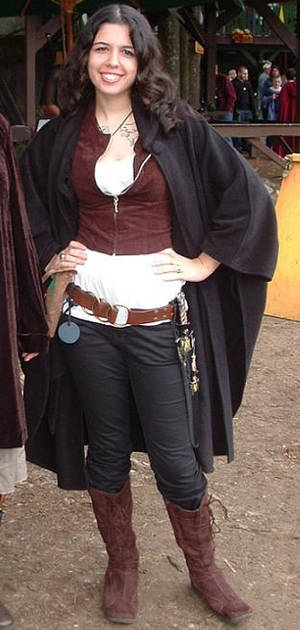


Materials
6 items
Budget
$60 - $150
save the visual refs
Full reference board
The preview above is curated for scanning. This is the working board you clone into your own build, with notes, colors, product images, and extra references intact.
Images are sourced from around the internet to help you get started. Use the web clipper to build your own reference library.
Reference images are gathered from around the web and belong to their original creators. We link back to where we found each one. If something here is yours and you want it taken down, email us and it is gone.
Build guide
Walking into your first ren faire in jeans and a t-shirt is fine. Nobody's going to throw a turkey leg at you. But there's something about wearing garb that changes the whole experience. Suddenly you're not a tourist, you're part of it.
This build gets you a complete starter outfit: a chemise or tunic, a belt with pouch, and the small finishing touches that sell the look. Nothing here requires more than straight-line sewing and basic measuring. If you can hem a curtain, you can build this.
Picking Your Look
Browse faire photos from your target event before buying anything. Most patrons fall into tavern casual (loose chemise, belt, done), merchant class (layered vest or jerkin over a tunic), or low nobility (richer fabrics, more structure). For your first build, tavern casual is the sweet spot. Comfortable, forgiving on fit, and cheap to make.
Pick an era loosely. Nobody at faire is checking your sources. What matters is that the silhouette reads as period-appropriate from 10 feet away.
Stick to natural-looking tones: cream, oatmeal, forest green, rust, brown, mustard, deep red. Avoid bright white (it reads modern) and anything neon.
Fabric and Sourcing
100% linen is the gold standard. It breathes in summer heat, drapes right, and gets softer with every wash. Expect $12-18/yard for mid-weight linen at Fabric Wholesale Direct or JoAnn's. You'll need 3-4 yards depending on your size.
Cotton muslin works as a budget alternative at $4-6/yard, but it doesn't drape the same and it's hotter to wear. A linen-cotton blend splits the difference at $8-12/yard. Avoid polyester blends. They trap heat and look shiny in photos.
Building the Chemise or Tunic
The simplest chemise pattern is basically a rectangle with sleeves. The body is a wide rectangle folded at the shoulders with a neck hole cut in the fold. The sleeves are narrower rectangles sewn to the body. Free patterns from Historical Sewing or Margo Anderson's site use this approach.
Cut your fabric, pin the shoulder seams, and run straight stitches. French seams give you clean interior edges without a serger, and they're period-accurate. Hem the neckline, wrists, and bottom edge. The whole thing takes an afternoon.
For a tunic, same idea but let it fall to mid-thigh. Add side slits from the hem up about 8 inches for mobility.
The Belt and Pouch
A leather belt transforms the outfit. You can buy a plain 1.5" leather ring belt from Etsy for $25-40, or make one from a strip of veg-tan leather and a brass ring for about $15 in materials. The ring belt is the most faire-universal option because it adjusts to any waist size and looks right with everything.
For the pouch, a simple drawstring bag in matching leather or a sturdy canvas works. This is where your phone, wallet, and car keys live. Modern pockets are the enemy of garb immersion. Budget $10-20 for materials or $15-30 to buy one ready-made.
Finishing Details
Trim and closures are what separate "I tried" from "I actually care." A strip of contrasting woven trim along the neckline or hem costs $3-8 and adds visual weight. Simple metal hooks, leather ties, or wooden buttons for closures all read as period-appropriate. Avoid plastic anything.
Test Fit for All-Day Wear
Put on the full outfit and walk around your house for an hour. Sit, stand, reach, bend. Use the privvy (figure out the logistics before you're in a porta-john). If the chemise rides up under the belt, it's too short. If the belt digs after 20 minutes, pad it or get a wider one.
Pack a small repair kit for faire day: safety pins, matching thread, a needle, and a spare leather lace.
Common Mistakes
- Buying polyester because it's cheap. You'll sweat through it by noon and hate the whole day. Spend the extra $20 on real linen.
- Skipping the test fit. A chemise that looks great on a dress form can bind at the arms or gap at the neck. Wear it, move in it, eat in it.
- Going too costume-y. Spirit Halloween sells "medieval" tunics with printed-on chainmail. Don't. Simple, well-made garb beats elaborate costume-shop garbage every time.
- Forgetting footwear. Sneakers under a chemise kills the illusion. Simple leather boots or even brown ankle boots from a thrift store work. Budget $20-40 for thrifted footwear.
- Over-accessorizing on the first build. A belt and pouch is plenty. You don't need a sword frog, a dagger, three pouches, and a drinking horn on day one. Build up over seasons.
Start simple, wear it to one faire, and you'll immediately know what you want to add next season. That's the whole point of a starter build.
Components
Chemise or tunic
Belt and pouch
Footwear
Materials list
6 itemsEstimated total cost
$60 - $150
Milestone timeline
3 weeks- 1
Research period silhouettes and faire dress codes
Research
- 2
Choose era, color palette, and character concept
design
- 3
Source linen, cotton, or blended fabrics
sourcing
- 4
Cut and sew chemise or tunic
Construction
- 5
Construct or source belt and pouch
Construction
- 6
Add closures, trim, and finishing details
Finishing
- 7
Test fit and comfort for all-day wear
field_test
- 8
Pack garb, boots, and repair kit
Packing
Frequently
asked questions.
Related tools and guides
Plan your build, estimate costs, and get ready.
Budget Calculator
Estimate your build cost before you start buying materials.
Convention Checklist
88-item packing checklist. Check off items as you pack.
Prop Scaling Calculator
Scale reference images to your body measurements.
How Much Does Ren Faire Garb Cost?
Real build budgets with specific products and dollar amounts.
Ren Faire on Costumary
Templates, tools, and workspace built for ren faire makers.
Browse all templates
Explore build plans across 10 craft verticals.
Debut your ren faire build
Upcoming conventions where you could wear this. Dates, checklists, and budget tools included.
Maryland Renaissance Festival 2026
Aug 29 - Oct 25 · Crownsville, MD
One of the largest and longest-running ren faires on the East Coast, transforming Crownsville into a Tudor village.
Texas Renaissance Festival 2026
Oct 10 - Nov 29 · Todd Mission, TX
The largest renaissance festival in the United States, running 9 weekends each fall in Todd Mission.
Start this build free
Clone this template into your workspace. Track materials, milestones, budget, and build progress in one place.
Related templates
Leatherwork Project
4 weeks · 8 milestones
A hand-tooled or constructed leather piece for your faire kit: bracers, a belt, journal cover, mug strap, or pouch. Covers veg-tan leather selection, tooling, dyeing with Fiebings, and hardware setting. Four weeks from raw hide to faire-ready gear.
Full Period Outfit
8 weeks · 10 milestones
A multi-layer historically inspired ensemble built from the skin out: chemise, structured outer garment (bodice or doublet), lower layers, headwear, and accessories with period-correct details. Eight weeks of intermediate sewing and pattern work, designed for seasoned faire-goers who want a researched, layered look.