Commissions
Cosplay Commission Cost Breakdown
A $2,000 cosplay commission isn't a ripoff. Here's where the money goes: materials ($150-400), labor (60-80 hours), overhead, and the margin makers skip.
"$2,000 for foam armor? I could buy real steel plate for that."
I've seen this comment (or some version of it) on every commission pricing post in r/cosplay, every TikTok showing a finished build, and approximately half of all Instagram DMs to armor makers. And I get it. If you've never built anything from EVA foam, $2,000 for a material that costs about $14 a sheet (CosplayPros lists 8mm high density sheets at $14.49) sounds unhinged.
It's not. Here's exactly where that money goes, line by line, so both makers and clients can stop guessing and start understanding.
The Four Components of Every Commission Price
Every commission, whether it's a simple prop or a full armor set, breaks down into the same four buckets:
- Materials (what gets consumed during the build)
- Labor (every hour the maker spends on your project)
- Overhead (the invisible costs of running a workshop)
- Profit margin (the part most makers forget, and why they burn out)
If you're a maker, skipping any of these means you're subsidizing your client's costume with your free time. If you're a client, understanding all four explains why the quote is what it is.
Materials: $150-$400 for a Full Armor Set
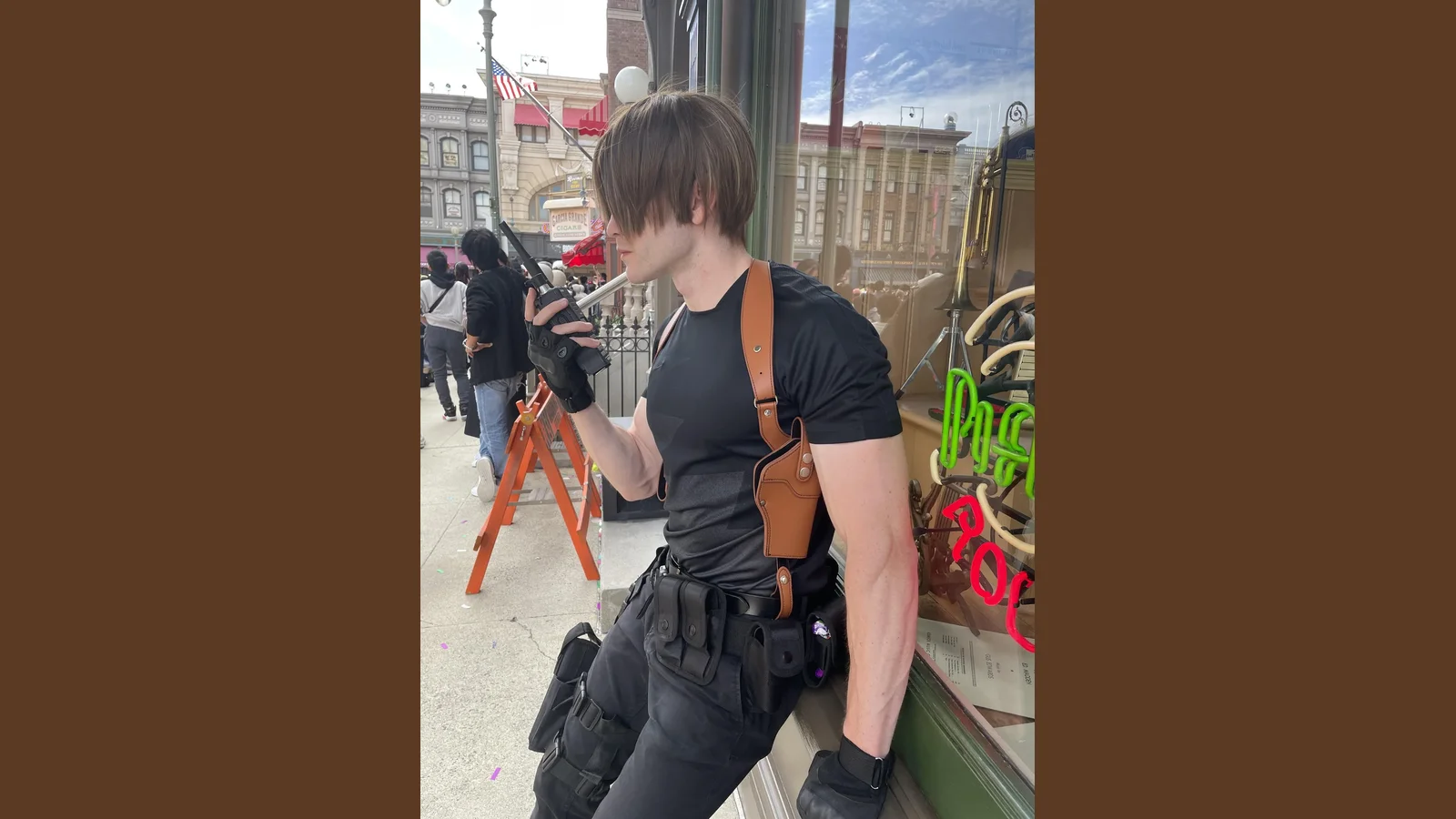
Let's itemize a real build. Prices below are current listings from the shops linked in each row, checked September 2026. This is a mid-complexity EVA foam armor commission: chest plate, pauldrons, vambraces, and a helmet. Think something like a Mandalorian-inspired set, a Final Fantasy XIV paladin, or a Levi Ackerman Survey Corps build with ODM gear.
| Material | Quantity | Cost |
|---|---|---|
| High density EVA foam sheets, 8-10mm, at CosplayPros | 5 sheets | $72 |
| 6mm EVA foam for detail work, same EVA foam collection | 2 sheets | $20 |
| 2mm high density foam for fine details | 3 sheets | $28 |
| Barge All-Purpose Cement at Panhandle Leather | 1 quart | $26 |
| AdTech multi-temp glue sticks | 1 bag | $7 |
| Plasti Dip spray (see EVA foam sealing comparison) | 3 cans | $30 |
| Liquitex BASICS acrylic paint, 8.45oz bottles | 3 bottles | $33 |
| Mod Podge clear acrylic aerosol sealer | 2 cans | $22 |
| Elastic, buckles, snaps, D-rings | Assorted | $22 |
| VELCRO Brand sew-on roll | 3 rolls | $9 |
| Sandpaper (80, 120, 220 grit) | 3 packs | $12 |
| Replacement cutter blades | 1 pack of 5 | $8 |
| Worbla's Finest Art thermoplastic (for helmet detail) | 1 medium sheet | $28 |
| Masking tape, painter's tape | 2 rolls | $8 |
| Total materials | $325 |
And that's without waste. Every maker has a scrap bin full of foam pieces that were cut wrong, test pieces for paint colors, and pattern prototypes that didn't fit. A safe rule of thumb: add 15-20% to your material estimate for waste. That $325 becomes $375-$390 in practice. Run your own numbers with the budget calculator to see exactly where your material spend lands.
Notice what's not on this list: the tools used to cut, shape, and assemble all of it. Those go in overhead. Materials are only the items consumed by the project.
Labor: 60-80 Hours at $15-$50/hr
This is where people's jaws drop. A full armor set takes 60-80 hours of hands-on work. Not spread lazily across months. Sixty to eighty hours of active, skilled labor.
Here's how those hours break down for our armor set example:
| Task | Hours |
|---|---|
| Client consultation, measurements, reference gathering | 3-4 |
| Patterning (drafting templates from reference images) | 6-8 |
| Cutting foam pieces | 4-6 |
| Heat shaping and forming | 5-7 |
| Assembly and gluing (with cure times) | 8-10 |
| Detail work (raised edges, engraving, appliques) | 6-8 |
| Strapping and fitting system | 4-5 |
| Priming (3-4 coats of Plasti Dip with drying time) | 4-5 |
| Base painting | 4-6 |
| Weathering and detail painting | 5-8 |
| Clear coating | 2-3 |
| Test fitting, adjustments, fix touch-ups | 3-4 |
| WIP photography, client updates, revision rounds | 3-4 |
| Final photography and packaging/shipping prep | 2-3 |
| Total labor hours | 59-81 |
Take the midpoint of 70 hours. Now multiply by the maker's hourly rate.
| Experience Level | Hourly Rate | 70 Hours of Labor |
|---|---|---|
| Beginner (0-2 years) | $15-20/hr | $1,050-$1,400 |
| Intermediate (2-5 years) | $20-35/hr | $1,400-$2,450 |
| Experienced (5+ years) | $35-50/hr | $2,450-$3,500 |
That labor line alone explains most of the price tag. An intermediate maker spending 70 hours at $25/hr racks up $1,750 in labor before materials, overhead, or profit.
And $25/hr isn't extravagant. That's what a decent auto mechanic charges. The difference is nobody looks at a $900 car repair and says "I could buy the parts for $200, why am I paying you $700?" Actually, they do. But at least they understand the mechanic's time has value.
Why "It Only Took You 3 Days" Is Misleading
Clients see a commission ship in a week and assume it was quick. What they don't see is 14-hour days. A maker working 10-14 hours daily for 5 days hits 50-70 hours. That's a work week and a half crammed into less than one. Speed of delivery is not amount of work. It's often the opposite.
Overhead: The 20-25% Nobody Sees
Overhead covers every expense that makes commissions possible but doesn't belong to any single project. Most makers ignore overhead entirely, which is why their "profit" evaporates when they need new tools or their Dremel dies.
Tools and equipment (amortized across projects):
- Heat gun: $35-80 (replaced every 1-2 years with heavy use)
- Dremel rotary tool and bits: $80-120 on my own receipts (bits replaced monthly at roughly $15 a pack)
- Cutting mats: $25-40 (replaced every 6-12 months)
- X-Acto handles, scissors, rulers, clamps: $50-80 in tools that wear out
- Sewing machine maintenance: $50-100/year for servicing
- Airbrush kit (if applicable): $150-400 upfront plus compressor
Workspace:
- Dedicated room or garage: even at home, that's square footage with electricity, heating/cooling, and ventilation
- Ventilation fan or respirator cartridges for Plasti Dip and contact cement fumes ($8-15 per set, replaced regularly)
- Lighting: proper workshop lighting runs $50-150 for decent LED panels
Business expenses:
- Website hosting and domain: $100-200/year
- Commission management software or spreadsheets
- Photo editing software: $10-20/month
- Self-employment tax (US): 15.3% per the IRS (12.4% Social Security plus 2.9% Medicare), which most makers forget until April
- Business insurance (if you have it, and you should): $300-600/year
The standard shortcut: add 20-25% to your materials-plus-labor subtotal. On a commission with $350 in materials and $1,750 in labor, that's $420-$525 in overhead. This covers tool replacement, workspace costs, software, and the tax set-aside without tracking every lightbulb and sandpaper sheet individually.
Profit Margin: The Part Makers Skip
Profit margin is not your paycheck. Your paycheck is labor. Profit margin is the 15-20% on top that lets you survive a slow month, replace your heat gun when it dies mid-project, upgrade to a better airbrush, or save for a proper workshop.
Without profit margin, you're a freelancer living commission to commission. One cancelled order, one material price spike, or one slow quarter and you're dipping into personal savings. That's not a business. That's a high-skill hobby that occasionally pays.
Most beginner and intermediate makers skip profit margin entirely. They calculate materials + labor, maybe add a small buffer, and call it their price. Then they wonder why they can't afford to replace their cutting mat after 200 hours of use.
Add 15% minimum. 20% if you can. It's the difference between "I take commissions" and "I run a commission business."
Putting It All Together: The Real Price of a Full Armor Set
Let's run the complete math for our example. Intermediate maker, $25/hr, mid-complexity EVA foam armor set.
| Component | Calculation | Amount |
|---|---|---|
| Materials | Foam, adhesive, primer, paint, hardware, Worbla | $350 |
| Labor | 70 hours x $25/hr | $1,750 |
| Overhead | 22% of ($350 + $1,750) | $462 |
| Subtotal | $2,562 | |
| Profit margin | 15% of $2,562 | $384 |
| Commission price | $2,946 |
Before platform fees and shipping. PayPal Checkout for commercial transactions is 3.49% plus $0.49 per its US business fee schedule, which takes another $103. Shipping a full armor set safely (with proper foam padding and a box large enough to avoid crushing pauldrons) runs $40-$80 domestic, $100-$200 international.
Where Your Commission Dollar Goes
 costumary.com
Labor is 59% of the total. Materials are 12%. If you're a client staring at a $3,000 quote and thinking "but foam only costs $14 a sheet," now you see why. You're not paying for foam. You're paying for 70 hours of someone's skilled time.
DIY vs. Commissioned: The Real Comparison
"Why don't I just make it myself?" is a fair question. Here's an honest comparison for three common build types, using the ranges I quote and see quoted rather than published figures.
| Build Type | DIY Material Cost | DIY Hours (First Timer) | Commission Price |
|---|---|---|---|
| EVA foam armor set (5 pieces) | $200-$350 | 100-140 hours | $2,000-$4,000 |
| Sewn costume (jacket, pants, accessories) | $100-$250 | 40-80 hours | $800-$2,000 |
| Prop weapon (sword or staff) | $50-$120 | 20-40 hours | $300-$800 |
A few things jump out. First, DIY takes significantly longer than a commission because you're learning while building. A maker who's built 50 armor sets patterns a chest plate in 20 minutes. Your first attempt takes 3 hours and two wasted foam sheets.
Second, DIY material cost is lower than a commission's material line because you'll buy fewer materials. You'll also produce lower quality unless you invest in the same tools (heat gun, Dremel, airbrush) the maker already owns. Those tools cost $200-$600 before you cut your first piece of foam.
Third, commissions get you a product from someone with years of experience. Your DIY build is your first attempt. Both have value, but they're not the same product.
If you want to learn the craft, DIY is fantastic. If your build includes sewn components, check the fabric yardage calculator so you buy the right amount of fabric the first time. If you want a competition-quality costume for a convention in 3 months and you've never touched EVA foam, commission it.
Why "$200 for a Full Armor Set" Is Below Minimum Wage
This request shows up in r/cosplay commission threads constantly. Let's do the math on what it actually pays.
A basic 3-piece armor set (chest plate and two pauldrons) takes 25-35 hours for an experienced maker. Let's be generous and say 25 hours.
$200 minus $80 in materials (even a minimal build) leaves $120 for labor. Divided by 25 hours, that's $4.80/hr. The federal minimum wage is $7.25, unchanged since 2009, and many states set theirs higher.
And that $4.80/hr doesn't include overhead, profit, or the time spent on client communication, WIP photos, and shipping prep. Include those, and the effective hourly rate drops to $3-$4.
When you ask a maker for a $200 armor set, you're asking them to work for less than half of minimum wage. Most will (rightly) decline. The ones who accept are usually desperate for work, which means they're either brand new or they're going to cut corners on materials and construction to make the economics work.
If your budget is $200, you have two good options: build it yourself (the materials fit that budget) or commission a single piece (a helmet or a pair of gauntlets) instead of a full set. And if you're a maker considering rush fees for tight deadlines, read the rush commission pricing guide so you don't undercharge for compressed timelines.
How Makers Can Use This Breakdown
If you're a maker, this breakdown is your negotiation tool. When a potential client pushes back on price, you don't need to justify or apologize. Walk them through the math. The commission pricing calculator generates a line-by-line breakdown you can share directly with clients.
"Here's my material list. Here are the hours based on my last three builds of similar complexity. Here's my hourly rate. Here's overhead. Here's my margin. That's the number."
Most reasonable clients, when they see the itemized breakdown, understand the price. The ones who don't were never going to pay a fair rate anyway.
Costumary's budget tracker lets you log materials, track hours, and calculate your true cost per commission as you build. No more guessing at quotes. You'll have real data from your last 5, 10, 20 builds telling you exactly how long a chest plate takes and how much paint you burn through.
For more on setting your hourly rate and structuring deposits, read the full commission pricing formula. And if you're tracking client payments across multiple commissions, the payment tracking guide covers deposit splits, milestone payments, and chasing overdue balances.
For Clients: What to Ask Before Committing
When comparing quotes, ask these four questions. "Can you break out materials and labor?" A maker who knows their costs will give you a rough split without hesitation. "What's your hourly rate?" This tells you if you're paying a beginner or an experienced builder. "Are revisions included?" Most makers include 1-2 rounds. On my own quotes, additional changes after that run $25-$50/hr. "What's not included?" Shipping, platform fees, and LED installation are commonly excluded from base quotes.
A $2,000 cosplay commission isn't a ripoff. It's 60-80 hours of skilled labor, $300+ in materials, and a finished product you couldn't produce yourself without months of practice. When you see where the money goes, the price makes sense.
Build and track your commissions in Costumary. Materials, labor, timelines, client communication, all in one workspace built for makers who take their craft seriously.
Frequently
asked questions.
Sources & references
We link to the brands, retailers, and research we reference so you can verify and explore.