Original Design
Design and build an original character costume from scratch. Covers concept art, color palette selection, silhouette planning, construction approach, and building a character that reads clearly even without an existing reference sheet.
10 weeks
12
7
4
See the whole look before you start.
References, materials, budget, and build order for Original Design.
Timeline
10 weeks
Color refs
Materials
7 items
Budget
$100 - $500
save the visual refs
Full reference board
The preview above is curated for scanning. This is the working board you clone into your own build, with notes, colors, product images, and extra references intact.
Images are sourced from around the internet to help you get started. Use the web clipper to build your own reference library.
Reference images are gathered from around the web and belong to their original creators. We link back to where we found each one. If something here is yours and you want it taken down, email us and it is gone.
Build guide
Building an original character (OC) is the most creatively free and the most terrifyingly blank-page project in cosplay. There's no reference sheet to follow, no other cosplayers' WIPs to study, and nobody to tell you if you got it "right." That freedom is the whole point. You're making a character that exists only because you built it.
Your finished costume is a fully realized character with a cohesive design, constructed from whatever techniques fit the concept. The result needs to read clearly from across a convention hall. If someone sees your silhouette from 50 feet and can't tell what kind of character you are (warrior, mage, rogue, sci-fi pilot), the design needs work.
Silhouette is more important than detail. The single most important design principle for an OC is readability at distance. Wide pauldrons and a flowing cape read "knight." Pointed hat and layered robes read "wizard." Sleek bodysuit with glowing lines reads "sci-fi." Establish the silhouette first, then add detail. A costume covered in beautiful small details that doesn't read from across the room is a design that works only in close-up photos.
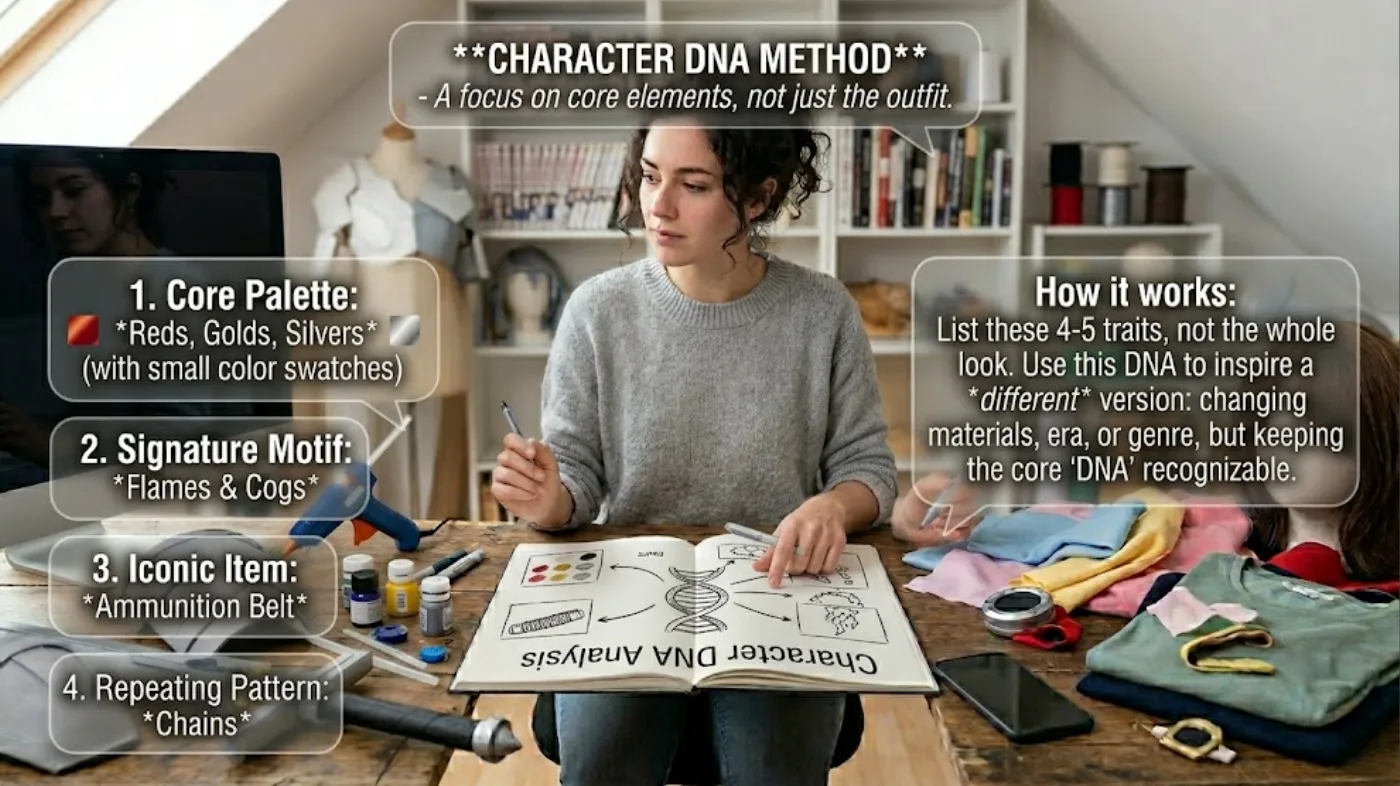
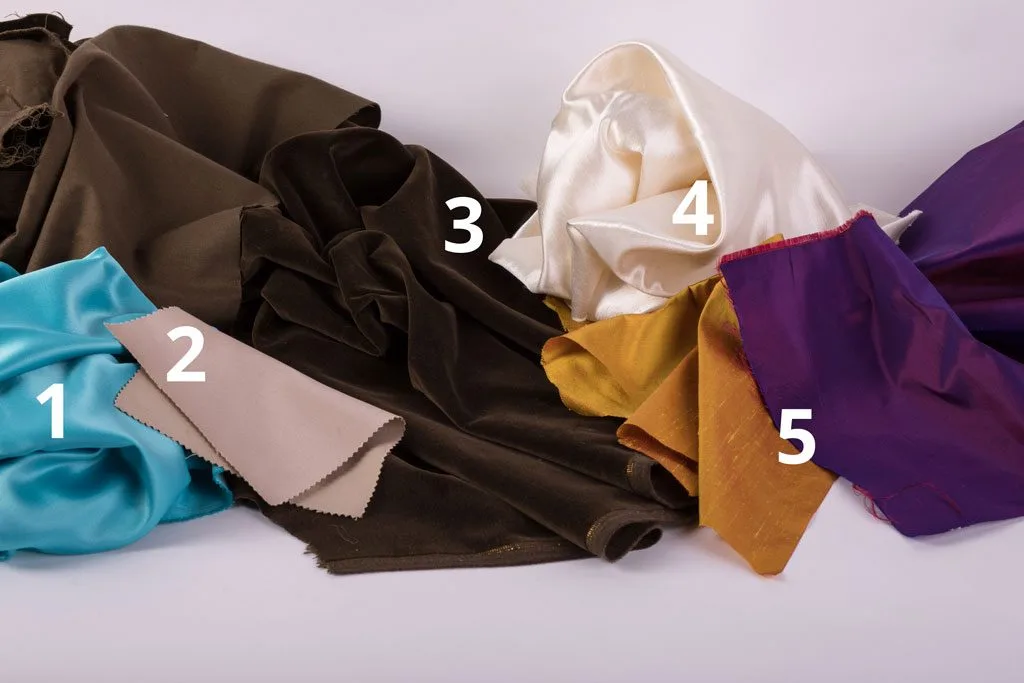
Color palette discipline keeps your design cohesive. Pick 2-3 main colors and 1 accent color. That's it. Real character designers work within tight palettes for a reason. A costume with six different colors looks like a craft store exploded. Look at any well-designed game character and count the colors. It's almost always three or fewer.
Research
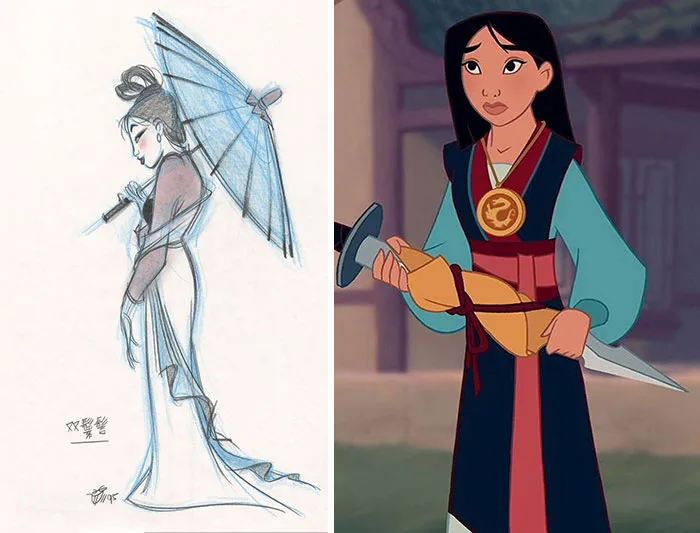
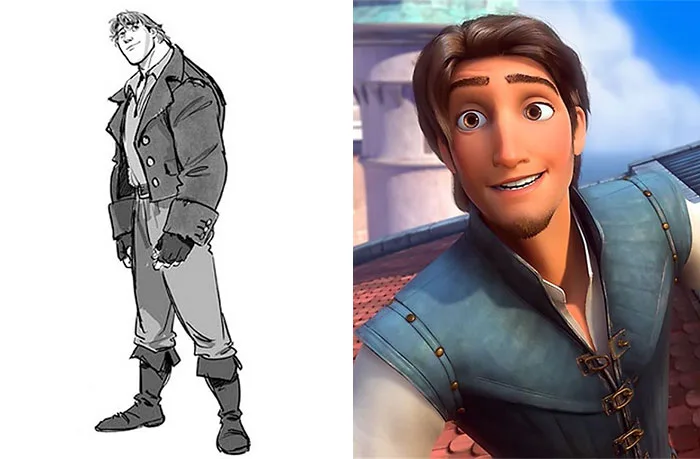
Sketch your character concept. You don't need to be a great artist. Rough sketches that capture the shape, proportions, and key design elements are enough. Finalize your color palette and silhouette before thinking about materials. Pinterest boards, color palette generators, and character design tutorials all help at this stage.
Patterning
Plan your construction approach for each piece. Which elements are sewn, which are foam, which are sculpted? Draft or source patterns based on existing garment shapes that match your design. Modify commercial patterns to match your character. Test with cheap materials before committing to your final fabric and foam.
Materials
Source materials based on your construction plan. The variety here depends entirely on your design. A primarily fabric character needs sewing supplies. An armored character needs foam and paint. Most OCs combine techniques, so expect to order from multiple categories.
Construction
Build the base costume structure first (the garment layer) and add armor, accessories, and details on top. Having the base done early lets you make design decisions about additional elements while wearing the foundation. Some of the best OC builds evolve during construction as builders discover what works.
Details
This is where your character comes alive. Signature details (a specific emblem, a unique weapon, an unusual material choice) make the character memorable. Build one standout element that draws the eye and serves as the visual anchor for the whole design.
Finishing
Paint, weather, and finish all pieces to a consistent level. An OC benefits from cohesive finishing even more than a known character, because there's no existing reference telling people how it "should" look. Consistent color temperature, matching wear patterns, and unified surface treatment across all materials make the design read as intentional.
Fitting and Photo Test
Fit everything and take photos. Check the silhouette in photos from across the room. Does the character read? Can people tell at a glance what kind of character this is? If the silhouette is muddy, adjust proportions. Add width where you need impact, reduce bulk where it clutters the shape.
Common mistakes
- Overdesigning. More details, more colors, and more accessories don't make a better character. Restraint makes a better character. Edit ruthlessly.
- No silhouette planning. A design that only works up close doesn't work at conventions, where most people see you from 20-50 feet away first.
- Inconsistent world-building. A character wearing medieval armor with sneakers and a modern backpack doesn't read as a coherent character. Every element should feel like it belongs in the same universe.
- Skipping concept art. Even rough sketches save you from expensive construction mistakes. Building an OC by improvising leads to a costume that looks improvised.
- Not testing the color palette. Print your colors or buy fabric swatches and hold them together in natural light. Colors that look great on a screen might clash in person.
OC cosplay is the purest form of the craft. You designed it, you built it, and nobody else in the world has it.
Components
Main costume
Armor / structural pieces
Signature accessory
Prop / weapon
Materials list
7 itemsEstimated total cost
$100 - $500
Milestone timeline
10 weeks- 1
Sketch character concept art
Research
- 2
Finalize color palette and silhouette
Research
- 3
Plan construction approach for each piece
Patterning
- 4
Draft or source patterns
Patterning
- 5
Source and order all materials
Materials
- 6
Build base costume structure
Construction
- 7
Build armor or accessories
Construction
- 8
Add signature details and flourishes
Details
- 9
Paint, weather, and finish all pieces
Finishing
- 10
Full fitting and adjustments
Fitting
- 11
Photo test for silhouette read
Wear test
- 12
Pack for event
Packing
Frequently
asked questions.
Related tools and guides
Plan your build, estimate costs, and get ready.
Budget Calculator
Estimate your build cost before you start buying materials.
Convention Checklist
88-item packing checklist. Check off items as you pack.
Prop Scaling Calculator
Scale reference images to your body measurements.
How Much Does EVA Foam Armor Cost?
Real build budgets with specific products and dollar amounts.
Cosplay Commission Cost Breakdown
Real build budgets with specific products and dollar amounts.
Cosplay on Costumary
Templates, tools, and workspace built for cosplay makers.
Browse all templates
Explore build plans across 10 craft verticals.
Debut your cosplay build
Upcoming conventions where you could wear this. Dates, checklists, and budget tools included.
New York Comic Con 2026
Oct 8-11 · New York, NY
The East Coast's largest pop culture convention, with major panels, artist alley, and cosplay showcases.
Anime USA 2026
Oct 9-11 · Washington, DC
A mid-size anime convention in the DC metro area, offering panels, cosplay, and Japanese cultural programming.
Tsubasacon 2026
Oct 9-11 · Charleston, WV
Sekaicon 2026
Oct 9-11 · Newark, OH
Start this build free
Clone this template into your workspace. Track materials, milestones, budget, and build progress in one place.
Related templates
Qifrey Cosplay
5 weeks · 12 milestones
Qifrey's elegant white-robed silhouette is built around three signature elements: the tall pointed hat with the bent tip and black ribbon, the flowing white cape with the brass brooch closure, and the asymmetrical pince-nez glasses with one dark lens hiding his scarred eye. This is an intermediate build that needs more structural crafting than sewing. The hat and glasses demand the most attention, while the cape is a manageable garment project. The glasses and the hat are the make-or-break details, and this template walks you through both. Includes 7 components, 15 materials with cost estimates, a 12-step build plan, and a realistic 5-week, $95 to $280 budget.
Coco Cosplay
6 weeks · 12 milestones
Witch Hat Atelier's apprentice witch in her full outfit: the tall pointed hat with ornamental band, a dark cloak with decorative hem trim, a layered tunic-dress, boots, and her drawing implements. The hat is the signature piece and the hardest to get right. 7 components, 13 materials, ~6 weeks at $120-280.
Sung Jinwoo Cosplay
7 weeks · 15 milestones
Solo Leveling's Shadow Monarch in his iconic default hunter outfit: a long black coat with purple inner lining, structured shoulder armor, fitted pants, and dual daggers. This is an intermediate hybrid build that combines garment sewing with foam armor crafting for the shoulder details, plus prop work for the daggers. The coat and its glowing purple lining are the make-or-break detail. Includes 7 components, 19 materials with cost estimates, a 15-step build plan, and a realistic 5-7 week, $120 to $320 budget.
Gojo Satoru Cosplay
5 weeks · 11 milestones
Jujutsu Kaisen's strongest sorcerer, built around three signature details: the black high-collar uniform jacket, the blindfold, and the white spiked hair. This is an intermediate build that leans on one well-made garment plus wig styling, so it reads instantly on the con floor without months of work. The collar and the wig are the make-or-break details, and this template walks you through both. Includes 6 components, 11 materials with cost estimates, an 11-step build plan, and a realistic 5-week, $90 to $240 budget.
Deadpool Suit Cosplay
5 weeks · 12 milestones
The Merc with a Mouth in full red and black: a head-to-toe spandex bodysuit with diamond-textured fabric, a face shell mask with white magnetic lenses, dual katanas on a concealed back harness, and a utility belt with pouches and holsters. An intermediate build that rewards patience with fit and details. Covers 7 components, 12 materials with cost estimates, a 12-step build plan across 5 phases, and a 5-week timeline at $120 to $350.
Yuta Okkotsu Cosplay
6 weeks · 12 milestones
Jujutsu Kaisen 0's tragic sorcerer bound to Rika's curse: the black school uniform, textured black wig, cursed arm markings, and luminous katana. A balanced build across uniform tailoring, prop construction, and wig styling. 4 components, 11 materials, ~6 weeks, $120-280.
Captain America Cosplay
6 weeks · 12 milestones
The star-spangled Avenger in his Endgame suit: scaled chest armor over a tactical blue base, a white star emblem, red gauntlets and boot details, a foam cowl helmet with ear wings, and the iconic round shield. This is an intermediate build with repetitive detail work on the scales and some prop-making for the shield. Covers 7 components, 12 materials with cost estimates, a 12-step plan across 5 phases, and a realistic 6-week, $150 to $400 budget.
Arlecchino Cosplay
7 weeks · 17 milestones
Arlecchino (The Knave) is Genshin Impact's most cosplay-demanding Fatui Harbinger: a layered suit jacket, structured long coat with back chains, multi-color ombre wig, character-specific X-pupil contacts, and a full accessories set that runs 12+ pieces. This is an advanced build for cosplayers who can sew structured garments, handle prop accessories, and plan a full character makeup look. The make-or-break details are the coat's lapel structure and the wig's silver-black-red color work. Includes 8 components, 14 materials with cost estimates, a 12-step build plan, and a realistic 7-week, $180 to $420 budget.