Commissions
Miniature Painting Commission Pricing
Tabletop standard is $5-15 per mini. Display quality hits $50-200+. How to price miniature painting commissions at every tier without losing money.
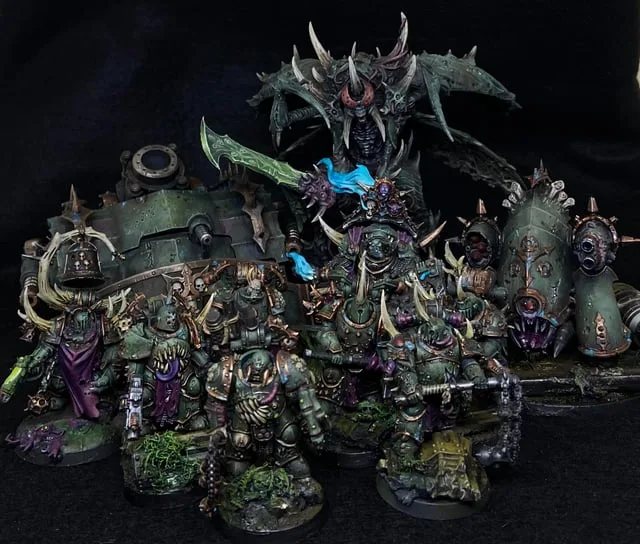
I charged $8 for my first commission mini. A fully magnetized Daemon Prince with blended wings, freehand scripture on the tabard, and custom basing. It took me 14 hours. That's $0.57/hour. I could've made more money finding coins on the sidewalk.
Three years and about 400 commissions later, I've figured out why so many mini painters undercharge, and how to build a pricing structure that actually pays you for your skill. You can plug your own numbers into the commission pricing calculator as you read. If you're painting your first batch of Intercessors for a buddy or running a proper studio, this guide breaks down the real numbers.
The Quality Tier System
Every commission service uses some version of quality tiers. The names vary (Battle Ready, Tabletop, Display, Competition), but the concept is universal: more time per model means higher quality means higher price. Here's how the tiers actually break down in practice.
Tabletop Standard is clean, game-ready painting. Base colors, a wash for shading, basic highlighting on raised edges, and neat basing. The mini looks good at arm's length on a gaming table. This is what most army commissions call for.
Tabletop Plus (sometimes called "Tabletop+" or "Enhanced") adds layered highlighting, more refined blending, extra detail work on faces and focal points, and better basing. The mini holds up to close inspection. Think of it as "the model looks great in photos, not just on the table."
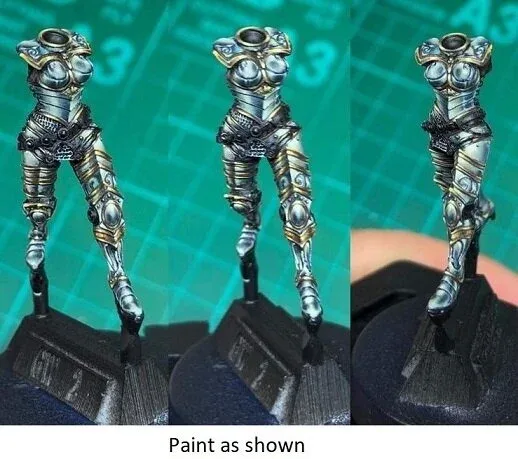
Display/Competition Quality is where you're painting each model as a standalone art piece. Smooth multi-layer blending, NMM (non-metallic metal), OSL (object source lighting), freehand details, and scenic basing. A single infantry model at this level can take 6-10 hours. A centerpiece character can eat 20-40 hours.
What Each Tier Actually Costs
Here's the pricing table I wish someone had shown me before I started. The ranges below are anchored to three published price lists I checked in September 2026: Top Miniatures' four-level price table, which runs $21 to $72 for small infantry and $164 to $555 for a large monster or vehicle depending on level, WEKES MINIS' price list at EUR 18 for a single infantry model and EUR 30 for a hero, and Paintedfigs' published per-model examples at the batch end. My ranges are wider than any one studio's because they span solo operators and mid-size studios across North America and Europe.
| Model Type | Tabletop Standard | Tabletop Plus | Display Quality |
|---|---|---|---|
| Infantry (28mm, basic trooper) | $8-15 | $18-30 | $50-100 |
| Elite infantry / character | $15-25 | $30-50 | $75-200 |
| Small vehicle (Rhino, Chimera) | $40-65 | $70-120 | $150-350 |
| Large vehicle (Land Raider, Knight) | $80-150 | $150-250 | $300-600+ |
| Monster / large creature | $60-120 | $120-200 | $250-500+ |
| Centerpiece / Primarch | $100-200 | $200-400 | $400-1,000+ |
Budget overseas studios like Paintedfigs publish per-model examples such as $5.82 for a 40k Space Marine and $43.65 for a Chaos Rhino, achieved by leveraging batch production at scale. Solo painters in the US and UK can't (and shouldn't) compete with those rates. Your pricing reflects your market, your turnaround time, and the fact that your client can text you about a specific highlight placement at 9 PM.
Time Tracking: Where the Real Math Lives
Most painters estimate time poorly. I know because I was one of them. Here's what models actually take when you're honest with a timer.
| Model Type | Tabletop Standard | Tabletop Plus | Display Quality |
|---|---|---|---|
| Infantry (28mm) | 30-45 min | 1-2 hours | 4-8 hours |
| Elite / character | 45-90 min | 2-3 hours | 6-15 hours |
| Small vehicle | 2-3 hours | 3-5 hours | 8-15 hours |
| Large vehicle / Knight | 4-6 hours | 6-10 hours | 15-30 hours |
| Monster / creature | 3-5 hours | 5-8 hours | 10-25 hours |
| Centerpiece / Primarch | 5-8 hours | 8-15 hours | 20-40+ hours |
That means a tabletop-standard Space Marine at $10 and 40 minutes of work gets you $15/hour. Survivable. But a display-quality character at $150 and 12 hours of work gives you $12.50/hour. Less survivable. This is why display-quality pricing needs to be aggressive. The work is exponentially harder and time compounds fast once you're chasing smooth blends.
Materials Cost Per Model
Paint and supplies feel cheap per pot, but they add up across hundreds of models. Here's my actual per-model cost breakdown for tabletop-standard infantry.
| Material | Cost Per Model |
|---|---|
| Primer (rattle can or airbrush) | $0.30-$0.60 |
| Paint (base coats, wash, highlight) | $1.00-$3.00 |
| Basing materials (texture paste, tufts, sand) | $0.50-$2.00 |
| Varnish (spray or brush-on) | $0.20-$0.40 |
| Consumables (brushes wear, palette, water cups) | $0.30-$0.50 |
| Total per infantry model | $2.30-$6.50 |
For display quality, paint costs climb to $3-8 per model because you're using more layers, specialty paints (Citadel Contrast at $7.80 per 18ml pot, Scale75 Metal 'n' Alchemy at $4.99 per 17ml bottle), and higher brush wear from precision work. Fancy basing with resin pieces, cork, pigment powders, and water effects can add another $3-10.
The real cost trap is brushes. A good Kolinsky sable brush is not cheap: Winsor & Newton lists its Series 7 miniature round at $34.99, and comparable Raphael 8404 sizes sit in the same neighborhood. If you're painting display quality, you'll burn through the tip in 30-50 hours of detail work. That's roughly $0.70 to $1.15 per hour just in brush depreciation.
Army Pricing: The Batch Painting Sweet Spot
Army commissions are where consistent income lives. A single display mini is a showcase piece, but a 2,000-point army is a $400-$2,000 project that keeps your desk busy for weeks.
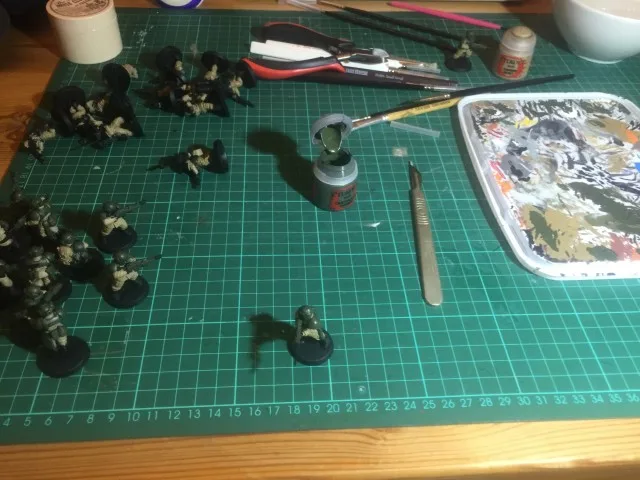
The batch of 10 is the efficiency sweet spot. When I paint 10 identical infantry, I can assembly-line each color across all 10 models before moving to the next step. Base coat all the armor panels, then all the cloth, then all the leather, then wash everything at once. This cuts per-model time by 20-30% compared to painting each model start-to-finish.
Bulk pricing makes sense, but don't cut too deep. I offer 10-15% off for full army commissions (30+ models). The batch efficiency gain covers that discount. Going beyond 15% starts eating into your hourly rate, and a 50-model army is still going to occupy your desk for 3-6 weeks.
Sample pricing for a typical 2,000-point army:
| Army Composition | Tabletop Standard | Tabletop Plus |
|---|---|---|
| 40 infantry + 5 characters + 2 vehicles | $500-$800 | $1,100-$1,800 |
| 20 elite infantry + 3 characters + 1 centerpiece | $400-$650 | $900-$1,500 |
| Horde army (80+ infantry, 3 characters) | $700-$1,100 | $1,600-$2,500 |
The horde army is where batch painting really shines. 80 Skaven clanrats painted assembly-line style at tabletop standard? That's 30-40 hours of work, not the 60+ it would take painting them individually. If your clients are new to the hobby, pointing them to the Warhammer starter army guide helps set realistic expectations about what they're buying and what painting it involves.
The Hidden Time You're Not Counting
This is the part that turns $20/hour into $12/hour. Every commission involves non-painting time that you need to account for.
Client communication. Discussing color schemes, answering questions about progress, sending WIP photos for approval. A typical commission involves 30-60 minutes of back-and-forth messaging before you even open a paint pot. Complex projects with specific requests can hit 2-3 hours of communication. This admin overhead is the same hidden cost that makes rush orders so expensive for cosplay and fursuit makers.
Photography. Your client expects finished photos, and good photos sell your next commission. Setting up lighting, shooting multiple angles, editing for white balance. That's 15-30 minutes per model for display pieces, 20-40 minutes for a batch photo shoot of an army.
Cleanup and setup. Washing brushes, cleaning your airbrush, mixing custom colors, organizing the batch on your desk. Packing and shipping adds another 20-45 minutes per order. These feel trivial individually, but across a month of commissions they're 8-15 hours of unpaid labor.
My rule: add 25% to your painting time estimate. If you think a commission will take 10 hours of painting, quote for 12.5 hours. That covers communication, photography, and admin. Your hourly rate should reflect the total time you spend on the project, not just brush-on-model time.
When Hourly Beats Per-Model Pricing
Per-model pricing works great for standard builds from a known range. A Space Marine Intercessor at tabletop standard? Easy to quote. You've painted dozens of them.
But some projects break the per-model model:
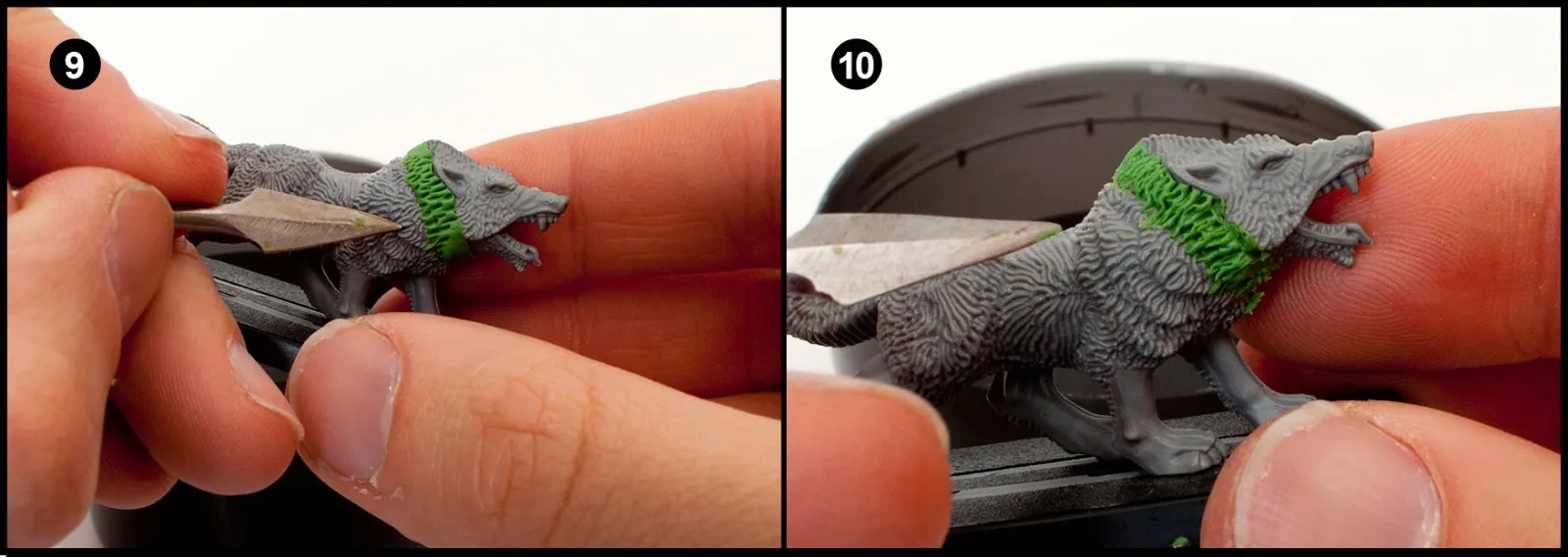
Kitbashes and conversions. If someone hands you a model built from five different kits with sculpted Green Stuff additions, you can't predict the paint time from the model type alone. Quote hourly.
Unique color schemes with test models. When a client wants a non-standard scheme, you'll need to paint 1-2 test models, get feedback, potentially repaint. Hourly billing covers the iteration time.
Repairs and repaints. Stripping an old paint job and repainting over someone else's work takes longer than working with bare plastic. Hourly rate, always.
Display/competition single pieces. A Golden Demon entry could take 40 hours or 100 hours depending on the techniques involved. Quote hourly with a range estimate. I charge $25-35/hour for display work and give clients a "likely range" (e.g., "This will probably be 25-35 hours, so $625-$1,225").
Pricing Formula That Actually Works
Here's the formula I use for every quote:
(Estimated Paint Hours x Hourly Rate) + Materials + Admin Buffer = Commission Price
For a squad of 10 Intercessors at tabletop standard:
- Paint time: 10 models x 40 min = 6.7 hours
- Admin buffer (25%): 1.7 hours
- Total hours: 8.4 hours
- Hourly rate: $22/hour
- Labor: $184.80
- Materials: 10 x $3.50 = $35
- Total: $220, or $22 per model
That's a real number you can stand behind. Not "$15 because that's what the Facebook group charges." For a broader take on the same formula applied to cosplay commissions, see the full cost breakdown.
Stop Undercharging Yourself
The mini painting community has a chronic underpricing problem, and it comes from three places.
Comparing to overseas studios. Paintedfigs and similar services in Sri Lanka and the Philippines offer incredible value, with published infantry examples under $6 a model. They achieve this through lower cost of living, massive batch operations, and division of labor. You're one person at a desk. Your pricing reflects a different service: local communication, faster turnaround, and direct creative input.
Treating it as a hobby that earns beer money. If you're painting commissions, you're running a business. Track your hours, track your materials, and pay yourself a real rate. The budget calculator makes this tangible by showing your actual cost-per-model across projects. Costumary's budget tracker helps you log paint costs, material expenses, and time per project so you can see your actual hourly earnings, not what you imagine they are. The best miniature painting apps comparison covers which tools handle recipe tracking, inventory, and project management so you can pick the right combination for commission work.
Guilt about charging for "just painting." You spent years developing this skill. You own hundreds of dollars in paints, brushes, and tools. Your workspace costs rent or mortgage. The fact that you enjoy the work doesn't mean it's worth less.
Frequently
asked questions.
Sources & references
We link to the brands, retailers, and research we reference so you can verify and explore.