Ren Faire
Ren Faire Costume Ideas for 2026
12 ren faire costume ideas with budget breakdowns, from $0 closet builds to full fantasy characters. Real outfits, real prices.
Six years of ren faire costumes, and the number one advice I give first-timers is the same every time: don't overthink it.
The people who have the most fun at their first faire aren't the ones with $400 gowns. They're the ones who threw together a peasant look from their closet and discovered they love it. Then they upgraded piece by piece.
Here are 12 character ideas with real costs, where to find the pieces, and honest comfort ratings for spending a full 6-8 hour day on your feet.
1. Peasant: $0-20
The most underrated ren faire look. Loose linen-ish pants, a plain white shirt, leather belt, soft shoes. If you have any of these in your closet already, you're basically done.
A plain linen-look shirt from Amazon runs $12-18. Brown or gray loose pants from a thrift store cost $5. Leather belt if you don't already own one: $10-15 on Amazon.
This look is unfinished in the best way. Add a flower crown ($5 at the faire), a leather pouch ($8-15 from an Etsy seller), and you fit the aesthetic without looking like you tried too hard.
Comfort rating: 5/5. You're basically wearing comfortable clothes.
2. Tavern Wench/Wench (Gender Neutral): $25-50
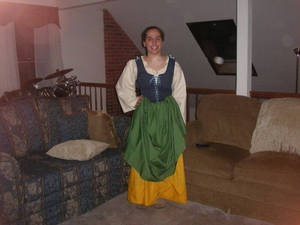
The classic. Bodice over a blouse, full skirt, lace-up details. This is the costume everyone pictures when they think ren faire.
A basic wench bodice from Timeless Trends runs $35-55. They're the most recommended entry-level bodice for good reason: they lace in front, fit a wide range of sizes, and look genuinely good for the price. Pair with a thrift store full skirt or a simple cotton peasant skirt ($15-25 on Amazon).
You don't need to buy a blouse if you own a white or cream top with a relaxed fit. Total without the blouse: $50-70.
Comfort rating: 4/5. Bodices take adjustment if you've never worn one. The first two hours can feel restrictive. By hour three you've figured out the right lace tension.
3. Noble/Court Costume: $60-120
Brocade fabric, structured bodice, an overskirt, hair dressed up with a snood or caul. This is the first costume level where construction matters visibly.
Moresca makes affordable structured bodices at $50-80 that read as genuinely richer than the entry-level tavern styles. Pair with a brocade skirt from Amazon ($25-35) or Jo-Ann Fabrics fabric yardage if you sew.
A merchant at almost every faire will sell hair accessories. Budget $10-20 for a snood or decorative hairpin. Shoes matter more at this tier. Flat-heeled boots or soft slippers in dark colors complete the look.
Comfort rating: 3.5/5. More structured means more planning about how much you'll want to eat and drink. Bring a small bag for essentials.
4. Pirate: $30-70
Pirate is technically anachronistic for Renaissance Europe but nobody cares and neither should you. Half the faire is also pirates.
Loose billowy white shirt (already covered), dark pants or breeches, wide belt, tall boots, tricorn hat. The hat is the whole costume. A decent tricorn from Amazon or Party City runs $15-25.
Add a plastic or foam cutlass ($10-15) if your faire allows costume weapons (most do, with peace-tied requirement). A leather shoulder bag or small barrel prop seals it.
Total for a convincing pirate with the shirt, hat, belt, and basic pants: $35-65.
Comfort rating: 5/5. Loose and breathable. Good for hot weather faires.
5. Witch or Wizard: $20-50
A flowing black dress or dark robes, a hat (pointed or wide-brimmed), and some prop accessories. This archetype is more fantasy than historical, but ren faires increasingly embrace fantasy alongside the historical, especially at events like Sterling Renaissance Festival or Georgia Renaissance Festival.
A basic long black dress from a thrift store: $5-15. A witch hat or wizard hat with some embellishment: $10-20. A staff prop (a walking stick with a crystal glued on top): $8-15.
The upgrade path here is excellent. Real dyed cotton robes from Etsy makers take this look to another level at $60-100, but the $30 version is genuinely fun and photographs well.
Comfort rating: 4/5. Dark colors absorb heat in summer sun. Wear breathable fabric underneath.
6. Knight: $100-400
Here's where the budget range gets wide, because "knight" can mean very different things.
A budget knight wears black pants, a chainmail-printed tunic (printed fabric, not real chainmail, $20-35), a tabard in their chosen colors ($25-40 from Etsy), and rents or borrows a sword prop.
A mid-range knight adds a real foam or ABS breastplate ($50-80 from Ren Supply Co or similar), proper leather gauntlets ($40-60), and a quality belt with scabbard.
A serious knight is wearing real leather armor, metal pauldrons, and a full sword set from a vendor like Kult of Athena. That full setup runs $300-500+.
All three versions work at the faire. Know which version you're building and use our budget calculator to plan it.
Comfort rating: 2/5 for full armor in summer. Real armor is heavy and hot. Budget knight is 4/5.
7. Bard: $40-80
Colorful, layered, musical. A bard outfit is the one that benefits most from thrifting, because you want mismatched interesting pieces rather than a unified set.
Colorful doublet or vest, contrasting shirt, interesting pants or breeches, a hat with a feather, a small musical instrument or fake one as prop. The feather hat is the key piece: $15-25 at craft stores or faire merchants.
Bards get to wear things other archetypes can't justify. Stripes, different colors, accessories piled on. It's the most expressive costume on this list.
Total: $40-80 depending heavily on what you already own.
Comfort rating: 5/5. Bard is whatever you make it.
8. Faerie: $30-60
Iridescent or jewel-toned fabric, wings, floral crown, pointed ear tips. Faerie is another fantasy archetype that's completely at home at modern ren faires.
A faerie dress from Amazon or Etsy: $25-45. Wings: $10-20 at Party City or Spirit Halloween (seasonal but findable year-round online). Ear tips: $5-8. Floral crown: $8-15 or DIY with wire and fake flowers for $5.
The photogenic factor on a faerie look is very high. It photographs beautifully and little kids at the faire go absolutely wild for it.
Comfort rating: 4/5. Wings get caught on things in crowds. Manageable with awareness.
9. Viking: $50-150
Historically, Vikings predate the Renaissance by several centuries. At the faire, nobody cares. Viking is a beloved costume archetype at many events.
Shieldmaiden or warrior build: basic linen-look tunic ($15-20), a wool or wool-look apron dress for women ($25-40 from Viking Merchant or Etsy), faux fur accents, leather bracers, a belt with hanging pouches.
The horned helmet is actually inaccurate (real Vikings didn't wear horns in battle), but the faire doesn't care and the horned helmet reads clearly as Viking to everyone. Expect to spend $15-25.
A quality hand-sewn Viking kit from an Etsy maker (tunic, apron dress or pants, belt, bracers) runs $100-150 and will last years.
Comfort rating: 4/5. Linen and wool breathe well. Layering can get warm in direct sun.
10. Tudor Lady: $80-200
Elizabethan ruff collar. That's the costume. Everything else is support.
A properly structured Tudor look requires a bodice, farthingale (or at least a petticoat to give the skirt shape), an overskirt, and that iconic ruff at the collar. This is a more complex build than most faire costumes.
Recollections makes affordable Tudor separates. A Tudor bodice runs $50-80. The overskirt adds $30-50. A ruff collar is $15-25.
If you sew, a Tudor build is extremely satisfying. Simplicity pattern 8578 is the most recommended Tudor pattern for beginners. Fabric cost for a full Tudor gown runs $40-80 depending on choices. Consider using the circle skirt calculator for the underskirt math.
Comfort rating: 2.5/5. Tudor silhouettes require structural undergarments. You'll be warm and restricted. Worth it for the photos.
11. Ranger or Woodsman: $40-90
Earthy tones, practical-looking gear, a quiver if you can find one, boots that look trail-worthy. Ranger is the most gender-neutral archetype on this list and works equally well across presentations.
Brown or green trousers, a laced tunic in forest green or tan, leather bracers, a hooded cloak ($25-40 from Etsy or Renaissance Dresses), leather boots or boot-cover boot toppers over regular shoes.
A quiver (empty, decorative) runs $20-35 on Etsy. A walking staff completes the look. Total build with cloak: $50-90.
Comfort rating: 5/5. Practical build, comfortable fabric, no structural elements. The cloak adds warmth in morning chill.
12. Jester: $30-60
Bells. Diamonds. Two-colored everything. The jester is the finale character on this list because it commits harder to its bit than anything else here.
A jester hat with bells ($12-20 from any costume supplier) is the cornerstone. The costume can be built around any harlequin-patterned garment: a basic jester tunic from Amazon ($20-30) or a thrift store base layer cut to add diamond patches.
Some people go full face paint with the jester look. This is impressive but exhausting for a full faire day. A jester's hat is enough visual commitment without adding face makeup maintenance.
Comfort rating: 4/5. Light and mobile. The bells are genuinely loud in crowds, which is either delightful or maddening depending on your personality.
Practical Tips for Every Budget
Layering is your best planning tool. Ren faires usually start cool in the morning and get warm by midday. Layers you can remove and stow in a bag give you more comfort than a single look that's too warm or too cold.
Shoes matter enormously. You'll walk 5-8 hours on grass, dirt, and uneven ground. Comfortable shoes under the costume beat historically accurate but painful shoes every time. Boot toppers (fabric sleeves that slip over modern shoes to look like period footwear) exist for exactly this reason.
For stitching together the budget on a full costume build, the ren faire garb cost guide goes deeper on material sourcing. If your costume involves a sewn skirt, the sewing project cost breakdown will help you plan fabric purchases accurately.
For checking what you need for your specific faire day, use the convention checklist tool. It covers everything from tickets to cash for vendor lanes.
Frequently
asked questions.
Sources & references
We link to the brands, retailers, and research we reference so you can verify and explore.