Unit / Squad
Paint a cohesive squad or warband using a batch painting workflow that keeps your color scheme consistent across every model. This template covers scheme planning, batch priming, assembly-line basecoating, shared washes, individual details, decals, and unified basing.
4 weeks
10
7
3
See the whole look before you start.
References, materials, budget, and build order for Unit / Squad.
Timeline
4 weeks
Color refs
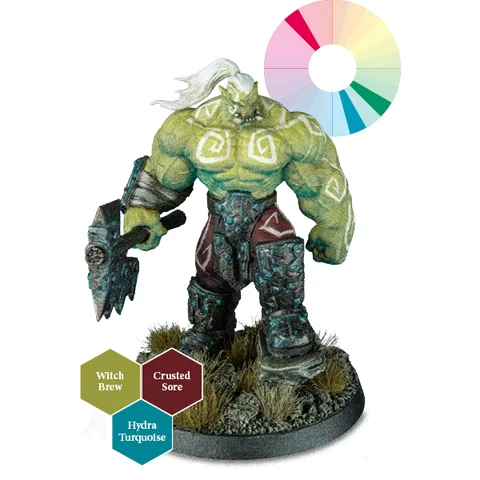
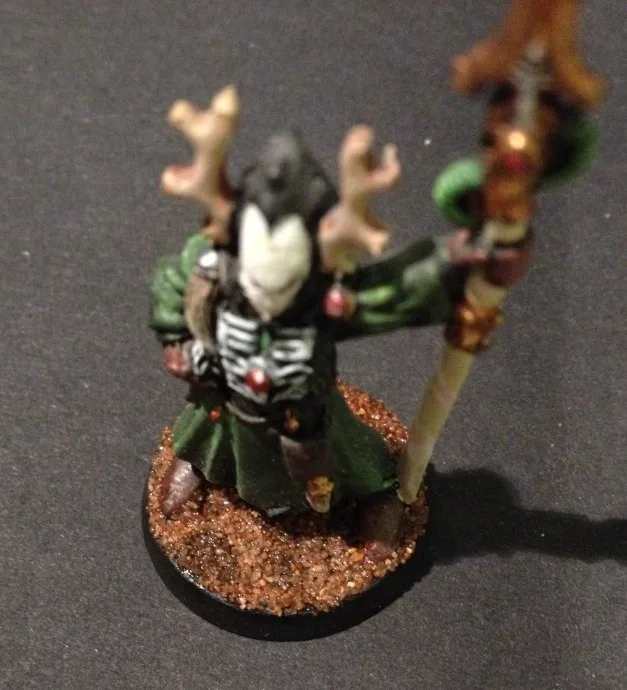
Materials
7 items
Budget
$60 - $180
save the visual refs
Full reference board
The preview above is curated for scanning. This is the working board you clone into your own build, with notes, colors, product images, and extra references intact.
Images are sourced from around the internet to help you get started. Use the web clipper to build your own reference library.
Reference images are gathered from around the web and belong to their original creators. We link back to where we found each one. If something here is yours and you want it taken down, email us and it is gone.
Build guide
Painting one model is satisfying. Painting ten models the same way without losing your mind requires a system. Batch painting is that system, and once you learn it, you'll wonder how you ever painted models one at a time.
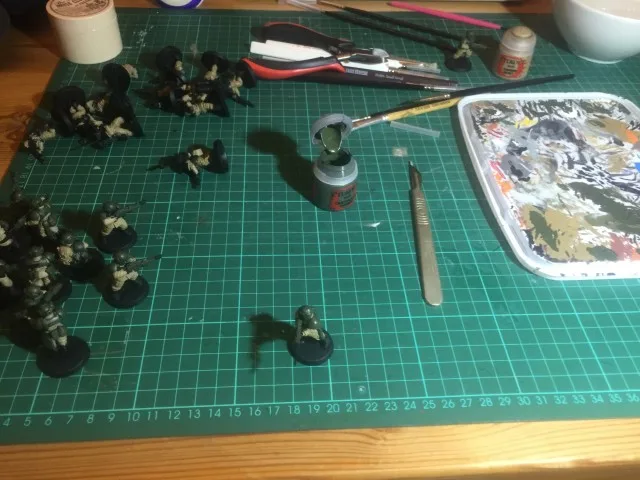
You'll take a full unit (5-10 models) from boxes to battlefield-ready using an assembly line approach. Every model gets the same treatment at each stage before you move to the next color. The result is a visually cohesive squad that looks like it belongs together on the table.
Planning Your Scheme
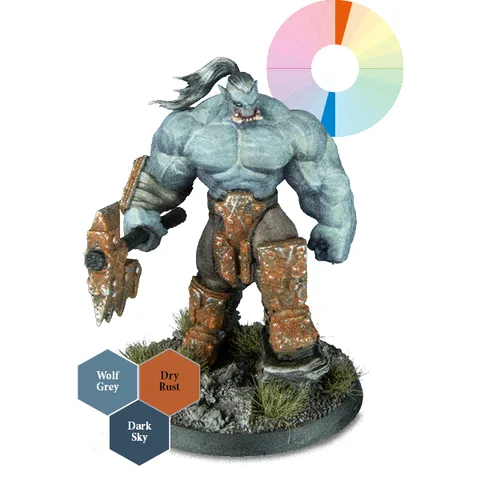
Before you touch a brush, write down your color recipe. Not "blue armor" but "Kantor Blue base, Nuln Oil wash, Caledor Sky layer, Lothern Blue edge highlight." Specific paints, specific steps. You'll thank yourself on model number seven when you can't remember what you did on model number one.
Decide on your squad markings too. Matching shoulder trim, identical base rims, consistent eye lens color. These small unifying details make a squad read as a unit from three feet away at the gaming table.
Assembly Line Setup
Clean and assemble all models before painting any. It's tempting to start the first model while others sit on sprues. Don't. You'll end up with one nice model and a pile of grey shame.
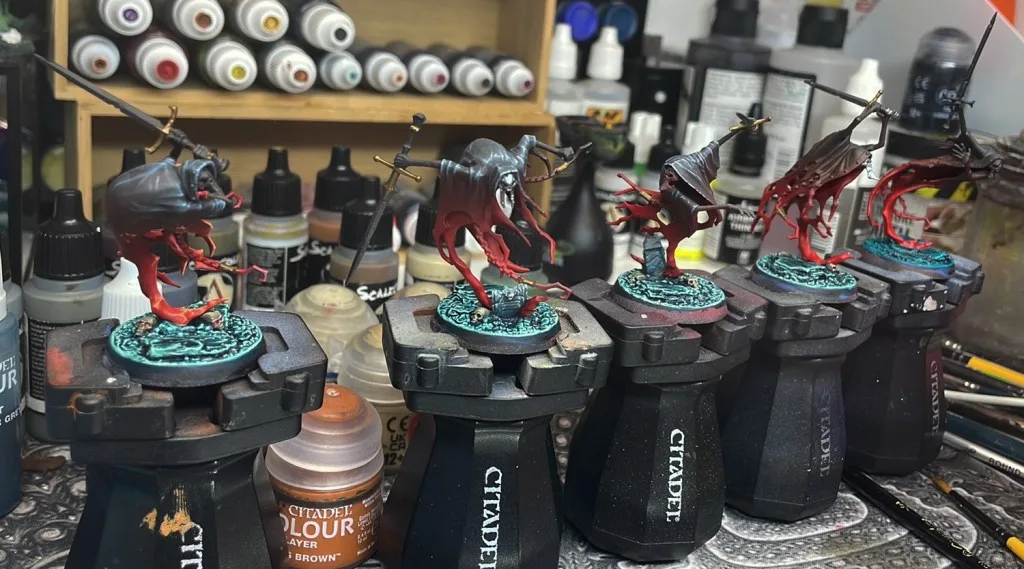
Mount everything on painting handles (cork on a stick, Citadel handle, or blue tac on old paint pots). Batch painting means handling every model multiple times, and finger oils ruin primer adhesion.
Batch Priming and Basecoating
Prime all models at once. Line them up and hit them with two light passes of spray primer. For speed painting, a colored primer matching your dominant armor color saves an entire basecoat step. Painting Ultramarines? Prime with Macragge Blue spray instead of black.
Now paint every model with color A before touching color B. All armor, then cloth, then leather, then metallics. You're not washing brushes between colors or opening and closing pots, and you build muscle memory. A squad of 10 that would take 30+ hours individually takes 15-20 hours batch painted.
Batch Shading
Once all basecoats are done across the squad, shade everything at the same time. Agrax Earthshade over warm colors, Nuln Oil over metallics and dark tones, Reikland Fleshshade on skin. If you're using Citadel Contrast or Army Painter Speedpaint over a zenithal prime, this step replaces both basecoat and shade.
The key to batch washes: don't overload the brush and don't let pools form on flat surfaces. Work model to model quickly. By the time you finish the tenth model, the first is dry enough for the next step.
Individual Details
After the batch work is done, spend 10-15 minutes per model on individual touches. Sergeant stripes, unique weapon loadouts, squad number decals, and face details. This is where each model gets its identity within the squad.
For decals (transfers), use Micro Set and Micro Sol. Micro Set goes on before the decal to help it adhere. Micro Sol goes on after and softens the decal film so it conforms to curved surfaces. Without these, your decals will look like stickers. With them, they look painted on.
Basing the Squad
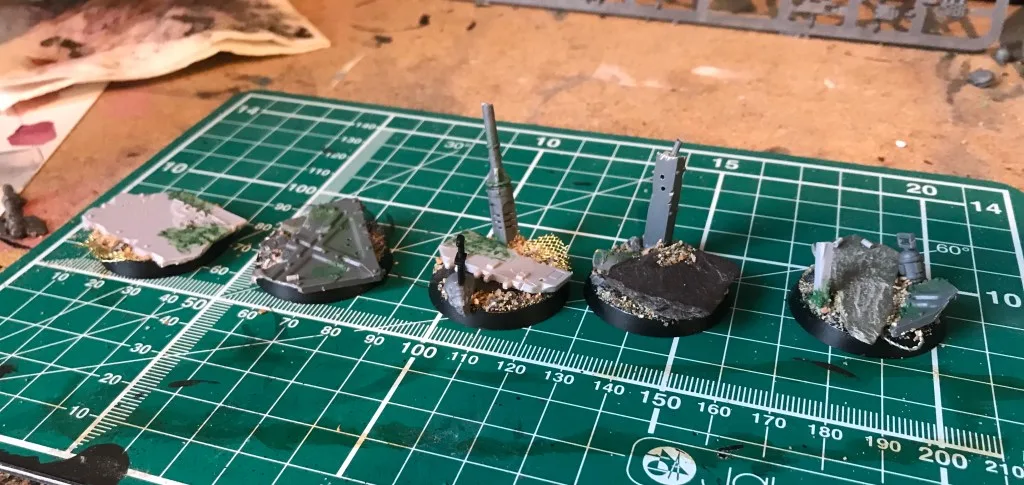
Batch your bases too. Same texture paste on all bases, same drybrush colors, same tuft placement pattern (but not identical). Matching bases are the single biggest factor in making a squad look cohesive. I use Vallejo Dark Earth texture paste, drybrush with Zandri Dust then Screaming Skull, then add Army Painter Highland Tufts. Takes about 2 minutes per base.
Seal everything with a matte varnish spray once the bases are done. Line them up, photograph the squad together, and feel the dopamine hit of a finished unit.
Common Mistakes
- Painting one model fully before starting the others. You'll never match the scheme exactly. Batch paint so every model goes through each stage together.
- Not writing down recipes. "I think it was that blue" is not a recipe. Write the exact paint names for every area. Costumary saves these per project for exactly this reason.
- Spending display-level time on rank and file. Tabletop standard means they look good from arm's length. Save your best blending for characters and centerpiece models. These guys just need clean basecoats, a wash, and one highlight.
- Inconsistent basing. Mismatched bases make a squad look like a collection of singles. Same texture, same colors, same rim color on every base.
- Skipping decals. Transfers add so much visual interest for almost no effort. A squad number or chapter symbol on a shoulder pad takes two minutes and reads clearly from across the table.
Batch painting is a skill that compounds. Your second squad will be faster. Your fifth will be twice as fast as your first. Build the habit now.
Components
Leader
Troopers
Shared bases
Materials list
7 itemsEstimated total cost
$60 - $180
Milestone timeline
4 weeks- 1
Define unit scheme and markings
planning
- 2
Clean and assemble all models
prep
- 3
Prime the batch
priming
- 4
Batch basecoat armor and cloth
basecoat
- 5
Batch shade and recess wash
shading
- 6
Highlight shared colors
highlighting
- 7
Paint weapons, faces, and unit details
Details
- 8
Apply decals or squad markings
Details
- 9
Base all models consistently
basing
- 10
Varnish and group photograph
Finishing
Frequently
asked questions.
Related tools and guides
Plan your build, estimate costs, and get ready.
Budget Calculator
Estimate your build cost before you start buying materials.
Convention Checklist
88-item packing checklist. Check off items as you pack.
Prop Scaling Calculator
Scale reference images to your body measurements.
How Much Does Miniature Painting Cost?
Real build budgets with specific products and dollar amounts.
Miniature Painting Commission Pricing
Real build budgets with specific products and dollar amounts.
Miniature Painting on Costumary
Templates, tools, and workspace built for miniature painting makers.
Browse all templates
Explore build plans across 10 craft verticals.
Debut your miniature painting build
Upcoming conventions where you could wear this. Dates, checklists, and budget tools included.
AdeptiCon 2027
Apr 7-11 · Milwaukee, WI
Five days of Warhammer, Infinity and historicals tournaments, with hobby seminars for people who'd rather paint than play. The 2027 event moves to the Baird Center in Milwaukee, so book travel around the new city and not Schaumburg.
NOVA Open 2027
Sep 1-5 · Arlington, VA
A five-day competitive miniature wargaming event near DC, built around tournaments and hobby seminars. If you paint more than you play, the seminar track is the reason to come.
Start this build free
Clone this template into your workspace. Track materials, milestones, budget, and build progress in one place.
Related templates
Army Project
12 weeks · 11 milestones
Plan and execute a full army build without losing your paint recipes, forgetting what's primed, or burning out halfway through. This template breaks a massive backlog into playable milestones with scheme tests, batch sequencing, centerpiece scheduling, and storage planning.
Commission Batch
6 weeks · 9 milestones
Manage a client painting commission from intake to shipping with clear approval checkpoints, documented paint recipes, batch progress tracking, and professional packing. This template keeps client expectations aligned at every stage so there are no surprises at handoff.
Kitbash / Conversion
5 weeks · 8 milestones
Build a unique miniature by combining parts from multiple kits, sculpting custom details with greenstuff or Milliput, and painting the result into a cohesive model. This template covers concept sketches, donor kit sourcing, pinning, gap filling, sculpting, and painting a conversion that looks intentional rather than cobbled together.
Terrain / Basing
3 weeks · 7 milestones
Build and paint terrain pieces, scatter, or a full set of matching bases for your army. This template covers theme selection, foam and cork construction, texture application, priming, drybrushing, foliage, and durable sealing so your table or bases survive regular game nights.
Display Piece
6 weeks · 9 milestones
Push a single miniature to its absolute best for a shelf, competition, or portfolio piece. This template covers mood references, subassembly planning, display base construction, value sketching, advanced blending, face and eye detail, and final photography for a model that's meant to be studied up close.
Single Miniature
2 weeks · 8 milestones
Take one model from sprue to shelf with a clear, repeatable workflow. This template walks you through mold line cleanup, priming, basecoats, washes, highlights, basing, and varnish so nothing gets skipped and every paint recipe is saved for next time.