Douma Cosplay
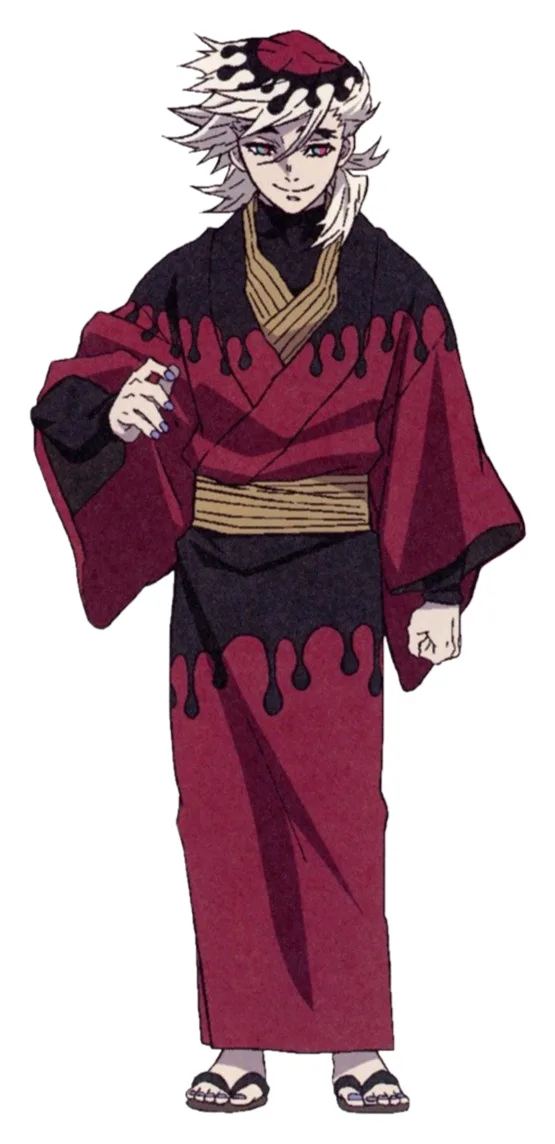
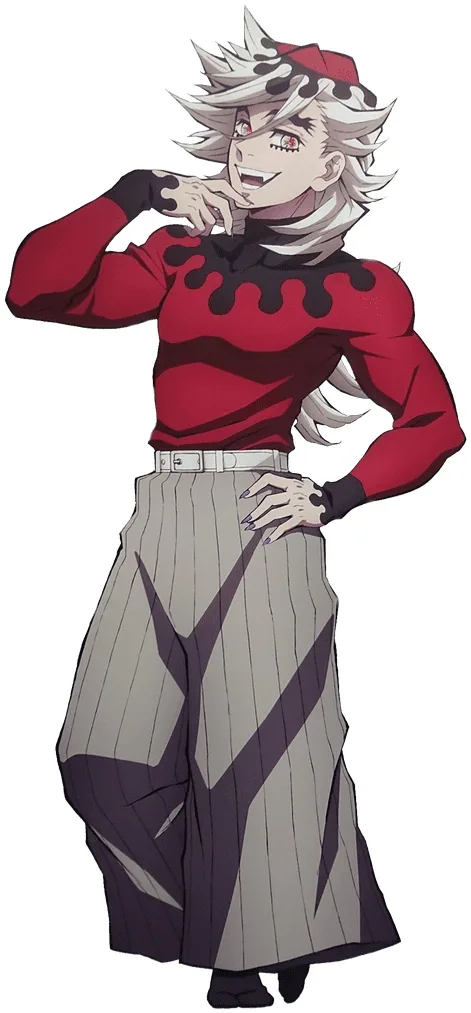
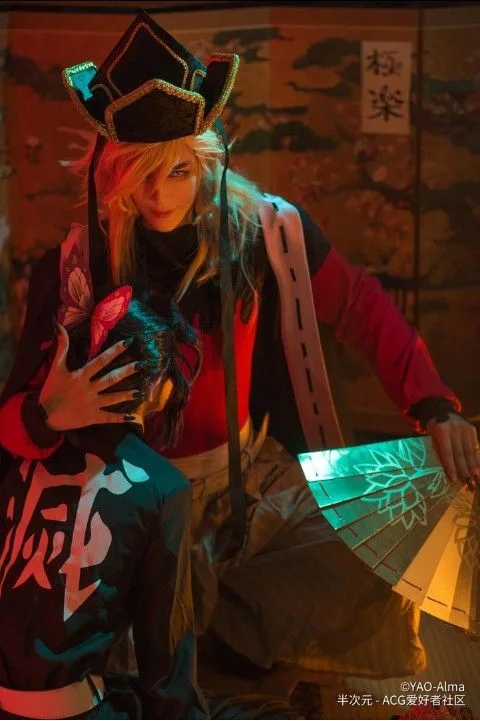
Upper Moon Two from Demon Slayer: the layered kimono with lotus and fan motifs, paired rainbow war fans, a long blonde wig with iridescent tips, and multicolored stained-glass eyes. This is a multi-discipline advanced build combining garment sewing, prop construction, wig gradient styling, and theatrical makeup. The rainbow gradient on the fans and the painted kimono patterns are what separate a memorable Douma from a costume-shop purchase. 7 components, 14 materials, about 8 weeks, $180 to $420.
8 weeks
19
14
7
See the whole look before you start.
References, materials, budget, and build order for Douma.
Timeline
8 weeks
Color refs


Materials
14 items
Budget
$180 - $420
save the visual refs
Full reference board
The preview above is curated for scanning. This is the working board you clone into your own build, with notes, colors, product images, and extra references intact.
Images are sourced from around the internet to help you get started. Use the web clipper to build your own reference library.
Reference images are gathered from around the web and belong to their original creators. We link back to where we found each one. If something here is yours and you want it taken down, email us and it is gone.
Build guide
Every Douma cosplay I see at conventions either nails the fans or doesn't. That's the tell. A flat gold folding fan picked up for $12 on Amazon kills the whole look. His fans are rainbow. Full-spectrum iridescent gradient from red at the handle through violet at the outer arc, gold ribs, green silk tassels. That's the build. Everything else supports it.
The fans are the reason I'd rate this advanced. Not because they're technically difficult, but because you can't fake them or shortcut them. Your options: buy acrylic fan blanks and hand-paint the gradient with Posca markers (most people), 3D print the MakerWorld Douma model by matttheamateur and paint post-print (best shape accuracy), or cardboard with acrylics (works, but they deform in convention humidity by noon and you'll be holding sad paper fans in your photos). Rub 'n Buff for the ribs. Not gold spray paint. The Rub 'n Buff catches light the way metalwork should.
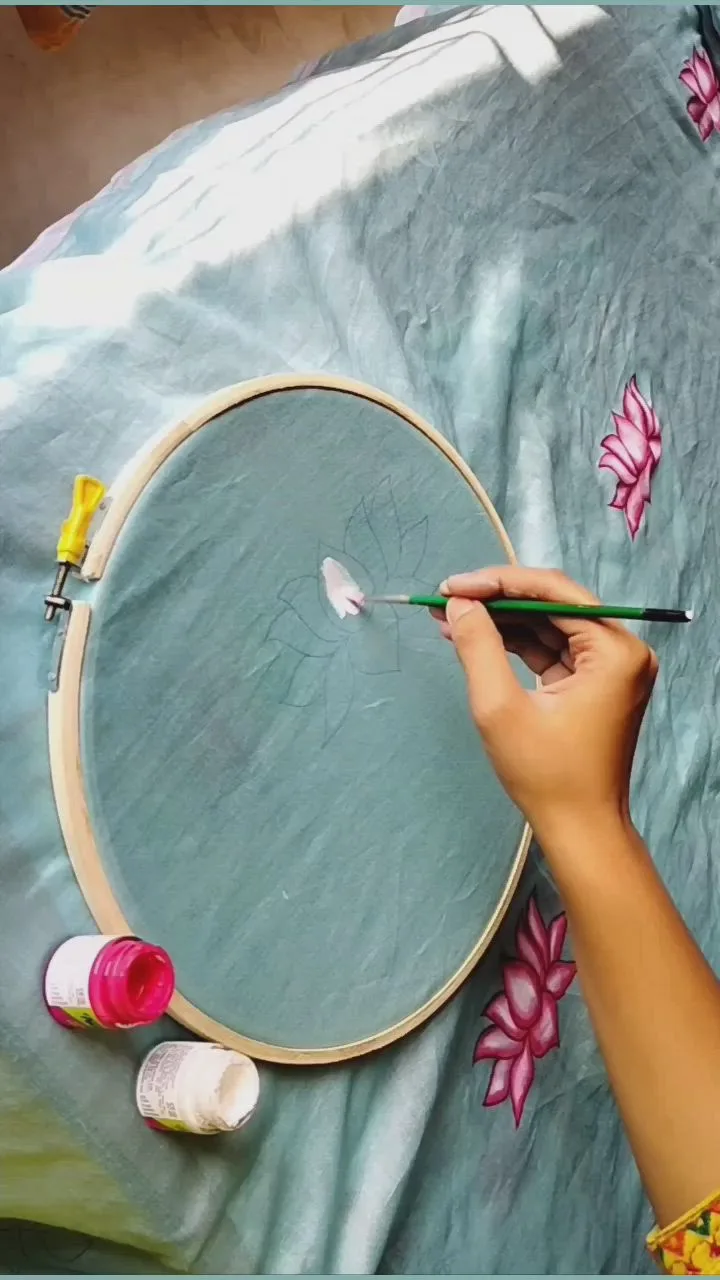
The kimono gradient is the second hardest thing and the place where most people make the decision that determines whether this is a good cosplay or a great one. Douma's kimono moves from a warm ivory/peach at the collar down through soft lavender and into blue at the hem. The lotus and open-fan motifs are painted over that gradient in white. If you skip the gradient and buy a solid-color pre-made kimono, you've built a different character. The only way to do this right is lightweight polyester charmeuse painted with Jacquard Textile Colors, working wet-into-wet in sections and mixing your transition shades before you touch the fabric. I've tried this on four different garments and the one variable that matters more than anything is having the transition colors mixed and ready before the base paint starts to tack. Charmeuse dries fast. You have maybe four minutes per blending zone.
For the lotus outlines on the sleeves: let the gradient dry 24 hours, heat-set with an iron on low, then switch to a fine-tip Jacquard or Tulip fabric paint pen for the motif lines. The pen gives you line control that a brush can't match on charmeuse's slick surface.
Mock up the kimono in muslin first. Non-negotiable. Charmeuse is slippery and correction-resistant. Once you cut into it, you're committed.
The obi slides. Always. Unless you line the back face with cotton muslin, which grips the charmeuse and keeps the sash in position through a full convention day. Forgot this on my first kimono build. Retied it five times between 11am and 3pm at Katsucon.
The wig ships unstyled. Whatever the product photo shows is someone's post-styling work. Thin it in horizontal sections with thinning scissors starting at mid-shaft, remove no more than 30% per pass. Rainbow tips: Sharpie fine-liner markers in pink, lavender, teal, and yellow on the last 2-3 inches of each strand, blend edges with rubbing alcohol on a soft brush, heat-set with a diffuser from 6 inches on low. Do not apply direct heat after the ink is on. The heat shifts the color and risks the fibers.
Contacts. The screen-accurate Sweety Demon Killer Upper Moon 2 mesh-center lenses from UNIQSO are correct for the character. They also limit usable vision to about 1 meter. Product listings say this plainly. Bring a con buddy for floor navigation or buy the clear-hole version for extended wear. Order both if your budget allows. Wear mesh for masquerade, swap to clear-hole for the dealer room.
Full build at $180 to $420 depending on whether you buy the fan bases or 3D print, whether you commission the wig styling or DIY, and whether you add the optional ice crystal props (resin casting, mica powder, silicone molds -- beautiful but a full extra weekend of work). Eight weeks if you're doing everything yourself. Start with the contacts order, they have the longest lead time. Then tackle the fans while you wait for the wig.
Components
Layered kimono with painted lotus and fan motifs
Obi and sash
Rainbow war fans (pair)
Long layered blonde wig with rainbow tips
Rainbow multicolor contact lenses
Pale skin makeup with angular brows
Optional: lotus ice crystal effect props
Pattern Plan
Real sewing patterns for each piece of the Douma costume: the commercial base to start from, a free alternative where one exists, and the exact modifications that turn the base into the character-accurate piece.
Layered kimono with painted lotus and fan motifs
Modifications for layered kimono with painted lotus and fan motifs: Use the floor-length view. Widen the sleeve opening by 4-5 inches to get the wide hanging-sleeve profile Douma's kimono has (the sleeves are very open and dramatic, not fitted). Add 2 inches to the collar depth so the under-collar shows correctly when layered. The pattern does not include an under-collar piece, so draft a separate contrast-fabric under-collar strip 2 inches wide to baste in at the neck.
Modifications for layered kimono with painted lotus and fan motifs: Download the Ladies' size that matches your height (S/M/L/LL for 155-168cm). Lengthen sleeves to mid-forearm and widen the sleeve opening to 8 inches. The free pattern is drafted for a more traditional close-sleeve kimono; Douma's wide theatrical sleeves require the opening modification. Add under-collar as a separate piece. Good match for budget builds where you want to spend money on paint and fans, not a pattern envelope.
The kimono's pattern complexity comes from the painting, not the sewing. Almost any simple T-shaped kimono pattern works as the base because the garment construction is essentially rectangles. Spend more effort getting a well-fitting muslin mock-up than sourcing a specific pattern number. The charmeuse drapes differently from cotton, so muslin fitting is mandatory.
Obi and sash
Modifications for obi and sash: Out of print -- find secondhand on Etsy or eBay (search 'Butterick 6698 uncut'). The obi in this pattern uses a Velcro closure which is practical for cosplay; keep it. Add a muslin backing to the obi interior face so it grips the charmeuse kimono instead of sliding down. Interface the obi fold so it holds its rectangular shape.
The obi is a wide rectangular sash with a bow-shaped back element. Any obi or sash pattern works; the key construction detail is muslin backing to prevent sliding on the charmeuse kimono. The Velcro closure from B6698 is the most practical for repeated dressing at conventions.
Materials list
14 itemsEstimated total cost
$180 - $420
Milestone timeline
8 weeks- 1
Gather Douma reference images from all angles including anime and official art
Research
- 2
Order contacts with minimum 2-week lead time
Materials
- 3
Buy and test wig fiber heat resistance on a hidden strand
Materials
- 4
Draft or source kimono pattern and mock up fit in muslin
Patterning
- 5
Cut and sew kimono body with separate under-collar piece
Construction
- 6
Construct and tie the obi with anti-slip backing
Construction
- 7
Source or print fan bases and prepare surfaces
Construction
- 8
Paint gradient across kimono panels working wet-into-wet in sections
Details
- 9
Paint lotus and fan motifs on sleeves and hem with fabric paint pens
Details
- 10
Heat-set all fabric paint per manufacturer instructions
Details
- 11
Apply gold finish to fan ribs with Rub 'n Buff
Details
- 12
Airbrush or hand-paint rainbow gradient across both fan leaf surfaces
Finishing
- 13
Seal with gloss coat and attach tassels
Finishing
- 14
Thin wig in horizontal sections using thinning scissors
Finishing
- 15
Apply rainbow ink gradient to wig tips and heat-set with diffuser
Finishing
- 16
Style layered wave sections on wig head and set overnight
Finishing
- 17
Test full makeup application for 6 hours before con day
Fitting
- 18
Practice inserting and removing contacts at home before con day
Fitting
- 19
Full suit-up, mobility test, and photo shoot dry run
Wear test
Frequently
asked questions.
Related tools and guides
Plan your build, estimate costs, and get ready.
Budget Calculator
Estimate your build cost before you start buying materials.
Convention Checklist
88-item packing checklist. Check off items as you pack.
Prop Scaling Calculator
Scale reference images to your body measurements.
How Much Does EVA Foam Armor Cost?
Real build budgets with specific products and dollar amounts.
Cosplay Commission Cost Breakdown
Real build budgets with specific products and dollar amounts.
Cosplay on Costumary
Templates, tools, and workspace built for cosplay makers.
Browse all templates
Explore build plans across 10 craft verticals.
Debut your cosplay build
Upcoming conventions where you could wear this. Dates, checklists, and budget tools included.
Start this build free
Clone this template into your workspace. Track materials, milestones, budget, and build progress in one place.
More from this series
Zenitsu Agatsuma Cosplay
5 weeks · 13 milestones
Zenitsu Agatsuma: the yellow-haori Thunder Breathing swordsman from Demon Slayer. This build covers the gradient urokomon haori, the Demon Slayer Corps gakuran uniform jacket, hakama pants, kyahan leg wraps, and the iconic yellow-to-orange ombre wig. The haori is the make-or-break piece; the triangle print needs sublimation or stenciling. 6 components, 13 materials, ~5 weeks, $100-260.
Tanjiro Kamado Cosplay
6 weeks · 14 milestones
Demon Slayer's water-breathing hero, built from the green-and-black checkered haori down to the hanafuda earrings. The haori is the signature piece, it needs clean seams and a pattern scale that reads on camera, while the black wig requires burgundy-dyed tips and structured front bangs. This is an intermediate build for someone who can sew straight seams and follow a wig styling tutorial. The forehead scar and leg wraps add the finishing touches that take it from a costume to a character. 8 components, 15 materials, about 6 weeks, $120 to $350.
Nezuko Kamado Cosplay
6 weeks · 14 milestones
Nezuko from Demon Slayer: the pink asa-no-ha kimono, dark brown haori, red and white checkered obi, bamboo muzzle, and the long black wig with flame-orange tips. Every garment is built from rectangles, so the sewing is friendly. The make-or-break work is the surfaces: printing or painting the hemp leaf pattern, piecing the checker obi, and a muzzle that stays put hands-free. 7 components, 14 materials, ~6 weeks, $110-280.
Giyu Tomioka Cosplay
8 weeks · 13 milestones
Giyu Tomioka, the Water Hashira: the iconic half-and-half haori split between deep maroon and geometric diamond patchwork, over the Demon Slayer Corps uniform. The patchwork half uses English Paper Piecing with hundreds of small diamonds across multiple fabrics. This is the most technically demanding Demon Slayer build. The haori alone takes 30-40 hours. 6 components, 14 materials, ~8 weeks, $130-300.
Qifrey Cosplay
5 weeks · 12 milestones
Qifrey's elegant white-robed silhouette is built around three signature elements: the tall pointed hat with the bent tip and black ribbon, the flowing white cape with the brass brooch closure, and the asymmetrical pince-nez glasses with one dark lens hiding his scarred eye. This is an intermediate build that needs more structural crafting than sewing. The hat and glasses demand the most attention, while the cape is a manageable garment project. The glasses and the hat are the make-or-break details, and this template walks you through both. Includes 7 components, 15 materials with cost estimates, a 12-step build plan, and a realistic 5-week, $95 to $280 budget.
Coco Cosplay
6 weeks · 12 milestones
Witch Hat Atelier's apprentice witch in her full outfit: the tall pointed hat with ornamental band, a dark cloak with decorative hem trim, a layered tunic-dress, boots, and her drawing implements. The hat is the signature piece and the hardest to get right. 7 components, 13 materials, ~6 weeks at $120-280.
Sung Jinwoo Cosplay
7 weeks · 15 milestones
Solo Leveling's Shadow Monarch in his iconic default hunter outfit: a long black coat with purple inner lining, structured shoulder armor, fitted pants, and dual daggers. This is an intermediate hybrid build that combines garment sewing with foam armor crafting for the shoulder details, plus prop work for the daggers. The coat and its glowing purple lining are the make-or-break detail. Includes 7 components, 19 materials with cost estimates, a 15-step build plan, and a realistic 5-7 week, $120 to $320 budget.
Gojo Satoru Cosplay
5 weeks · 11 milestones
Jujutsu Kaisen's strongest sorcerer, built around three signature details: the black high-collar uniform jacket, the blindfold, and the white spiked hair. This is an intermediate build that leans on one well-made garment plus wig styling, so it reads instantly on the con floor without months of work. The collar and the wig are the make-or-break details, and this template walks you through both. Includes 6 components, 11 materials with cost estimates, an 11-step build plan, and a realistic 5-week, $90 to $240 budget.