Commissions
Fursuit Commission Scope and Pricing
How to scope fursuit commissions so clients don't ask for changes after you've started cutting fur. Design lock, revision limits, and pricing extras.
My third commission went sideways because I didn't have a design lock
The client changed their character's chest markings after I'd already cut $120 worth of fur. The new pattern required a different chest panel, and the old cuts were unusable. We hadn't agreed on when changes were final. I ate that cost because I didn't have a written agreement, just a DM conversation and a PayPal deposit.
That was suit number three. By suit number eight, I had a two-page commission agreement, a milestone-based approval system, and a clear change fee policy. I haven't had a scope dispute since.
Scope creep is the most common business problem fursuit makers face. Unlike digital art commissions, where a change costs you time, fursuit changes cost you materials. Cut fur can't be uncut. Carved foam can't be un-carved. Ordered fabric in the wrong color can't be returned. Every revision after work starts costs real money, and most of that cost lands on you if you didn't plan for it.
This guide covers how to structure your commission process, what to put in your agreement, and how to price the extras clients inevitably ask for. If you're new to fursuit commissions, read through the fursuit cost guide first so you understand the material cost structure before you set your prices.
Why scope creep hits fursuit makers harder than other artists
In the digital art world, a scope change means redoing hours of work. Frustrating, but recoverable. In fursuit making, a scope change can mean throwing away materials you've already paid for and reordering new ones.
Here's a concrete example. A client decides they want a different base color after you've already ordered five yards of fur at $22/yard. That's $110 gone, plus the cost of the new fur. If you didn't have a clause covering material cost pass-through, that $110 comes out of your margin.
The problem is compounded by lead times. Quality fur from Distinctive Fabric or Howl Fabric ships in 3-10 business days. If a client changes their mind about color after your order arrives, you're waiting another week for new fabric, which pushes your delivery date back. For makers with a full queue, that delay cascades into every commission behind it.
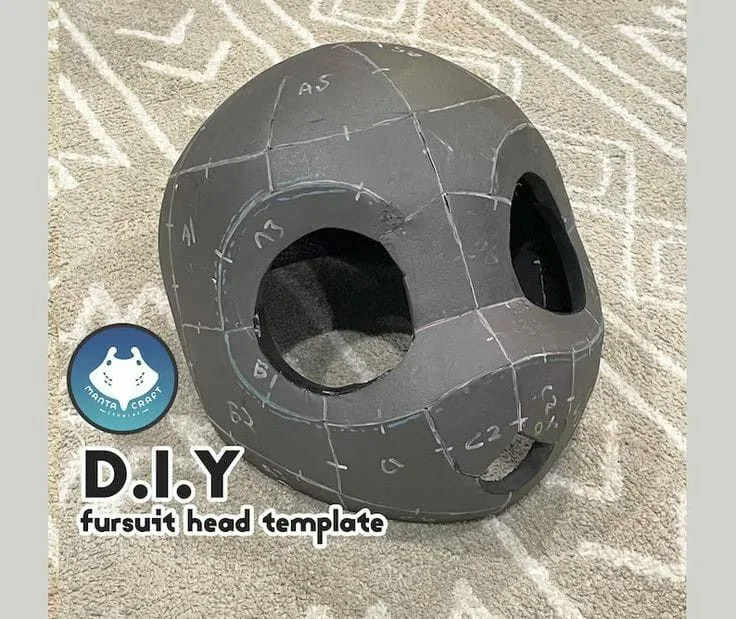
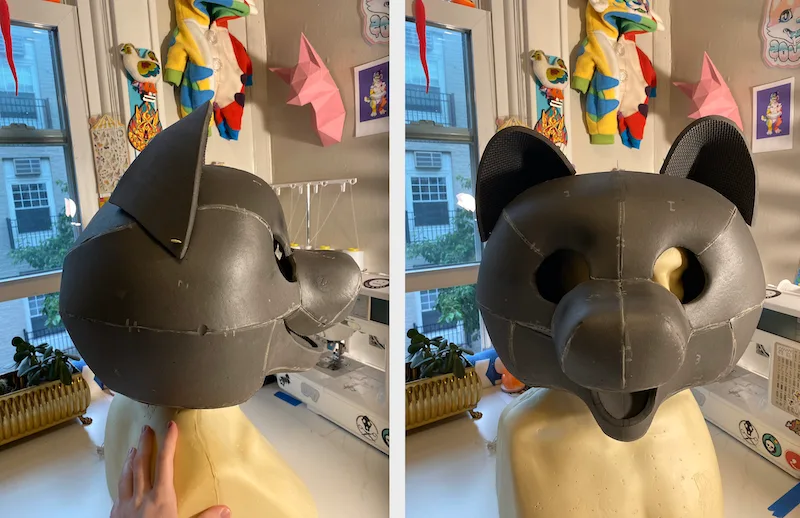
Carved foam has the same problem. A head base takes 15-20 hours to carve to shape. If the client decides they want a different skull shape or ear placement after seeing the carved foam, you're either patching (which shows) or starting over with a new piece of foam at $15-30. Neither is free.
Scope creep in fursuit commissions isn't a communication failure. It's a structural failure. Without defined approval gates, changes can happen at any stage, and you have no basis for charging for them.
The five commission stages where scope must be locked
A well-structured fursuit commission has five approval checkpoints. At each one, the client approves work before you proceed. Once they approve, changes to that component trigger your modification fee policy.
Stage 1: Reference sheet approval
This is the most important lock in the whole process. The client's reference sheet is the source of truth for everything that follows. Before you order a single yard of fur or touch a block of foam, the reference sheet must be finalized and approved in writing.
At this stage, you're confirming:
- Character markings and their exact placement
- All colors, with fur swatches (more on this below)
- Expression options (open mouth only, toony only, realistic)
- Optional features (moving jaw, LED eyes, follow-me eyes)
- Head shape style (toony, semi-realistic, kemono)
This is also where you price the commission. Your quote covers what's on the approved reference sheet. Anything that appears later is an addition.
For a fursuit reference sheet, I require a front and back view minimum. For complex markings, I require a 3/4 view as well. If the client doesn't have a reference sheet, I refer them to artists who do character design, and I don't start until the sheet exists.
Stage 2: Fur selection approval
Screen colors lie. I cannot stress this enough. A color that looks perfect on a monitor in the client's living room may look nothing like the fur you order, because monitor calibration varies wildly and fur has texture that photographs differently under different lighting.
After reference sheet approval, I source fur swatches (physical samples, either purchased or requested from the supplier) and photograph them next to the reference sheet in natural light. The client approves the actual fabric, not the color on their screen.
If I'm ordering without swatches (sometimes necessary for deadline builds), I explicitly note that final colors may vary from screen representation, and the client signs off on that risk.
Once fur selection is approved, I place the order. After that point, any color change means the client pays for both the original order and the new order. This needs to be in your agreement, in plain language, before the client deposits.
Stage 3: Foam head approval
After carving the head base but before applying any fur, I send the client a photo set of the bare foam. This is their chance to approve the head shape, snout length, ear placement, and overall proportions.
At this stage, you have approximately $30-50 in foam and 15-20 hours of carving time invested. Minor adjustments (shaving the snout slightly shorter, repositioning an ear) are usually workable without starting over. Major structural changes require new foam.
I define this explicitly in my agreement: "Modifications to head shape after foam approval that require new foam ($30-50 in materials and 10+ hours of rework) will be quoted separately before work proceeds."
Stage 4: Mid-build WIP check
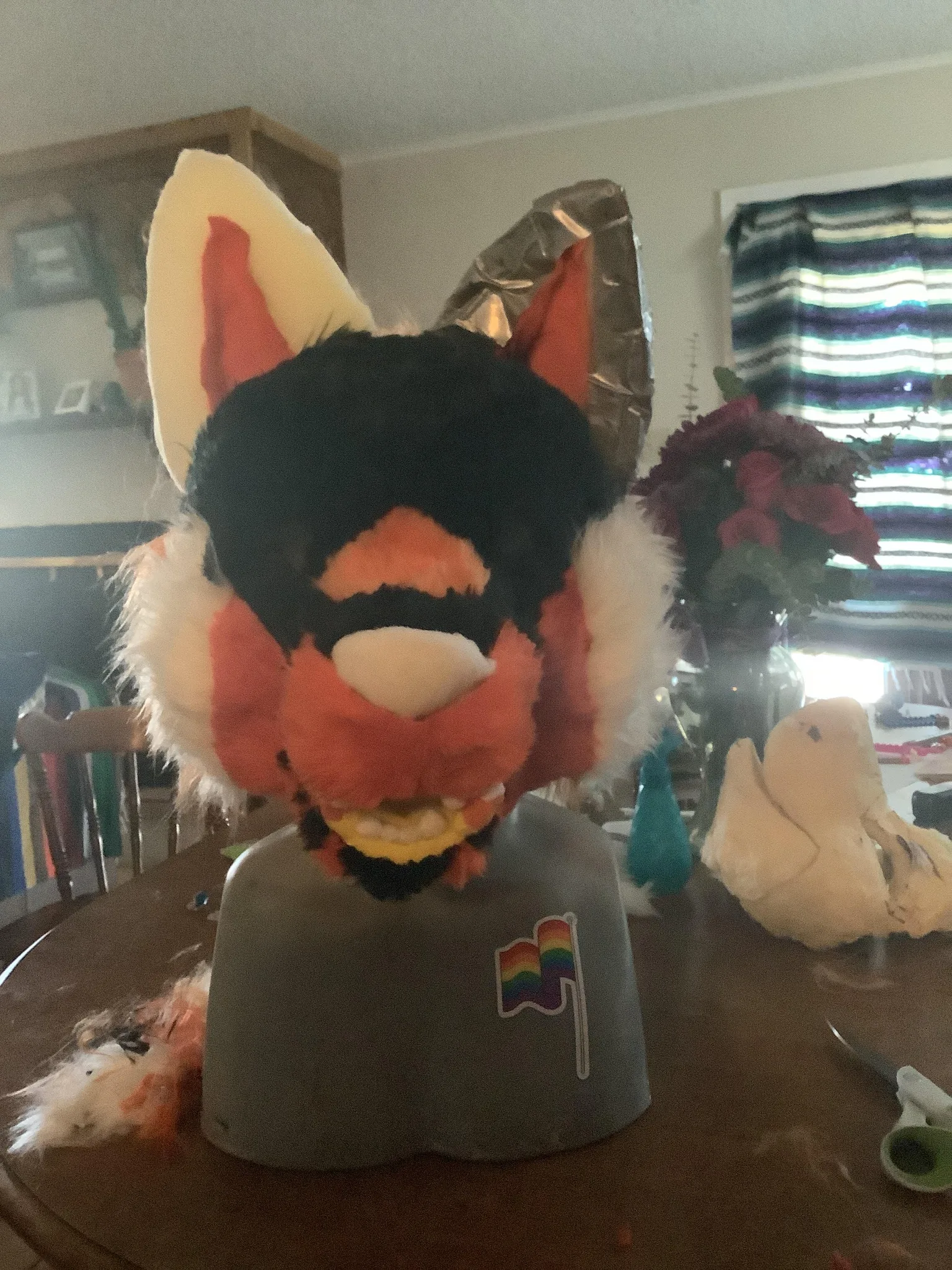
Around 50% furring completion, I send a progress photo set. This is the last checkpoint where minor adjustments are possible without significant rework.
At this stage I can still:
- Adjust fur pile direction in areas I haven't finished
- Make small tweaks to marking placement if I haven't reached that section
- Add or modify features that haven't been installed yet
What I can't do without major cost: change anything already furried. Removing fur from a finished section to change a marking tears seams and often damages the fur pile. It's almost always faster and cheaper to replace the affected panel, which is a material and labor cost.
The mid-build WIP check is not a revision session. It's a progress confirmation. I make this clear to clients before we start.
Stage 5: Final approval before shipping
Full photo and video set of the completed suit. Client approves before I pack and ship. At this point, the build is done. Any changes are post-delivery modifications billed as new work.
I also do a final wearability test at this stage, checking that zippers open smoothly, cooling works, vision is clear, and all seams are secure. This is also when I deliver the care guide.
What to include in your commission agreement
A handshake deal (or a DM conversation) is not an agreement. An agreement is a document both parties sign, or at minimum, a document the client explicitly acknowledges in writing ("I've read and agree to these terms") before you accept their deposit.
Here's what mine covers.
Design lock clause. Changes to approved elements (reference sheet, fur selection, head shape) after the approval date incur a minimum modification fee. My current fee is $50 plus material costs. I list the specific stages and their lock points.
Revision limits during design phase. The client gets two free revisions to the reference sheet before I finalize the quote. After that, revisions are $25 each. This prevents the endless back-and-forth that can eat days of your time before you've charged a single dollar.
Material cost pass-through. If the client requests a change that requires reordering materials I've already purchased, they pay for the original order and the replacement. I list examples (fur color changes after order, foam replacement after head approval) so there's no ambiguity.
Timeline and rush policy. Full fursuits take 3-6 months depending on queue position. Rush orders (under 8 weeks for a partial, under 12 weeks for a full suit) add 25-50% to the base price. I define "rush" explicitly rather than leaving it to interpretation.
Payment milestones. My structure: 50% non-refundable deposit before I order materials, 25% at mid-build approval (Stage 4), 25% before I ship. The deposit is non-refundable because it covers materials I've already ordered and time I've already scheduled.
Kill fee and cancellation. If the client cancels after materials are ordered, the deposit covers those material costs and my time to that point. If the deposit doesn't fully cover my actual costs (which can happen on a complex commission), I invoice the difference before releasing any completed work. Unfinished builds don't get shipped.
Dispute resolution. I note that any disputes will be handled through a specific process (written notice, 30-day resolution window) before escalating. This isn't legally binding in most jurisdictions, but it signals professionalism and filters out clients looking for easy chargebacks.
Having a written agreement also protects clients. I tell every client exactly this: "Design lock means I won't make changes to approved elements without your explicit go-ahead either. This protects you as much as it protects me. You won't receive a suit that looks different from what you approved."
Framing it as mutual protection changes how clients receive it. It's not a legal trap. It's a shared understanding of how the build works.
Handling the "just one small change" request
It's never one small change. After 40+ commissions, I can say this with confidence.
"Can you just make the tail a bit fluffier?" means sourcing different fur or adding a longer-pile accent layer, both of which require material orders.
"Can you adjust the ear tips to be slightly more rounded?" means removing the ear fur, reshaping the foam, recovering, and reattaching. That's 3-5 hours of work on a head that was already finished.
"The markings look smaller than I imagined" means removing and replacing fur panels that may already be sewn into finished seams.
When a client asks for a change after design lock, I follow this process:
- Acknowledge the request without committing to it. "Let me look at where we are in the build and what this would involve."
- Assess the actual work required. Time estimate, materials needed, current build stage impact.
- Send a written scope change quote before doing anything. "This change requires X hours of rework and Y in materials. The cost is $Z. Please confirm in writing to proceed."
- Get written approval before touching the build.
This process feels formal. That's intentional. Clients who experience it once understand that changes aren't casual requests. They're production decisions with real costs.
For clients who push back on the process, I explain it plainly: "I run a small business, and every change I make without tracking costs is a loss I absorb. I'd rather be transparent about what changes cost than resent the commission halfway through."
Most clients respect this. The ones who don't are the ones you don't want to work with anyway.
Pricing common fursuit extras
Knowing what to charge for add-ons is just as important as having the scope agreement. Here are current market rates based on maker surveys and Etsy listings as of 2026.
| Add-on | Price range | What it involves |
|---|---|---|
| Additional expression (removable jaw) | $100-200 | Second jaw mechanism, extra fur panels |
| Moving jaw upgrade | $150-300 | Jaw hinge, mechanism, additional carving |
| LED eyes | $50-100 | Electronics, battery housing, wiring |
| Follow-me eyes | $75-150 | Buckram mesh, pupil painting, interior structure |
| Digitigrade leg padding | $100-200 per leg | Foam shaping, extra fur yardage, patterning |
| Internal cooling fan (head) | $30-50 | Fan, battery, switch, housing |
| Wing harness | $150-400 | Depends on size and mechanism type |
| Magnetic eyelids | $80-150 | Magnet installation, extra eyelid panels |
| Custom teeth/fangs | $40-80 | Sculpted resin or polymer clay |
| Airbrushed markings on fur | $50-150 | Depends on complexity |
These are add-ons priced at quote time, before work starts. If a client requests an LED eye upgrade after you've already installed standard resin eyes, that's not the standard LED eye price. That's the LED eye price plus the cost of removing and replacing the installed eyes.
I price add-ons with a 15-20% buffer above my material cost estimate to account for sourcing time, trial runs, and the inevitable "this didn't work on the first try." Novel mechanisms almost always take longer than expected.
For a full estimate with base cost and add-ons itemized, the commission calculator is the fastest way to build a client-ready quote. It handles the line-item breakdown so you're not doing math in your head during an intake conversation.
Managing your commission queue
Scope is only half the problem. The other half is queue management. Most maker disputes on Artists Beware (the long-running artist accountability community) involve two issues: scope creep and stale queues. Clients who've waited 18 months for a commission are much less patient when something goes wrong.
The standard maker toolkit for queue management is a patchwork: Google Forms for intake, Trello for queue position, Telegram for WIP updates, PayPal for invoicing. That's four tools, four places to check, and zero connection between them.
Most makers use this setup because it's free and it works well enough for a few commissions per year. At higher volume (5+ active commissions), the context-switching gets painful. You're copying reference images between apps, manually updating Trello when PayPal marks a payment received, and keeping WIP photos organized in chat threads.
The commission tracker connects intake, client communication, WIP milestone tracking, and payment status in one place. I started using it at commission number 28, and it cut my admin time by about two hours per commission. At $19/month on the Studio tier, it pays for itself if your time is worth more than $10/hour. It's probably overkill for one or two commissions a year, but worth it at five or more active builds.
For commission pricing and business setup, the commission pricing guide covers how to set your base prices in a way that accounts for materials, labor, overhead, and your actual time. Don't set prices before reading it.
If you're also trying to figure out how to charge for rush orders or premium slots, /commission-management has a full breakdown of queue structures that experienced makers use.
A note on Artists Beware
Artists Beware is a long-running community database of problematic commission interactions, maintained for years as a LiveJournal community and now spread across various platforms. It's a useful reference point not for naming names, but for understanding what actually goes wrong in commissions.
The patterns are consistent. Scope disputes cluster around two failure points: no written agreement (so neither party can prove what was agreed), and no design lock (so clients request changes at every stage). Both are fully preventable.
Having a written agreement with explicit approval gates doesn't guarantee every commission goes smoothly, but it means disputes can be resolved by pointing to documentation rather than arguing about who said what in a DM. That alone has saved me from at least three potential chargebacks.
Protecting yourself as your business grows
The systems you build at commission five matter more at commission fifty. Getting into the habit of written agreements, approval gates, and documented scope changes now means you're not scrambling to retrofit processes when your queue fills up.
A few things that take five minutes to set up now and save hours later:
A templated intake form. Collect character name, reference sheet link, suite type, deadline, budget range, and specific requests all at once. Stop gathering this information across 15 DMs.
A standard reply for change requests. "Thanks for reaching out about a change. Let me assess what this would involve and get back to you with a quote before we decide how to proceed." Copy-paste this every time. Don't answer change requests off the cuff.
A folder structure for each commission. Client name, reference sheets, approved swatches, approval photos, WIP photos, invoice copies. Six folders. Everything lives there. When a client asks about something from three months ago, you have it.
A checklist for each approval gate. What needs to be in the photo set, what questions to ask the client, what they need to confirm in writing. Consistent process means consistent results.
The fursuit maker page has resources specifically for makers managing commissions as a business rather than a hobby, including templates and workflows from experienced makers.
Frequently
asked questions.
Sources & references
We link to the brands, retailers, and research we reference so you can verify and explore.