Budget
LARP Armor on a Budget (2026)
Real costs for LARP armor at every budget level. From $30 foam kits to $500 leather sets, with durability ratings and weather warnings.
I've been LARPing for ten years. I've watched people show up in $600 leather sets that fell apart after one wet weekend, and I've watched people in $40 foam builds that lasted three seasons of outdoor combat.
Budget and quality don't correlate the way you'd expect in LARP armor. Knowing where to spend and where to cut corners matters more than the total number.
Here's a real breakdown of what armor costs at every level, including the things most guides politely skip over.
What LARP Armor Actually Needs to Do
Before talking price, let's talk function. LARP armor requirements vary significantly by system.
Amtgard uses an armor point system where different materials provide different protection values. Foam doesn't count. Leather gives 1-3 points depending on thickness. Metal gives 4-6 points.
Dagorhir and Belegarth are historically grounded and lean toward realistic-looking armor. Foam painted to look like metal doesn't carry the same weight socially or in immersion.
LARP systems like those from Profound Decisions in the UK focus heavily on costume quality and immersion rather than armor point accounting.
Know your system before you buy anything. Spending $300 on real leather that doesn't count in your system's armor rules is a painful lesson.
Budget Tier: $30-100
EVA Foam Armor
EVA foam is the most accessible entry point. You can buy pre-cut foam kits from TNT Cosplay Supply or similar vendors, or source 6mm and 10mm foam sheets from hardware stores and cut your own.
A basic pauldrons-and-vambraces foam set, painted with Plasti-Dip and acrylic craft paint, runs $30-60 in materials. It looks convincingly like metal in photographs and from 10 feet away. It's lightweight enough to wear all day.
The hard truth: foam hates rain. EVA foam absorbs moisture at cut edges, paint peeling happens faster than you'd think, and a weekend of outdoor LARP in wet weather can leave your carefully painted armor looking rough. Seal everything thoroughly with Plasti-Dip before the base coat, and store it dry.
Thrift Store Base Builds
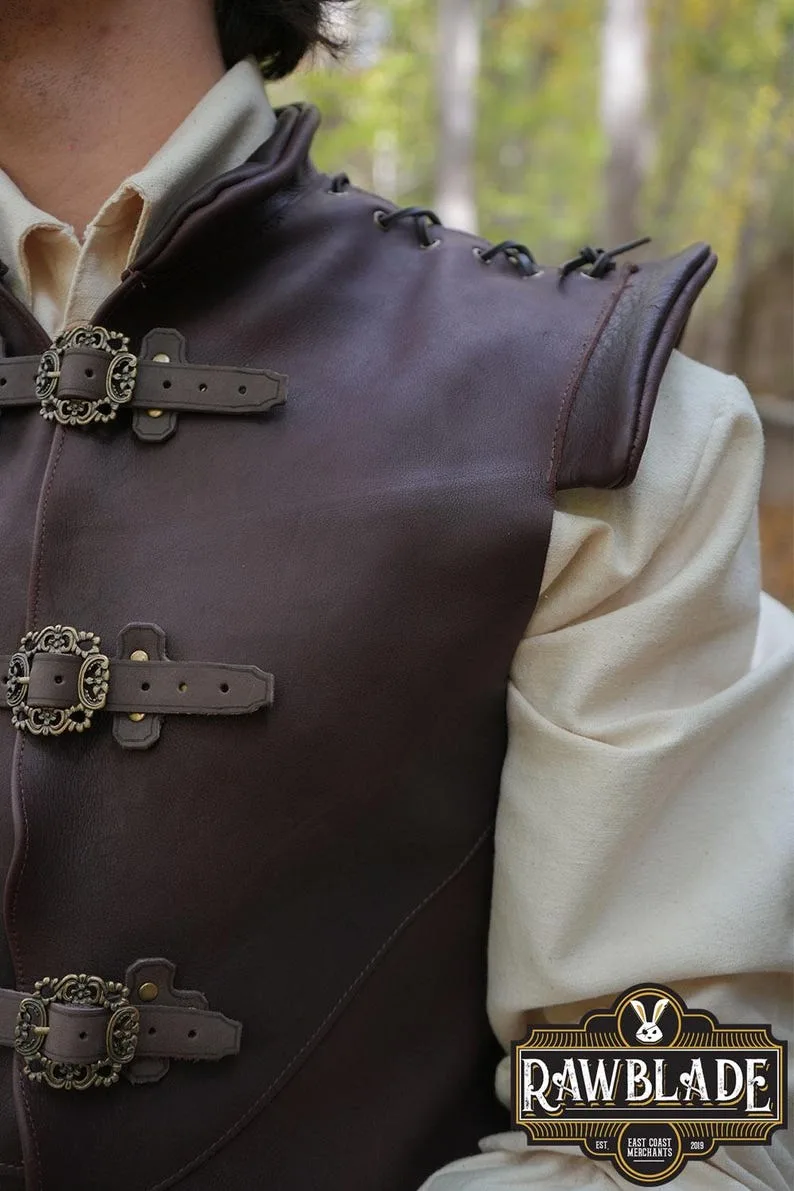
A leather jacket from Goodwill runs $8-20. Cut into pauldrons and a chest panel, dyed darker, and fitted with buckles from a craft store, it becomes passable medium armor for a lot of systems. Total cost including hardware: $30-50.
This approach is genuinely creative and often produces armor with more character than off-the-shelf pieces. It takes time and some craft skill, but the budget ceiling is very low.
Amazon and AliExpress Bracers
Search for "LARP leather bracers" on either platform and you'll find functional pieces at $15-35 per pair. Quality varies. Most are genuine or bonded leather, stitched reasonably well, and fine for casual LARP. They won't last a decade of heavy use but they're adequate for figuring out if you love this hobby before committing more.
Durability rating at this tier: 2/5 for foam in wet climates, 3/5 for thrift builds, 3/5 for mass-market leather bracers.
Mid-Range Tier: $150-300
This is where the value-to-quality ratio peaks. You're spending enough to get real materials and skilled construction, without paying the premium for bespoke work.
Foam with Proper Finishing
Foam armor that's been heat-shaped, primed with contact cement, sealed with Plasti-Dip, painted with acrylics, then finished with a leather sealant can hold up surprisingly well and look genuinely impressive. A full torso set (chest, back, pauldrons, vambraces) built from quality foam and finished well runs $80-150 in materials.
The time investment is real. A full foam set takes 20-40 hours for a skilled builder. If you're paying someone to make it, that time has to be compensated.
Mixed Leather and Foam from Etsy
Etsy has a genuinely strong LARP maker community. Searching for leather bracers, gorgets, or pauldrons from a small maker typically lands you in the $50-150 range per piece, with quality that beats mass-market by a significant margin.
A mixed set, leather on high-wear areas (bracers, gorget, belt), foam on large panels (chest, back), from Etsy makers, can come together for $200-280. The leather pieces last years. The foam panels can be rebuilt if they wear out.
DIY Leather Armor with Tandy Supplies
Tandy Leather is the USA standard for leather crafting supplies. A 4-5 oz veg-tan leather shoulder comes in around $40-60 depending on size. Tools (swivel knife, beveler, stamping tools, mallet) run $50-80 for a basic set.
DIY leather armor is a genuine skill investment. Your first piece will take 10+ hours and look like your first piece. By your fifth piece, you'll have something worth wearing. The supply cost for a beginner LARP chest piece runs $80-120, excluding time.
Leather armor needs conditioning. Leather Honey conditioner applied twice a year keeps leather flexible and prevents cracking. Skip this and outdoor armor deteriorates fast.
Durability rating at this tier: 4/5 for properly finished foam, 4/5 for Etsy leather, 4.5/5 for DIY veg-tan with maintenance.
Premium Tier: $400-800+
At this price point, you're buying work that's meant to last a decade or more with proper care.
Epic Armoury Full Leather Sets
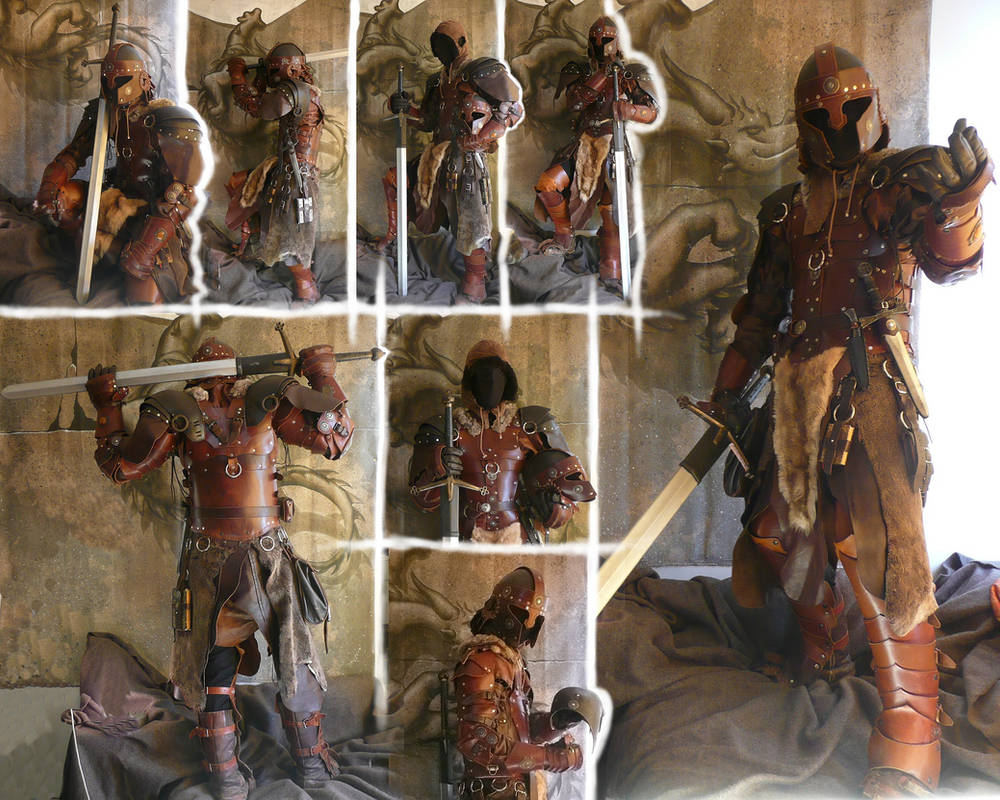
Epic Armoury is the closest thing LARP armor has to a standard. They're the largest professional LARP armor manufacturer, sold through distributors worldwide. Their leather cuirasses run $200-350. Full knight sets (cuirass, pauldrons, vambraces, cuisses) land $500-800 depending on configuration.
The quality is consistent and purpose-built for outdoor LARP. The leather is thick enough to take real hits, the fittings are metal rather than plastic, and the designs are historically informed enough to look right at systems with high immersion standards.
This isn't fancy handcraft leather work. It's functional armor engineered for repeated use. The visual result is good, not artisanal.
Custom Commissions from LARP Smiths
Independent LARP armor makers charge $80-150 per hour for custom work. A full custom set takes 30-60 hours of work, putting bespoke commissions in the $2,400-9,000 range for serious builds.
For most hobbyists, this is out of scope. For people who run large events, portray named characters with specific visual requirements, or want heirloom pieces they'll wear for 15 years, the math can work.
Chainmail
Real chainmail for LARP runs $150-400 for a coif and standard hauberk, depending on ring size and whether you buy pre-made or make your own. The Ring Lord sells rings for DIY chainmail; a standard hauberk takes 15,000-25,000 rings and 40-80 hours.
Chainmail is heavy (a hauberk can weigh 15-20 lbs), hot in summer, and requires a padded gambeson underneath to be comfortable. It also provides real armor protection and looks unmistakably authentic. Rust is the enemy. Steel rings need occasional oiling.
Durability rating at this tier: 5/5 for professional leather with maintenance, 5/5 for chainmail (rust excepted).
Weather and Practical Considerations
LARP happens outdoors. This is the detail armor guides skip most often.
Foam doesn't like sustained rain. Paint seals help but aren't perfect. If your event involves wet ground, stream crossings, or full-day outdoor exposure, foam armor will need more maintenance than indoor cosplay foam.
Leather hates being soaked and then dried fast. Leaving a leather set in a hot car after a wet event cracks the leather. Air dry slowly, condition after any significant moisture exposure.
Metal (chainmail, plate inserts) rusts. Even mild steel rings will show surface rust after outdoor use without oil treatment. Naval jelly removes light rust. Prevention is easier than removal.
For planning your event budget including travel, gear, and entry fees, use our con checklist tool. The LARP workspace on Costumary has more resources for kit planning.
For deeper cost analysis at every build tier, the LARP armor cost DIY guide goes deeper into material sourcing. If you're comparing LARP investment to ren faire costuming, the ren faire garb cost guide covers similar budget territory.
Finally, the honest overall budget recommendation: spend $50 on your first LARP event's armor. Show up. See what people actually wear at your specific system. Talk to veteran players about what holds up. Then invest in quality pieces you know fit your system's needs and your own event frequency.
Frequently
asked questions.
Sources & references
We link to the brands, retailers, and research we reference so you can verify and explore.